1815 · St. Marys, United States
The naval engagement known as the Battle of Fort Peter took place during the War of 1812, where British forces attacked a U.S. defensive position at Fort Peter, located in Georgia.
August 13, 1814
The British, led by Sir Alexander Cochrane, attacked Fort Warburton during the War of 1812, contributing to the Washington Campaign.
Fort Warburton, United States | British Royal Navy
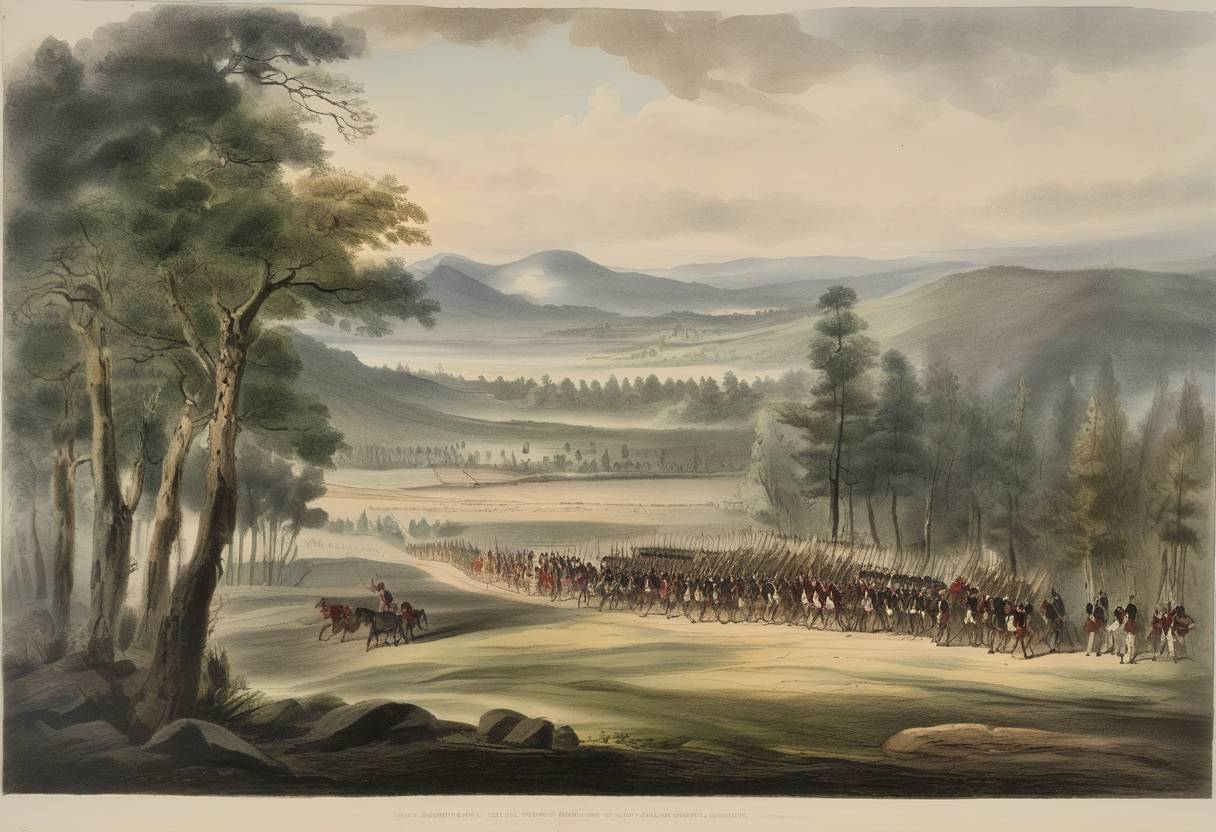
During the War of 1812, a conflict primarily fought between the United States and the United Kingdom, strategic campaigns were executed by both sides to exert control over North American territories. The Washington Campaign was a pivotal series of events during this war, marked by British efforts to threaten and capture the U.S. capital, Washington, D.C.
Leading up to the attack on Fort Warburton, British forces sought to exploit the vulnerabilities of American defenses along the eastern seaboard of the United States. Rear Admiral Sir Alexander Cochrane commanded the naval squadron, while Major General Robert Ross led ground forces, intending to press towards Washington.
On August 13, 1814, British forces targeted Fort Warburton, an American fortification situated along the Potomac River, approximately 12 miles downstream from Washington. This fort, also known as Fort Washington, was a crucial defensive point intended to protect the nation’s capital and its surrounding areas from naval incursions.
The fort’s strategic placement allowed it to command the river entrance towards Washington, making it a significant objective for the British. However, during this period, Fort Warburton was not adequately fortified or manned to withstand a well-coordinated assault. Consequently, the defense predominantly relied on its ability to delay British forces rather than stop them outright.
The successful attack on Fort Warburton allowed British forces to proceed further up the Potomac River without substantial resistance, clearing a path for the infamous Burning of Washington on August 24, 1814. This series of events significantly undermined American morale and demonstrated the vulnerabilities of the young nation’s defenses.
The attack on Fort Warburton played an instrumental role in the broader Washington Campaign, exemplifying the strategic importance of controlling waterways and access points during wartime. This event highlighted the need for improved military readiness and fortifications for the United States, contributing to later defense infrastructural developments.
The British campaign’s success at Fort Warburton and subsequent actions emphasized the profound impact of coordinated land and naval operations, setting a precedent for future military strategies and defense policies.
Source: www.history.com