Repeal of the Stamp Act - May 12, 1766
1766 · London, Great Britain
In London, Britain issues a declaration effectually repealing the Stamp Act, which imposed taxes on paper goods in the American colonies.
June 29, 1767
The Townshend Acts are passed by the British Parliament, imposing duties on common products imported into the American colonies, heightening tensions leading to the American Revolution.
London, England | Parliament of Great Britain
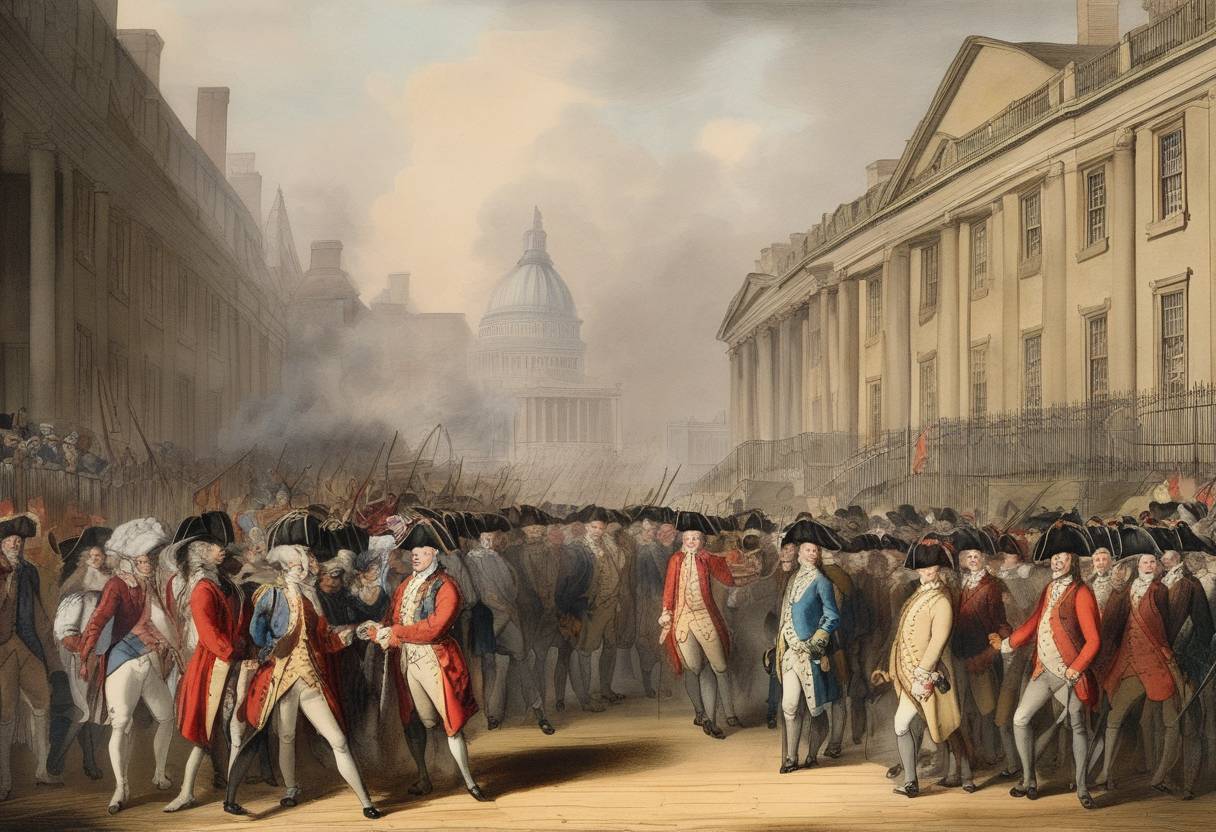
On June 29, 1767, the British Parliament enacted the Townshend Acts, a series of measures that imposed duties on various goods imported into the American colonies. These acts marked a significant escalation in the fiscal policies that followed the earlier Stamp Act and contributed to rising tensions between Britain and its American colonies, eventually leading to the American Revolution.
Following the financial strain placed on Britain by the Seven Years’ War, the British government sought to generate revenue from its colonies to help offset the costs of maintaining a standing army in North America and to alleviate its national debt. The Townshend Acts were named after Charles Townshend, the Chancellor of the Exchequer, who proposed the acts as a means to exert greater control over the economic affairs of the American colonies.
The Townshend Acts comprised several laws, the most prominent being:
The Townshend Acts exacerbated existing discontent in the colonies over taxation without representation. Colonists, who saw the acts as encroachments on their self-governance and economic freedom, responded with protests, boycotts of British goods, and increased smuggling. Noteworthy responses included:
The enforcement of the Townshend Acts intensified colonial unity and resistance, contributing to the growing sense of American identity. This period saw increased tension that culminated in the Boston Massacre in 1770. In response to heightened unrest and economic pressure, Parliament eventually repealed most of the Townshend duties in 1770, except the tax on tea. The persistence of the tea tax ultimately led to events such as the Boston Tea Party, setting the stage for the American Revolutionary War.
The Townshend Acts, therefore, played a crucial role in the progression of events leading to the American Revolution, highlighting the growing divide between the colonies and the British government over issues of governance and economic control.
Source: www.history.com