The Validation of Henry VIII and Anne Boleyn's Marriage
1533 · London, England
The Archbishop of Canterbury, Thomas Cranmer, declares the marriage between King Henry VIII and Anne Boleyn to be valid.
February 11, 1531
Henry VIII is recognized as the Supreme Head of the Church of England following the enactment of the Act of Supremacy.
London, England | Church of England
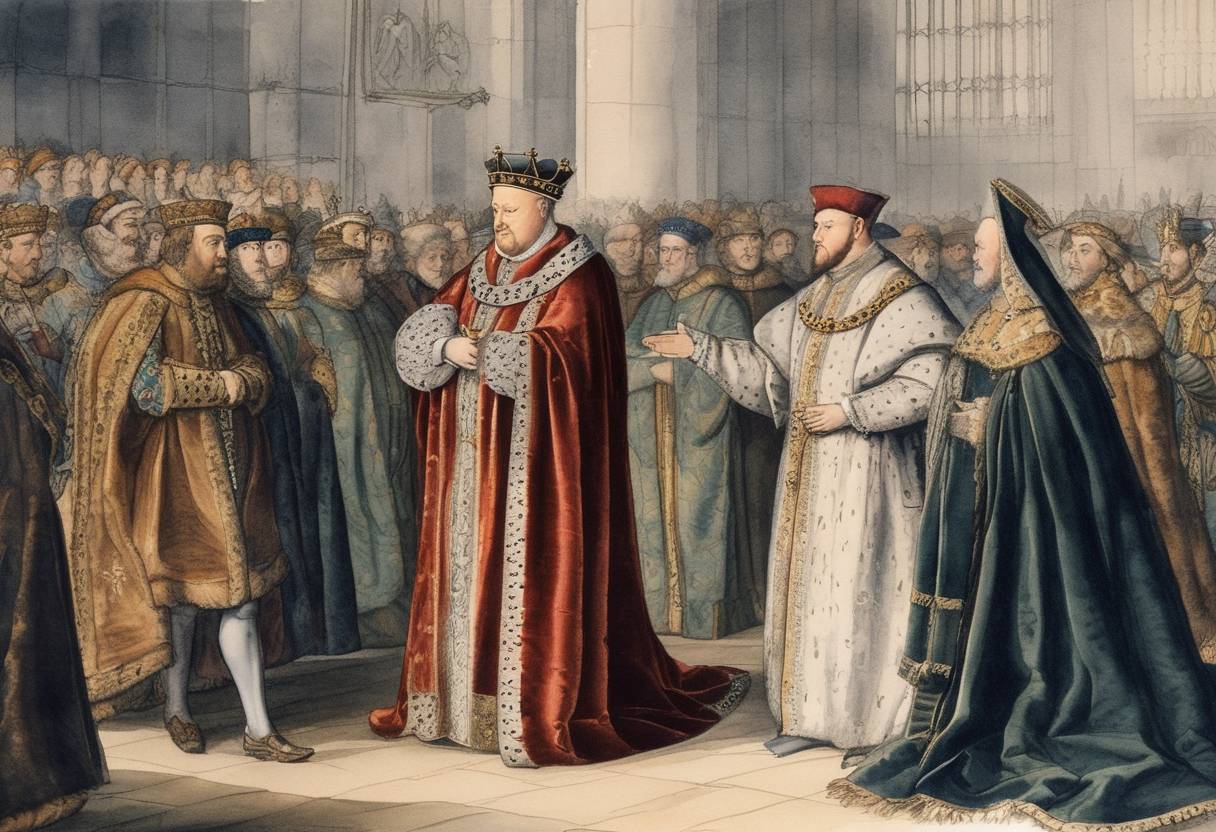
On February 11, 1531, Henry VIII began his journey to becoming recognized as the Supreme Head of the Church of England, a pivotal moment in English and religious history. While the Act of Supremacy itself was formally enacted in 1534, setting the legal foundation for this recognition, the events of February 11, 1531, were crucial in setting this transformative process in motion.
The early 16th century was marked by significant religious tension and reform across Europe. The Catholic Church faced criticism and challenge from reform movements, notably Protestantism led by figures such as Martin Luther. In England, Henry VIII’s desire to annul his marriage to Catherine of Aragon catalyzed a series of events leading to a schism with the Catholic Church.
Henry’s request for an annulment was motivated by his wish to marry Anne Boleyn, hoping she would bear him a male heir. The Pope’s refusal to annul his marriage to Catherine became a point of conflict, pushing Henry toward a radical reassessment of England’s religious alignment.
On this date, the Convocation of Canterbury, the ecclesiastical assembly of the Church in England, was pressured into acknowledging Henry VIII as the “Supreme Head” of the Church. This came after charges were threatened against the English clergy under the praemunire statute, which prohibited the authority of foreign powers (such as the Pope) over England. In a strategic move, the clergy conceded to Henry’s demands, granting him unprecedented control over religious matters in England.
It is important to note that while this event marked Henry’s recognition as the supreme religious authority in practical terms, the formal legal establishment through the Act of Supremacy would occur a few years later.
This recognition set in motion the English Reformation, transforming England from a Catholic nation under the influence of the Pope to an independent Protestant entity with the monarchy at its spiritual and temporal helm. This move had profound implications:
The events of February 11, 1531, and the subsequent Act of Supremacy fundamentally shifted the religious landscape of England, illustrating the intricate dance between politics and religion during this era and leaving a lasting legacy on English governance and society.
Source: en.wikipedia.org