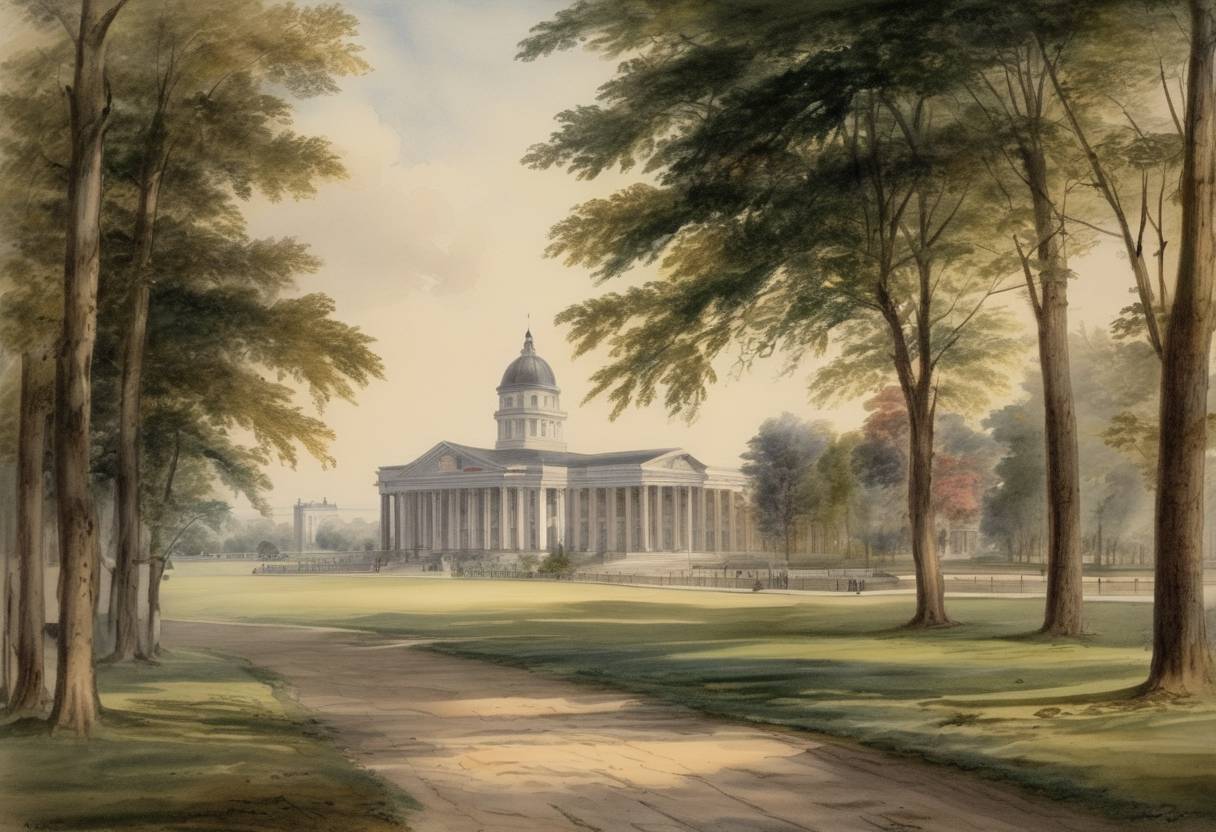
First Graduating Class of the U.S. Naval Academy - June 10, 1854
On June 10, 1854, the first class graduated from the United States Naval Academy, initially established as the Naval School in 1845 in Annapolis, Maryland. This marked a significant milestone in the institutionalization of naval education in the United States, reflecting a commitment to more structured and formal training for naval officers.
Background
- Establishment: The Naval School was founded on October 10, 1845, by Secretary of the Navy George Bancroft. It was set up on the grounds of the former Fort Severn in Annapolis.
- Purpose: The institution aimed to standardize the training of midshipmen and provide a comprehensive curriculum encompassing both practical and theoretical education in naval science and engineering.
The First Graduating Class
- Class Composition: The inaugural graduating class consisted of 10 officers. This first cohort set the standard for future graduates who would go on to serve with distinction in the U.S. Navy.
- Curriculum Highlights: The students underwent a rigorous academic program that included mathematics, navigation, gunnery, steam, chemistry, English, natural philosophy, and French.
Legacy
- Transformation to the Naval Academy: The institution evolved from the Naval School into the U.S. Naval Academy in 1850, receiving a formal renaming and expansion of its curriculum.
- Impact on Naval Training: The academy became the cornerstone of officer training in the United States Navy. Its establishment was complemented by continuous advancements in military education, adapting to technological and strategic developments.
Historical Significance
- The graduation of the first class reinforced the importance of professional military education in maintaining a capable and ready naval force. It laid the groundwork for the training of future generations of naval leaders who would play key roles in American military history.
This event was a pivotal step in the professionalization of the U.S. Navy, establishing a legacy of excellence that continues to this day.