First Official Census of Canada - February 14, 1851
1851 · Ottawa, Canada
The first official 'Census of Canada' was held by the Province of Canada, recording a population of 2,414,519.
June 18, 1847
The village of Merrickville, initially Merrick's Mills, is incorporated in Ontario, Canada, enhancing its status amid its burgeoning industrial activity.
Merrickville, Canada | Province of Canada
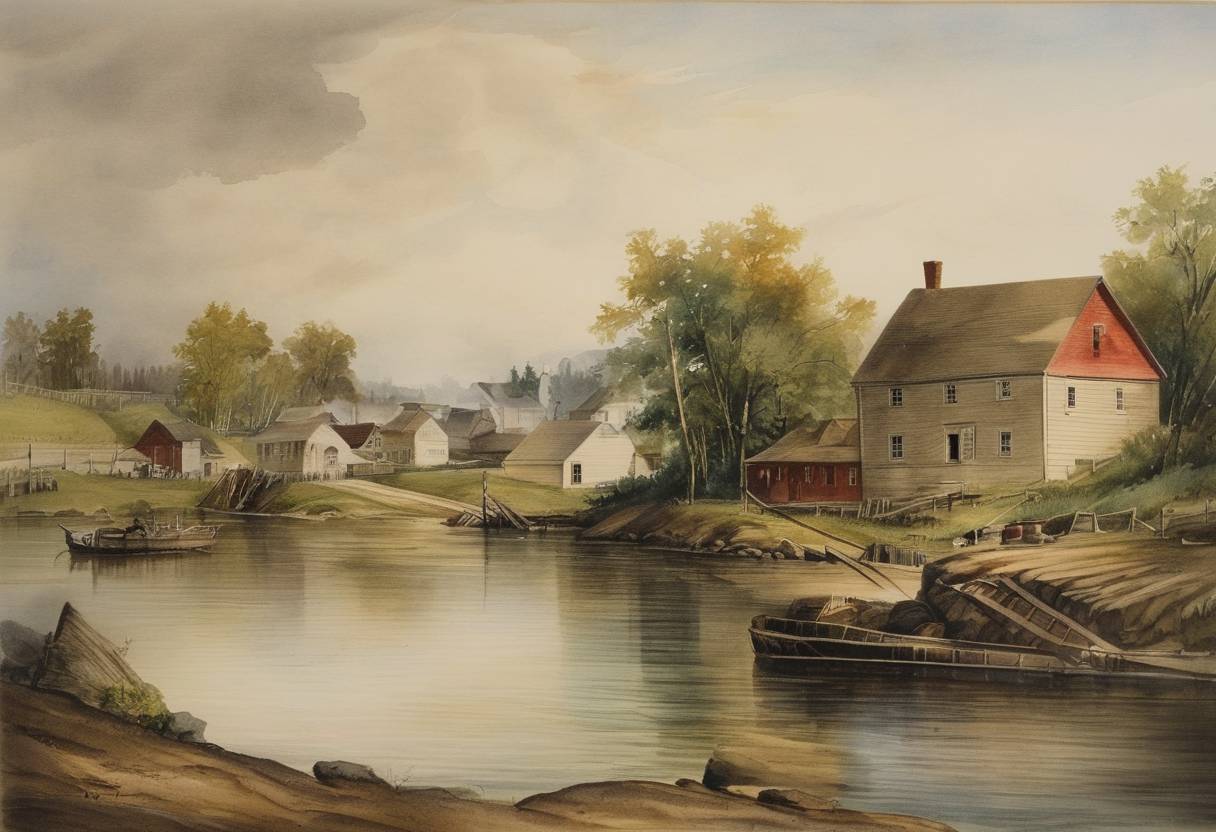
On June 18, 1847, the village of Merrickville, then known as Merrick’s Mills, was formally incorporated in Ontario, Canada. This incorporation was a significant development in the village’s history, marking its evolution from a small milling settlement to an established community with a formal civic structure.
Merrickville’s origins can be traced back to the early 19th century when a sawmill and gristmill were established by William Merrick on the banks of the Rideau River. These mills were pivotal in the village’s development, effectively laying the foundation for a bustling community. The village was strategically positioned along the Rideau Canal, which was completed in 1832 and significantly boosted trade and movement in the region.
The mid-19th century was a period of burgeoning industrial activity in Merrickville. The incorporation on June 18, 1847, recognized the growing economic importance of the village, which had become a vital node for commerce and transportation along the Rideau Canal. The canal itself was part of a larger network intended to secure and enhance trade routes within Canada, and Merrickville’s good standing along this route contributed to its economic growth.
Following its incorporation, Merrickville continued to thrive as a center of local industry and trade. The establishment of a formal municipal government allowed for better organization and governance, fostering further growth and development. Merrickville’s heritage, encompassing its early industrial roots and unique position along the Rideau Canal, contributes to its reputation today as a historic and tourist destination.
The incorporation of Merrickville can be seen as part of a broader trend during the 19th century, where many Canadian communities were transitioning from informal settlements to formally recognized municipalities. This period marked an era of regional development, fueled by infrastructure projects like canals and railways, which were crucial in shaping the economic landscape of Ontario and Canada as a whole.
Merrickville’s history as a milling and industrial center underscores the transformative power of such infrastructural advancements, highlighting the interplay between regional resources and technological progress in Canadian history.
Source: www.merrickville-wolford.ca