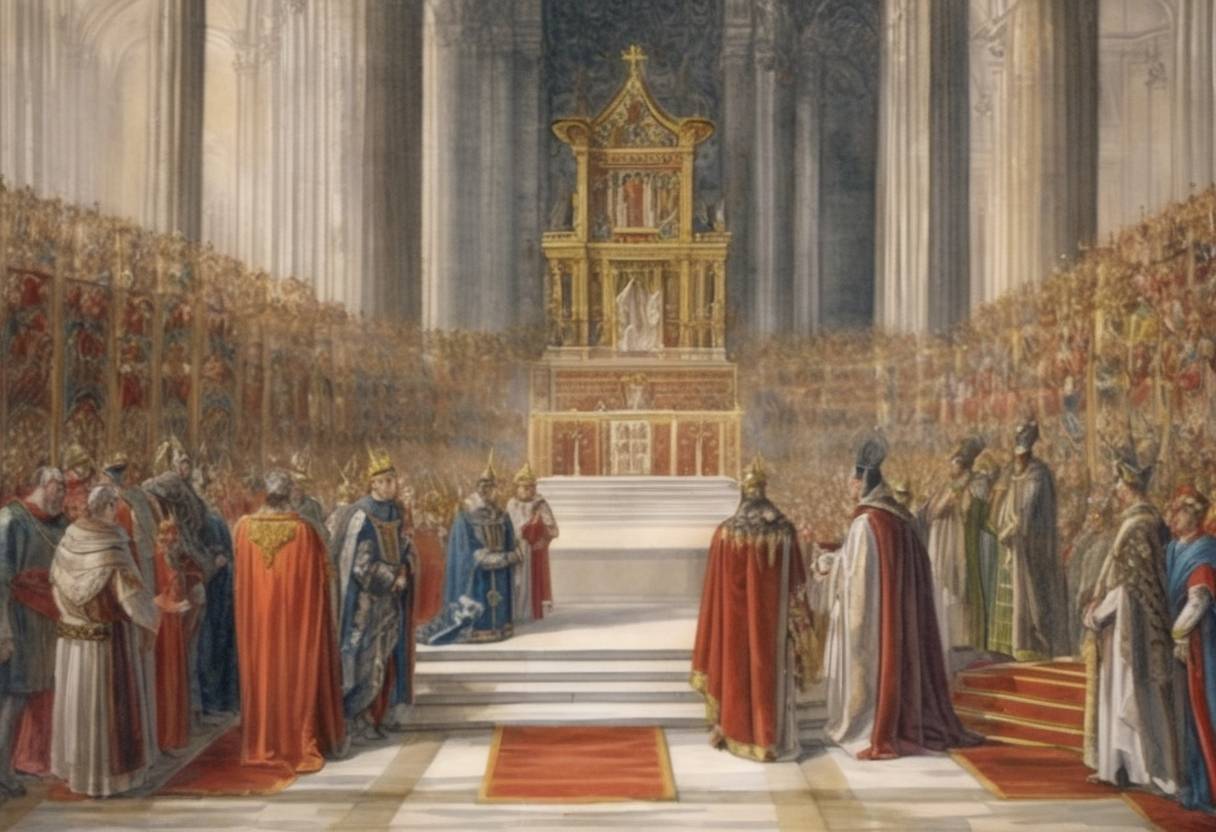
The Privilegium Constitutum and the Investiture Controversy
On April 10, 1111, the Investiture Controversy reached a significant turning point with the issuance of the Privilegium Constitutum by Pope Paschal II under duress from Henry V, Holy Roman Emperor. This agreement granted the emperor substantial authority over the appointment of church officials within the Holy Roman Empire, effectively shifting the power dynamics between the papacy and the secular rulers.
Context
The Investiture Controversy was a fundamental conflict between the papacy and the Holy Roman Empire regarding who held the authority to appoint local church officials such as bishops and abbots. Traditionally, emperors and kings had played a dominant role in such appointments, a practice known as lay investiture. This issue came to a head starting in the late 11th century, especially under Pope Gregory VII, who opposed secular influence over church appointments, advocating for papal primacy and clerical independence.
Events Leading to the 1111 Agreement
Henry V, who became Holy Roman Emperor in 1111, followed in his father, Henry IV’s footsteps in his struggle against the papacy. Seeking to secure his realm and influence, particularly in religious appointments, Henry V marched into Italy in 1110, capturing Pope Paschal II. Holding the pope and other high-ranking church leaders captive, Henry used this position to force a favorable agreement.
The Privilegium Constitutum
The Privilegium Constitutum was essentially a coerced concession where Paschal II granted Henry V the right to invest bishops and abbots with their temporal rights and benefits. This document marked a temporary victory for imperial authority over the church, granting the emperor the ability to influence ecclesiastical appointments considerably. However, it came at a great personal and institutional cost for Paschal, as many saw this as a capitulation.
Aftermath and Historical Significance
Despite the issuance of the Privilegium Constitutum, the settlement was short-lived. Facing backlash from the broader church community, Pope Paschal II renounced the agreement, labeling it void later the same year. The controversy over investiture would continue until the Concordat of Worms in 1122, which marked a compromise between the papacy and the emperor. It ultimately delineated the spiritual and temporal authority that led to a lasting balance of power within the medieval Christian world.
The events surrounding the Privilegium Constitutum exemplify the intense power struggles of the Middle Ages, and its short-lived nature underscores the complexity of the church-state relationship during this period. The prolonged Investiture Controversy and its resolution were pivotal in shaping the authority and structure of the medieval church, setting precedents for the interaction between religious and secular authorities in European history.