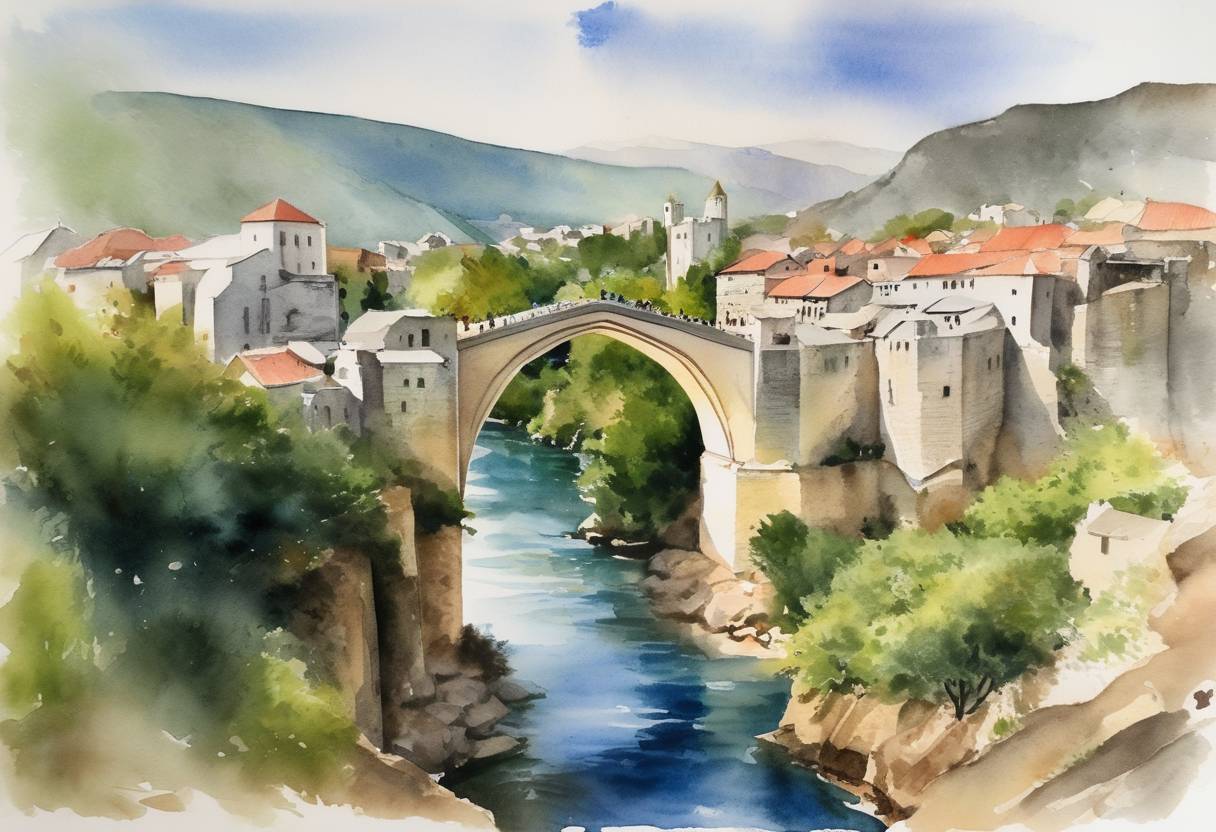
Destruction of Stari Most on November 9, 1993
Background
Stari Most, meaning “Old Bridge,” was a renowned Ottoman-era bridge in the city of Mostar, Bosnia and Herzegovina. Built in the 16th century under the commission of Suleiman the Magnificent, it symbolized architectural ingenuity and was considered a masterpiece of Islamic architecture in the Balkans. The bridge connected the two sides of the Neretva River, serving as a vital link for the region’s trade, culture, and community.
Bosnian War Context
The Bosnian War, which began in 1992, was a complex conflict involving Bosniaks, Croats, and Serbs after the breakup of Yugoslavia. Ethnic tensions within Bosnia and Herzegovina deeply fractured societies, leading to severe and widespread human suffering and destruction. Mostar, historically known for its multicultural and multiethnic heritage, became a significant battleground, particularly for Bosniak and Croat factions.
Events of November 9, 1993
On November 9, 1993, the strategic Stari Most bridge was deliberately destroyed by Croat forces during intense fighting in the region. Artillery fire caused the once-robust structure to collapse into the Neretva River below, marking a significant and symbolic loss in the cultural heritage of Bosnia and Herzegovina. The cataclysmic event highlighted the widespread cultural destruction characteristic of the war.
Aftermath and Significance
The destruction of Stari Most had profound implications. It not only dealt a blow to Mostar’s physical landscape but also to its cultural and social fabric, representing the divisiveness and devastation of the conflict. Its collapse became an emblem of the broader destruction wrought by the war.
In the years following the cessation of hostilities, there were concerted efforts to rebuild the bridge, symbolizing reconciliation and hope. The reconstructed bridge was inaugurated in 2004 and was recognized by UNESCO as a World Heritage Site in 2005, underscoring its importance as a symbol of peace and a reminder of the region’s rich multicultural past.
Broader Impact
Stari Most’s destruction and subsequent restoration reflect the broader themes of loss, reconciliation, and recovery in post-conflict contexts. It remains a poignant symbol of resilience amid adversity and a testament to the enduring significance of cultural heritage in the face of conflict.