Ghana's Independence: March 6, 1957
1957 · Accra, Ghana
Ghana becomes the first African country to gain independence from colonial rule, with Kwame Nkrumah as its first Prime Minister.
July 1, 1960
Ghana becomes a republic and Kwame Nkrumah becomes its first President.
Accra, Ghana | Government of Ghana
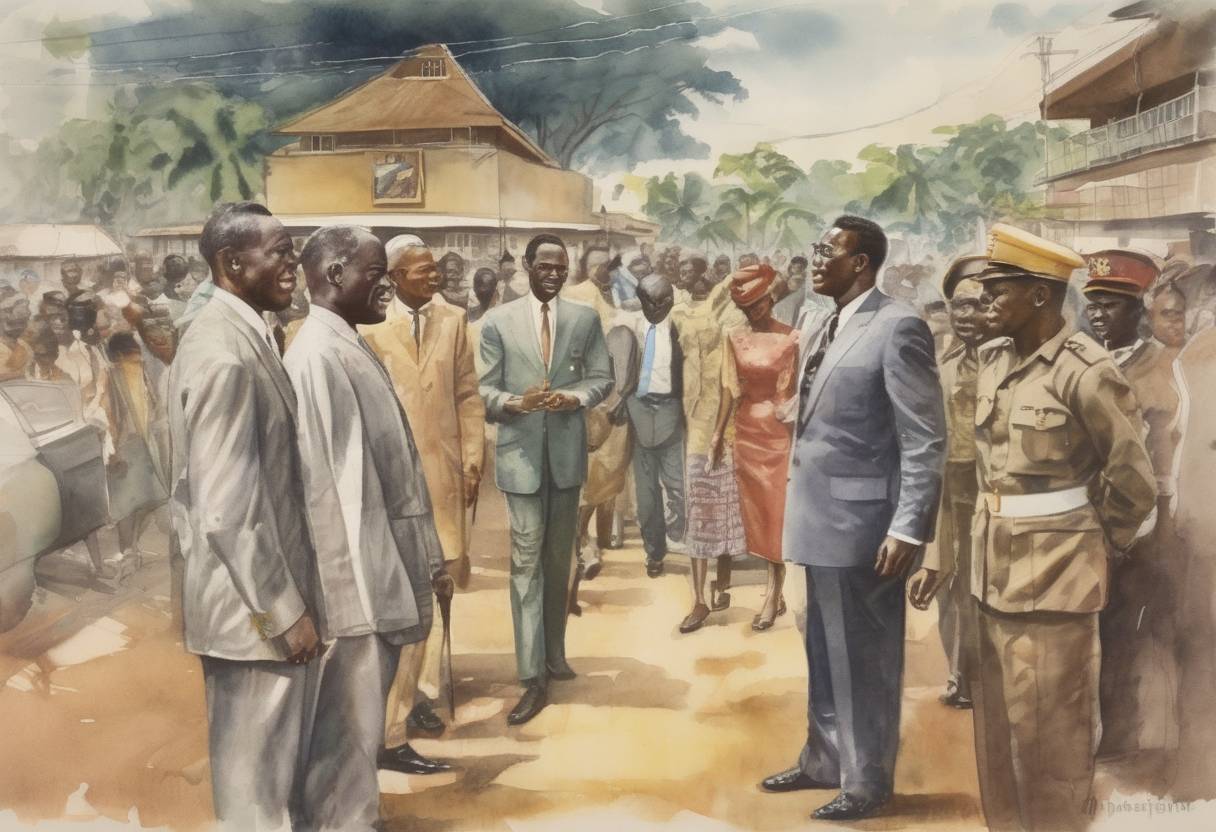
On July 1, 1960, Ghana marked a significant milestone in its history by becoming a republic, with Kwame Nkrumah as its first President. This event was a pivotal moment in the post-colonial history of Africa and represented a major step in Ghana’s journey towards full sovereignty and self-governance.
Ghana, formerly known as the Gold Coast, was the first African country south of the Sahara to gain independence from colonial rule. This independence was achieved on March 6, 1957, under the leadership of Kwame Nkrumah and his political party, the Convention People’s Party (CPP). However, even after independence, Ghana remained a constitutional monarchy with Queen Elizabeth II as the head of state, represented by a Governor-General.
The transition to a republic was driven by Nkrumah’s vision of complete political autonomy and his desire to eliminate any remaining colonial influence. A referendum was held on April 27, 1960, to decide whether Ghana should become a republic and adopt a new constitution. The proposal received overwhelming support, with approximately 88% of voters in favor.
Following the successful referendum, the new constitution came into effect on July 1, 1960, officially establishing Ghana as a republic. This change abolished the position of Governor-General and replaced it with an executive presidency.
Kwame Nkrumah, who had been serving as Prime Minister since independence, was elected as the first President of Ghana. His presidency marked the beginning of a new era in Ghanaian politics. Nkrumah was a prominent advocate for Pan-Africanism and sought to unite African countries against colonialism and imperialism.
Under Nkrumah’s leadership, Ghana pursued policies aimed at rapid industrialization and modernization. He initiated several ambitious projects, including the construction of the Akosombo Dam, which was intended to provide hydroelectric power and stimulate economic growth.
Ghana’s transition to a republic was a significant event in the broader context of African decolonization. It inspired other African nations to pursue independence and self-governance. Nkrumah’s vision and leadership played a crucial role in the Pan-African movement, and he became a symbol of African unity and resistance against colonial rule.
However, Nkrumah’s presidency was not without challenges. His increasingly authoritarian style of governance and economic difficulties led to growing discontent. In 1966, Nkrumah was overthrown in a military coup while on a state visit to China and North Vietnam.
The establishment of Ghana as a republic on July 1, 1960, was a landmark event in the history of the nation and the African continent. It marked the consolidation of Ghana’s independence and set the stage for its future political and economic development. Kwame Nkrumah’s presidency, while controversial, left a lasting legacy in the pursuit of African unity and self-determination.
Source: en.wikipedia.org