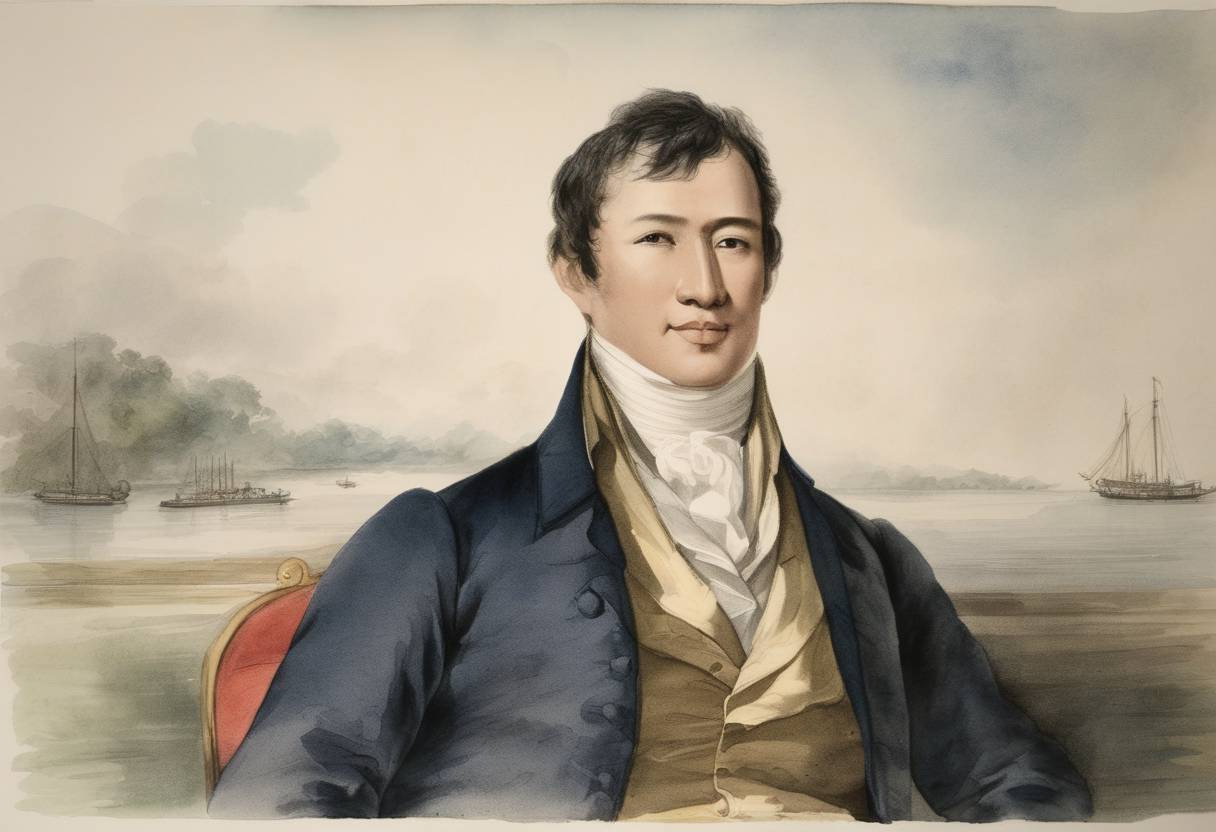
Sir Thomas Stamford Raffles Founds Singapore - February 6, 1819
On February 6, 1819, Sir Thomas Stamford Raffles, representing the British East India Company, formally founded Singapore as a British trading post. This marked a significant development in the colonial history of Southeast Asia and laid the foundation for Singapore to become a major port city.
Context and Background
- Strategic Location: Singapore’s strategic position along the Malacca Strait made it an ideal location for the British, who were seeking to establish a presence in the region to counterbalance Dutch influence and protect their maritime trade routes in Asia.
- Rivalry with the Dutch: Prior to the founding of Singapore, the Dutch controlled much of the trade in the region through a monopoly. The British aimed to challenge this dominance by establishing new trading posts under the East India Company’s control.
Key Events Leading to the Founding
- Arrival of Raffles: Raffles arrived in Singapore on January 29, 1819, aboard the ship Indiana. He recognized the strategic importance of the area immediately.
- Negotiations with Local Rulers: Raffles negotiated with local Malay rulers, Sultan Hussein Shah and the Temenggong Abdu’r Rahman, to establish a British settlement. To solidify British claims, he signed a formal treaty on February 6, 1819.
- Establishment of a Trading Post: The agreement allowed the British to establish a trading post in exchange for a financial compensation and annual tribute to the Sultan. It was agreed that Singapore would become a free trade port, welcoming traders from all over Asia and beyond without the heavy duties that were common in Dutch-controlled ports.
Consequences and Legacy
- Rapid Growth: Singapore rapidly grew as a center of trade due to its free port status, attracting merchants and settlers from various parts of Asia and Europe.
- Colonial Rule: The settlement eventually developed into a major Crown Colony, playing a central role in the maritime trade of the British Empire.
- Cultural Diversity: The founding set the stage for the multicultural society seen in modern Singapore, with diverse communities settling there over time.
Raffles’ founding of Singapore initiated a transformation that propelled the small settlement into a leading global city known for its economic prosperity and strategic importance, an enduring legacy of his vision for the region.