The Battle of Bloody Run: July 31, 1763
1763 · Detroit, United States
The Battle of Bloody Run took place during Pontiac's War, where British forces were ambushed by Native American warriors.
May 7, 1763
Pontiac's War begins with Pontiac laying siege to Fort Detroit as Native American tribes of the Great Lakes region rise against British postwar policies after the French and Indian War.
Detroit, Great Lakes region, British North America | None
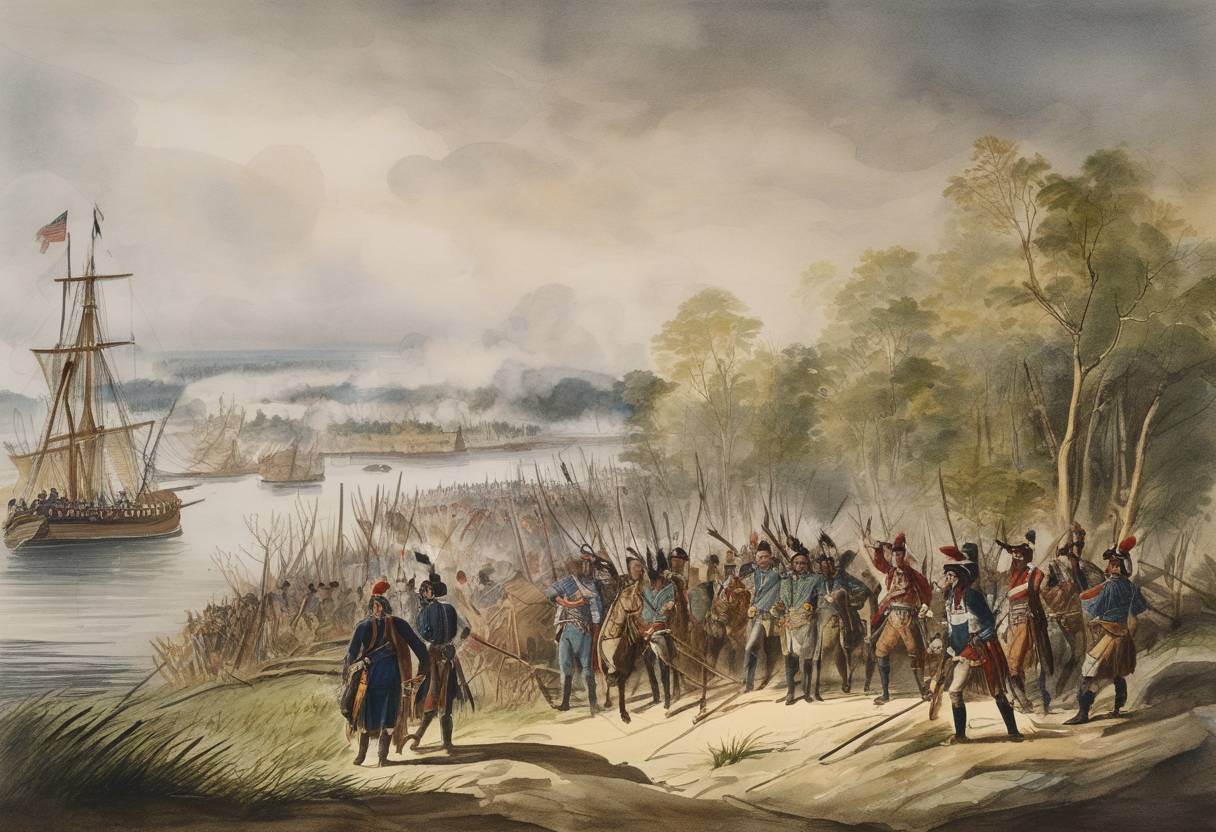
On May 7, 1763, Pontiac’s War was ignited by an event that saw the coalition of Native American tribes, led by Chief Pontiac of the Ottawa, lay siege to Fort Detroit. This marked the beginning of a widespread uprising against British military policies in the Great Lakes region following the end of the French and Indian War.
The roots of the conflict lay in the British victory in the French and Indian War (1754-1763), after which the British took control of French territories in North America. Native American tribes had fostered relatively positive relations with the French, who engaged in extensive trade and largely respected tribal sovereignty. However, British policies shifted significantly after the war.
The British, led by General Jeffrey Amherst, curtailed the gifting of supplies and maintained a more rigid stance on trade with the Native Americans. They imposed restrictions that disrupted traditional economic and social structures, inciting discontent among the tribes.
Pontiac’s War, exemplified by the siege of Fort Detroit, remains a crucial chapter in the history of Native American resistance and a key event in the postcolonial development of North America.
Source: www.britannica.com