Coronation of Philip V of France
1322 · Reims, France
Philip V of France, also known as Philip the Tall, was crowned King of France at Reims Cathedral.
April 2, 1285
Philip III, King of France, known as Philip the Bold, died in Perpignan and was succeeded by his son Philip IV, known as Philip the Fair. This transition marked a continuation of the consolidation of royal power in France.
Perpignan, Kingdom of Majorca (modern-day France) | French Monarchy
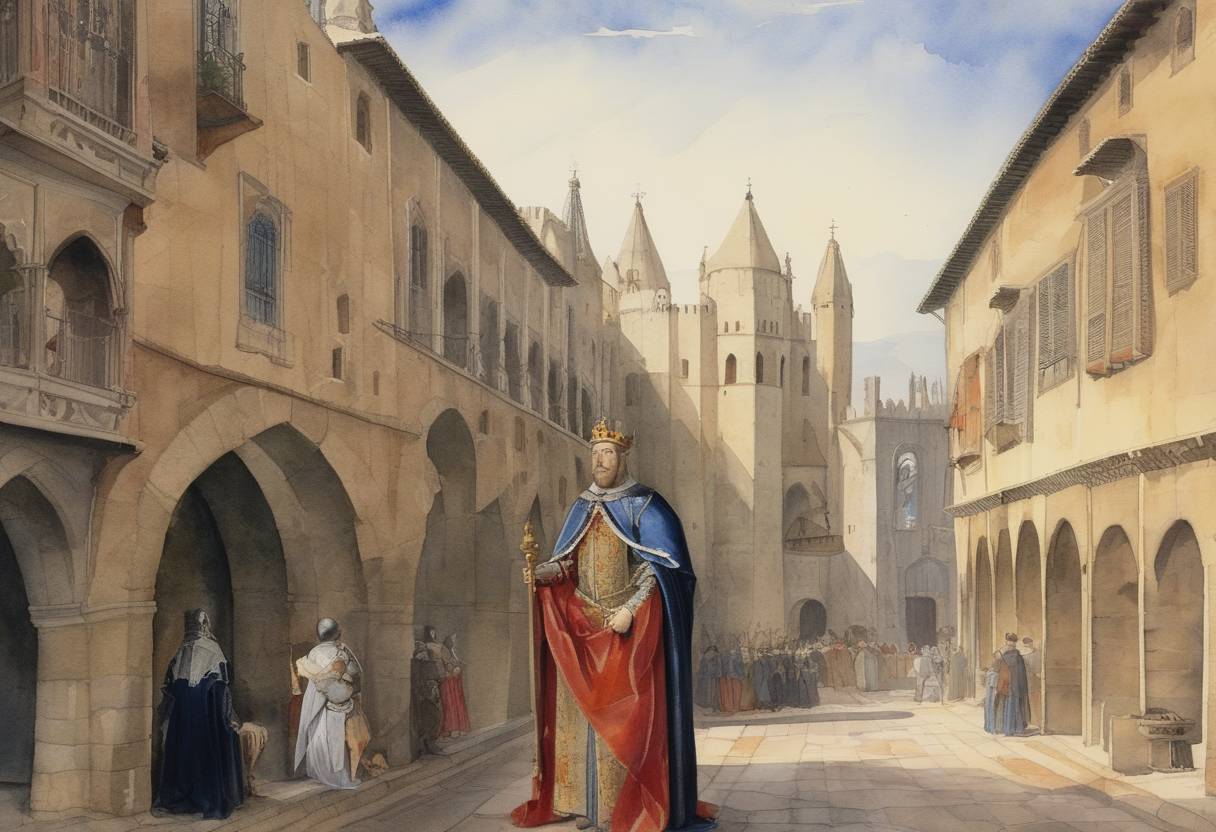
On October 5, 1285, Philip III, known as Philip the Bold, King of France, died in Perpignan, which is located in the present-day region of Occitanie, France. His death marked the end of his reign, which began in 1270 following the death of his father, Louis IX. Philip III’s reign was characterized by attempts to extend royal influence over French territories and by participating in a number of military conflicts, including the Aragonese Crusade, which ultimately led to his demise.
Upon Philip III’s death, the throne was succeeded by his son, Philip IV, known as Philip the Fair. Philip IV’s reign would become notable for the continued consolidation of royal power and the expansion of administrative reforms that strengthened the monarchy.
Philip IV’s ascension to the throne marked a critical juncture in the evolution of French monarchical power. He is often credited with laying the groundwork for a centralized state. His reign witnessed the expansion of royal administrative controls, adaptation of more sophisticated fiscal systems, and implementation of legal frameworks that enhanced the authority of the crown over the nobility and clergy.
The reign of Philip the Fair is particularly remembered for his confrontations with the papacy, which culminated in the arrest of Pope Boniface VIII and the eventual relocation of the papal court to Avignon, inaugurating the period known as the Avignon Papacy. Furthermore, his decision to tax the clergy to fund his wars contributed to tensions between the French monarchy and the Catholic Church. These events were instrumental in setting the stage for the later conflicts of the Hundred Years’ War and the decline of feudal power.
Philip IV’s policies would also begin to alter the social and political fabric of France, introducing more direct royal authority that affected all strata of medieval French society. His legacy includes the integration of territories such as Navarre through strategic marriage alliances, thereby further expanding the French realm.
Source: en.wikipedia.org