Posthumous Execution of Oliver Cromwell's Remains - January 30, 1661
1661 · London, England
Oliver Cromwell's remains were exhumed and subjected to a posthumous execution.
January 24, 1679
King Charles II of England dissolves the Cavalier Parliament after 18 years of rule, marking a significant event in the political history of England.
London, England | English Monarchy
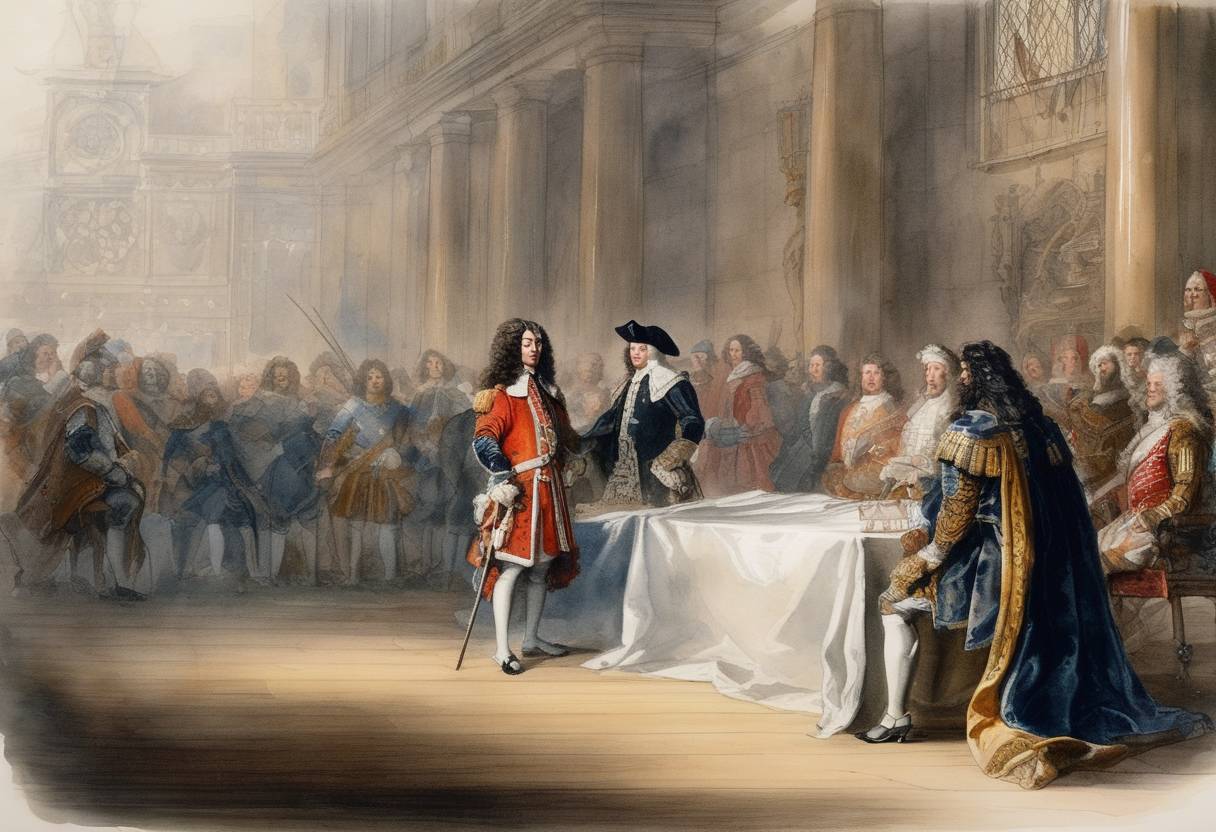
The dissolution of the Cavalier Parliament by King Charles II of England on January 24, 1679, marked a pivotal moment in the political history of England during the Stuart Restoration period. The Cavalier Parliament, which had been convened on May 8, 1661, held the longest continuous session in English parliamentary history until that point, lasting over 18 years.
The Cavalier Parliament was elected in the wake of the English Interregnum, during which the monarchy had been abolished, and England had been declared a commonwealth under Oliver Cromwell. Following Cromwell’s death and the subsequent collapse of the Protectorate, Charles II was restored to the throne in 1660, ushering in a period known as the Restoration.
Initially, the Cavalier Parliament was characterized by its strong Royalist majority, being elected just after the monarchy’s restoration. It primarily sought to strengthen the monarchy and re-establish the authority of the Church of England. However, as time passed, the political climate evolved, marked by increasing tensions over religious and constitutional questions.
Religious Tensions: The Exclusion Crisis, which began in 1679, fueled much of the discontent within the Parliament. It revolved around the attempt to exclude the Catholic Duke of York, James, from the line of succession, heightening the fear of a potential Catholic monarch.
Financial Struggles and Corruption: Constant financial difficulties faced by Charles II’s government and allegations of corruption contributed to the Parliament’s declining effectiveness.
Political Alignments: The formation of political groupings that would evolve into the Whigs and Tories began during this period. The rivalry and competing interests further exacerbated the political instability within the Parliament.
The dissolution of the Cavalier Parliament on January 24, 1679, facilitated the emergence of a new political landscape in England. It allowed for the election of a new parliamentary body, known as the Habeas Corpus Parliament (May-July 1679), which was more amenable to addressing contemporary political issues, including the pressing need for judicial and constitutional reforms.
Most notably, the Exclusion Crisis continued to dominate the political scene even after the dissolution, laying the groundwork for future constitutional developments in England, such as the Bill of Rights 1689. Additionally, the eventual acceptance of James II as king, despite the Exclusion efforts, would lead to the Glorious Revolution of 1688, a crucial moment that shaped the constitutional monarchy.
This dissolution emphasized the dynamic relationship between the monarchy and Parliament, highlighting the gradual movement towards a constitutional framework that balanced royal prerogative with parliamentary authority.
Source: en.wikipedia.org