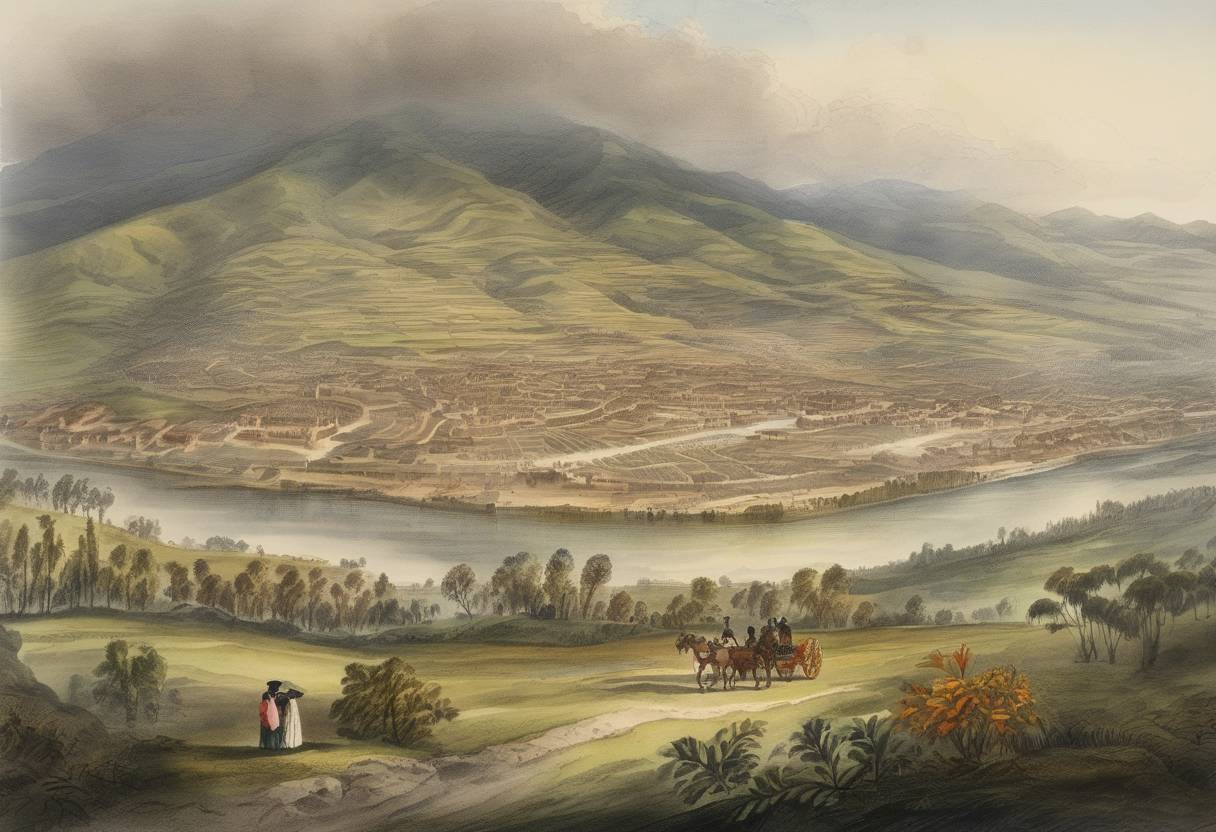
Foundation of the Republic of Ecuador: May 13, 1830
On May 13, 1830, the Republic of Ecuador was founded, marking its independence from Gran Colombia. This significant event in South American history came after a period of political upheaval and transformation in the region.
Historical Context
Gran Colombia was a large state that included present-day Colombia, Venezuela, Ecuador, and Panama. Established in 1819 after the successful Latin American wars of independence against Spanish rule, Gran Colombia was envisioned as a unified entity by its key leader, Simón Bolívar. Despite Bolívar’s aspirations for a united South America, political differences, regional interests, and administrative challenges began to strain the federation.
Steps Towards Independence
In the late 1820s, dissatisfaction with the centralist policies of the Gran Colombian government in Bogotá, compounded by local economic issues and political rivalries, fueled separatist sentiments in Quito, the city that would become Ecuador’s capital. The southern provinces of Gran Colombia, particularly those corresponding to present-day Ecuador, sought greater autonomy and self-determination.
The decisive move towards independence occurred following the election of a constituent assembly in Quito, where representatives, disenchanted with Gran Colombia’s governance, deliberated on their political future. Led by prominent figures like Juan José Flores, one of Bolívar’s loyal generals, the assembly ultimately favored establishing an independent republic.
Declaration and Consequences
On May 13, 1830, the constituent assembly formally declared the independence of the Republic of Ecuador. Juan José Flores was appointed as the first president, setting the foundations for the new nation. This moment marked a significant shift in the geopolitics of South America as Ecuador charted its own course separate from the larger Gran Colombian framework.
The establishment of Ecuador as an independent republic was part of a broader pattern of fragmentation in the region, as Venezuela had similarly declared its independence the previous year. Though initially facing internal conflicts and struggles for political stability, Ecuador’s independence was eventually recognized by neighboring countries and solidified in the following years.
Broader Historical Impact
Ecuador’s foundation impacted the geopolitical landscape of South America, highlighting the challenges of large federations managing diverse regional interests. This event underscored the complexities of post-colonial nation-building and the enduring quest for sovereign governance in the face of colonial legacies.
The Republic of Ecuador’s independence demonstrated the dynamic nature of Latin American political developments in the 19th century, paving the way for future national consolidation and identity formation. Today, Ecuador remembers May 13, 1830, as a pivotal moment in its national history, marking the beginning of its journey as an independent country.