The Treaty of Plessis-les-Tours - June 26, 1579
1579 · Plessis-les-Tours, France
The Treaty of Plessis-les-Tours was signed, forming the foundation of the Union of Utrecht that would lead to the independence of the Dutch Republic from Spanish rule.
January 23, 1579
The Act of Abjuration, declaring the independence of the northern Netherlands from Spain, was ratified.
The Hague, Netherlands | States General of the Netherlands
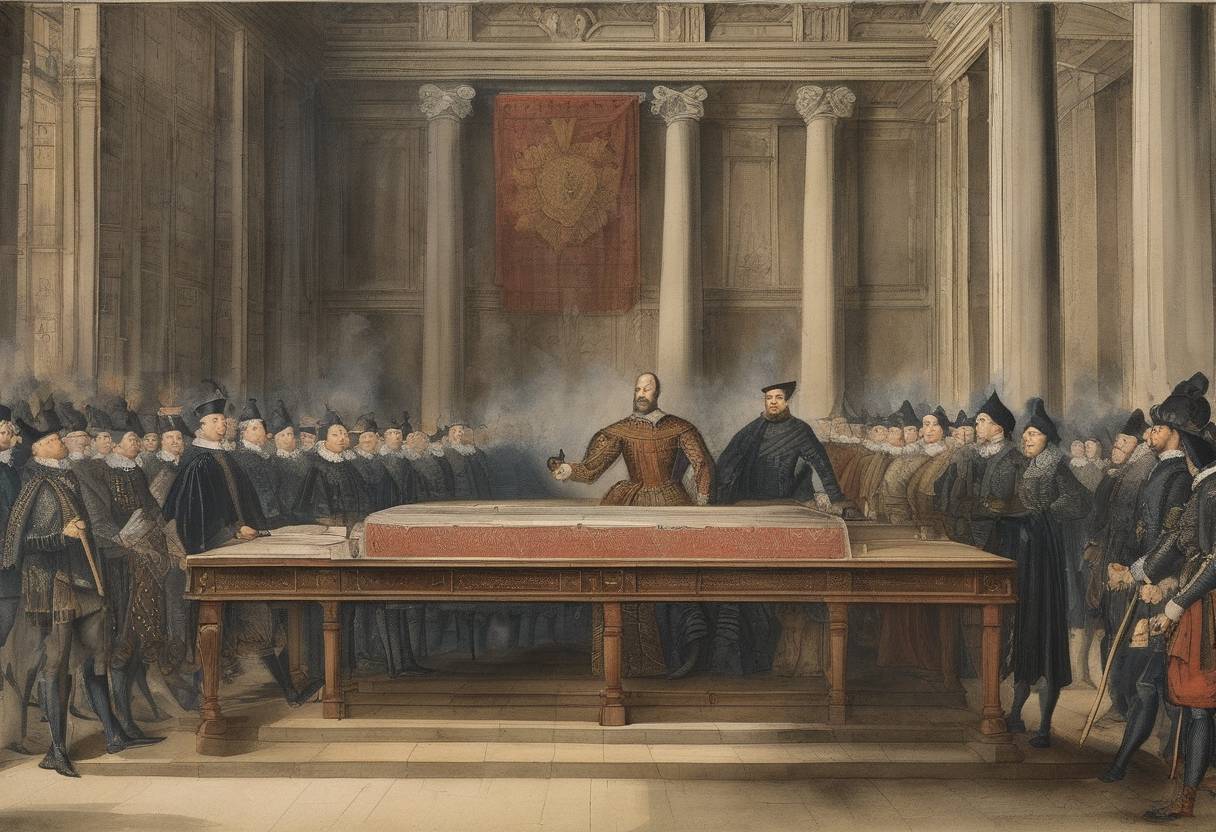
While the Act of Abjuration is a pivotal moment in the history of Dutch independence, it’s essential to clarify the specific timeline for accuracy. The Act of Abjuration, a declaration of independence by the northern Netherlands from Spanish rule, was actually ratified not on January 23, 1579, but later on July 26, 1581.
The Act of Abjuration emerged from a complex backdrop of political and religious tensions between the Habsburg rulers of Spain and the provinces that would become the Netherlands. By the mid-16th century, Protestant Reformation ideas had gained popularity in the region, clashing with the strict Catholic orthodoxy enforced by King Philip II of Spain. Resistance against Spanish rule intensified due to increasing taxation and repression of religious freedom, leading to the Eighty Years’ War (1568–1648).
Initially, several attempts at reconciliation were made, including the Pacification of Ghent in 1576, aiming to unite the provinces against Spanish rule. However, these agreements were short-lived due to internal religious and political divisions.
The Union of Utrecht, signed on January 23, 1579, laid the groundwork for unified opposition against Spain by aligning several northern provinces, committed to defending their autonomy and religious freedoms.
By the time the Act of Abjuration was declared in 1581, the provinces formally renounced their allegiance to Philip II. This act marked a decisive break and is often considered the foundation of Dutch independence, albeit full recognition came much later with the Treaty of Westphalia in 1648.
The Act stated that a ruler who fails his subjects and acts as a tyrant loses his right to govern, reflecting emerging Enlightenment concepts of sovereignty and the right to resist despotism.
Although the Union of Utrecht occurred on January 23, 1579, the ratification of the Act of Abjuration didn’t happen on that date. This distinction is critical for understanding the timeline and evolution of Dutch independence, demonstrating the gradual assertion of defiance against oppressive rule and the enduring quest for self-determination.
Source: en.wikipedia.org