Democratic National Convention Nominates Franklin D. Roosevelt for Third Term
1940 · Chicago, United States
The Democratic National Convention nominates Franklin D. Roosevelt for an unprecedented third term as President of the United States.
July 24, 1897
A 24-year-old William Jennings Bryan delivers his famous 'Cross of Gold' speech at the Democratic National Convention in Chicago, leading to his nomination for President.
Chicago, United States | Democratic National Convention
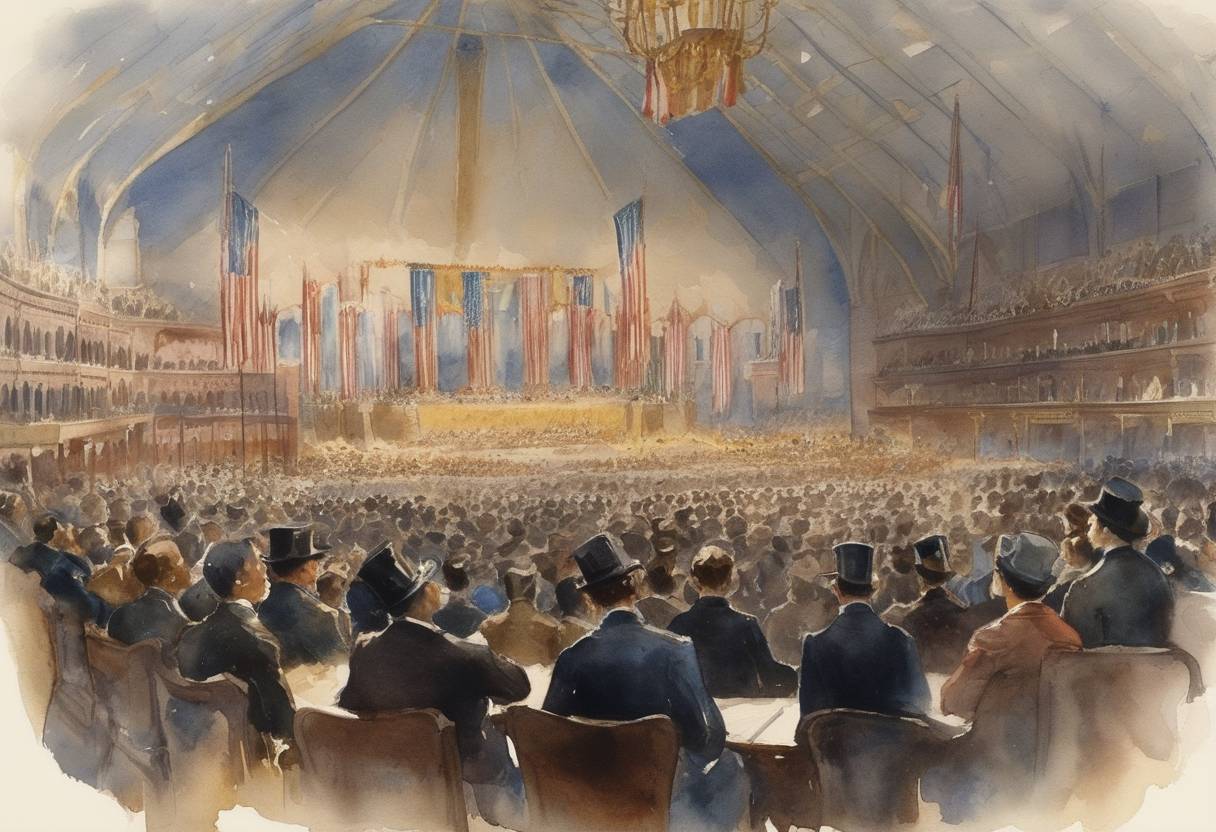
The “Cross of Gold” speech by William Jennings Bryan did not occur on July 24, 1897. Instead, it took place on July 9, 1896, at the Democratic National Convention in Chicago. This speech was instrumental in securing Bryan’s nomination as the Democratic candidate for President.
During the late 19th century, America was embroiled in a significant economic debate over monetary standards. The country was divided between those supporting the gold standard, which favored deflationary policies benefiting creditors and industrialists, and advocates of bimetallism, who argued for the free coinage of silver to increase money supply and ease the economic burdens on farmers and debtors.
William Jennings Bryan, a former Congressman from Nebraska, delivered the “Cross of Gold” speech as a rallying cry for the proponents of silver. His eloquent and passionate argument against the gold standard resonated with many Americans suffering economic hardship. Bryan famously concluded the speech by declaring, “You shall not crucify mankind upon a cross of gold,” effectively solidifying his position as a leader of the silver movement.
Nomination: Bryan’s speech propelled him to the forefront of the Democratic Party, and he received the nomination for the presidency at the convention. At 36 years old, he became the youngest presidential nominee of a major party in United States history at that time.
Election Campaign: Bryan conducted an extensive campaign, appealing directly to the American populace with his oratory skill and populist message. Despite his efforts and the wide support among rural and silver-supporting regions, he lost the election to Republican candidate William McKinley, who supported the gold standard.
Legacy: The speech remains one of the most famous in American political history, underscoring the power of rhetoric in shaping political discourse. Bryan’s advocacy for bimetallism highlighted the economic rifts in the country and set the stage for ongoing debates about economic policy and social justice.
The “Cross of Gold” speech was a pivotal moment in American politics, encapsulating the economic struggles of the era and turning Bryan into a significant political figure. Though unsuccessful in his presidential bid, Bryan’s impact on American politics and policy debates endured, influencing future generations and solidifying his place in history.