NASA's Mars Exploration Rover Spirit Lands on Mars
2004 · Mars, N/A
NASA's Mars Exploration Rover Spirit successfully lands on Mars, beginning its mission to explore the Martian surface.
September 3, 1976
The Viking 2 spacecraft landed on Mars, becoming the second spacecraft to successfully land on the planet and send back images.
Mars, N/A | NASA
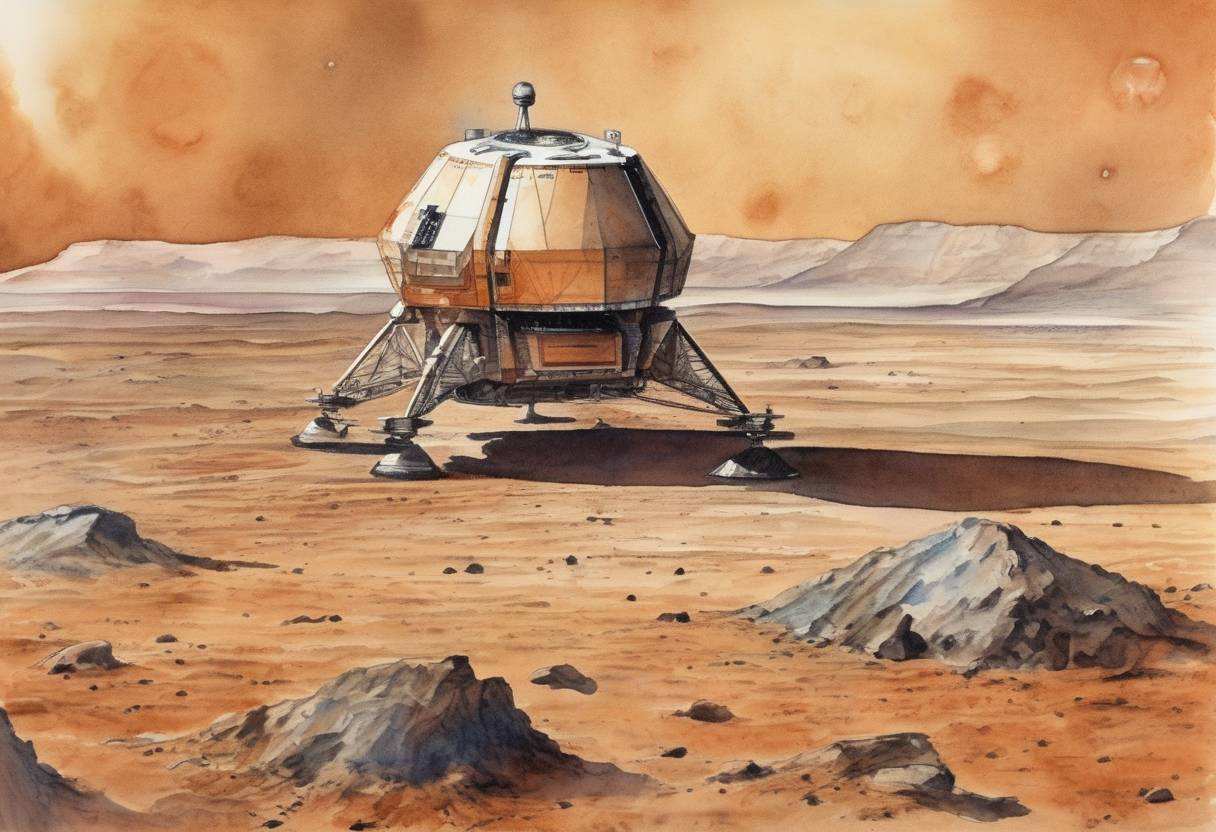
On September 3, 1976, the Viking 2 spacecraft successfully landed on Mars, marking a significant milestone in space exploration. It became the second spacecraft to achieve a successful landing on the Martian surface and transmit images back to Earth, following its predecessor, Viking 1, which landed earlier in July 1976.
The Viking program was initiated by NASA with the primary goal of exploring Mars and searching for signs of life. The program consisted of two spacecraft, Viking 1 and Viking 2, each comprising an orbiter and a lander. These spacecraft were designed to conduct a comprehensive study of the Martian surface and atmosphere.
Viking 2’s lander touched down in Utopia Planitia, a region chosen for its relatively flat terrain, which was deemed suitable for a safe landing. Upon landing, the spacecraft began its mission by deploying its instruments to conduct scientific experiments and capture images.
The Viking missions, including Viking 2, were pivotal in shaping our understanding of Mars. They provided the first direct analysis of the Martian environment and laid the groundwork for future exploration. The data collected by Viking 2 continues to be a reference point for scientists studying Mars.
In conclusion, the Viking 2 landing on September 3, 1976, was a landmark achievement in space exploration, contributing significantly to our understanding of Mars and setting the stage for future missions to the Red Planet.
Source: en.wikipedia.org