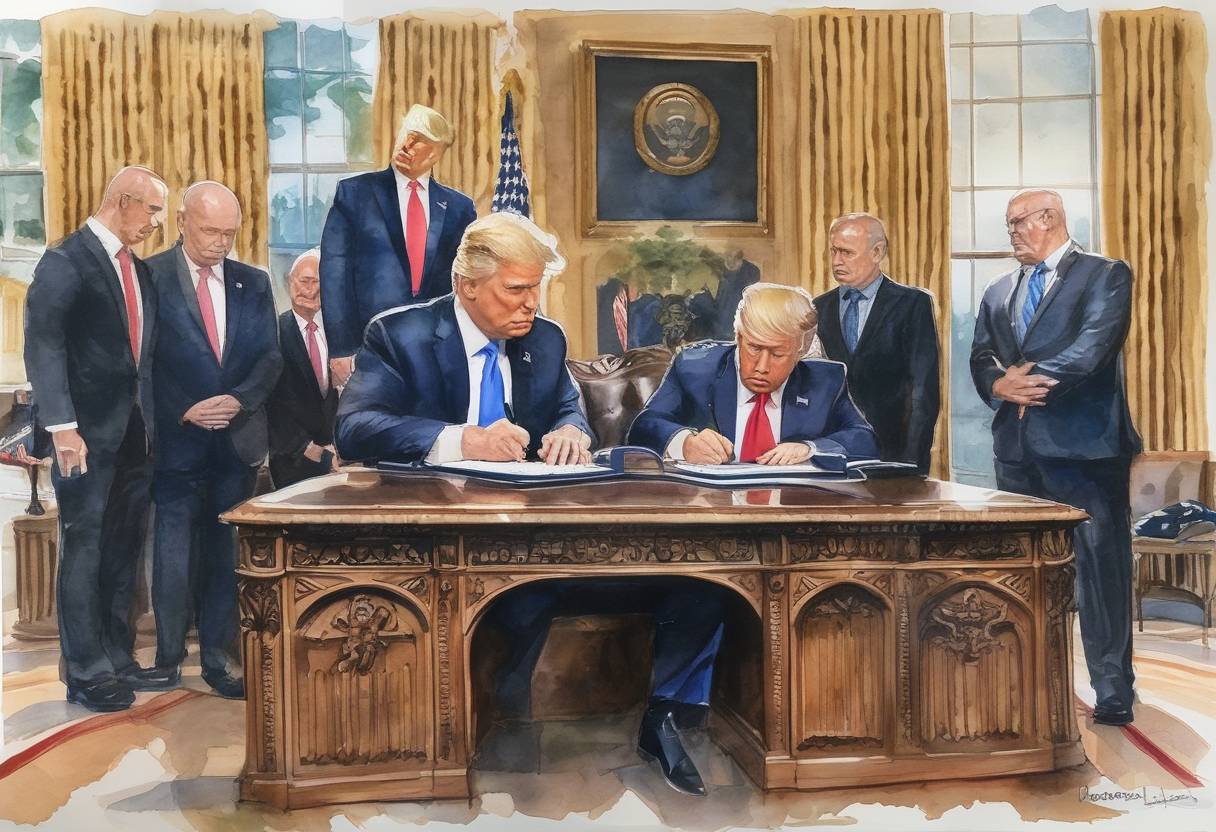
Executive Order 13769: Protecting the Nation from Foreign Terrorist Entry into the United States
On January 27, 2017, U.S. President Donald Trump signed Executive Order 13769, titled “Protecting the Nation from Foreign Terrorist Entry into the United States.” This executive order marked a significant and controversial moment in U.S. immigration policy, often referred to as the “travel ban.”
Key Provisions of the Executive Order
Temporary Ban on Entry: The order imposed a 90-day ban on entry into the United States for citizens from seven predominantly Muslim countries: Iran, Iraq, Libya, Somalia, Sudan, Syria, and Yemen.
Suspension of Refugee Admissions: It also suspended the U.S. Refugee Admissions Program for 120 days, with an indefinite ban on Syrian refugees until further notice.
Reduction in Refugee Admissions: The order reduced the number of refugees to be admitted to the United States in 2017 to 50,000, down from the previous target of 110,000.
Review and Vetting Procedures: The order called for a review of the visa and refugee vetting processes to enhance security measures.
Context and Rationale
National Security Concerns: The Trump administration justified the executive order as a necessary measure to protect national security and prevent potential terrorist attacks. It argued that the countries listed were either state sponsors of terrorism or had insufficient vetting procedures.
Campaign Promise: The order fulfilled a campaign promise by Trump to implement “extreme vetting” of immigrants and refugees from countries deemed to pose a security risk.
Protests and Legal Challenges: The order sparked widespread protests at airports and cities across the United States. It faced immediate legal challenges, with critics arguing that it discriminated against Muslims and violated constitutional rights.
Confusion and Implementation Issues: The sudden implementation led to confusion and chaos at airports, with travelers being detained or sent back despite holding valid visas or green cards.
Judicial Intervention: Several federal judges issued temporary restraining orders, blocking parts of the executive order. The legal battles culminated in significant court rulings that shaped the order’s implementation.
Broader Historical Significance
Debate on Immigration Policy: Executive Order 13769 intensified the national debate on immigration policy, national security, and religious freedom in the United States.
Subsequent Orders and Revisions: The order underwent revisions and was replaced by subsequent executive orders and proclamations, which adjusted the list of affected countries and addressed legal concerns.
Supreme Court Ruling: In June 2018, the U.S. Supreme Court upheld a version of the travel ban, ruling that it fell within the president’s authority to regulate immigration.
Executive Order 13769 remains a pivotal moment in the Trump administration’s approach to immigration and national security, reflecting broader tensions and debates within American society.