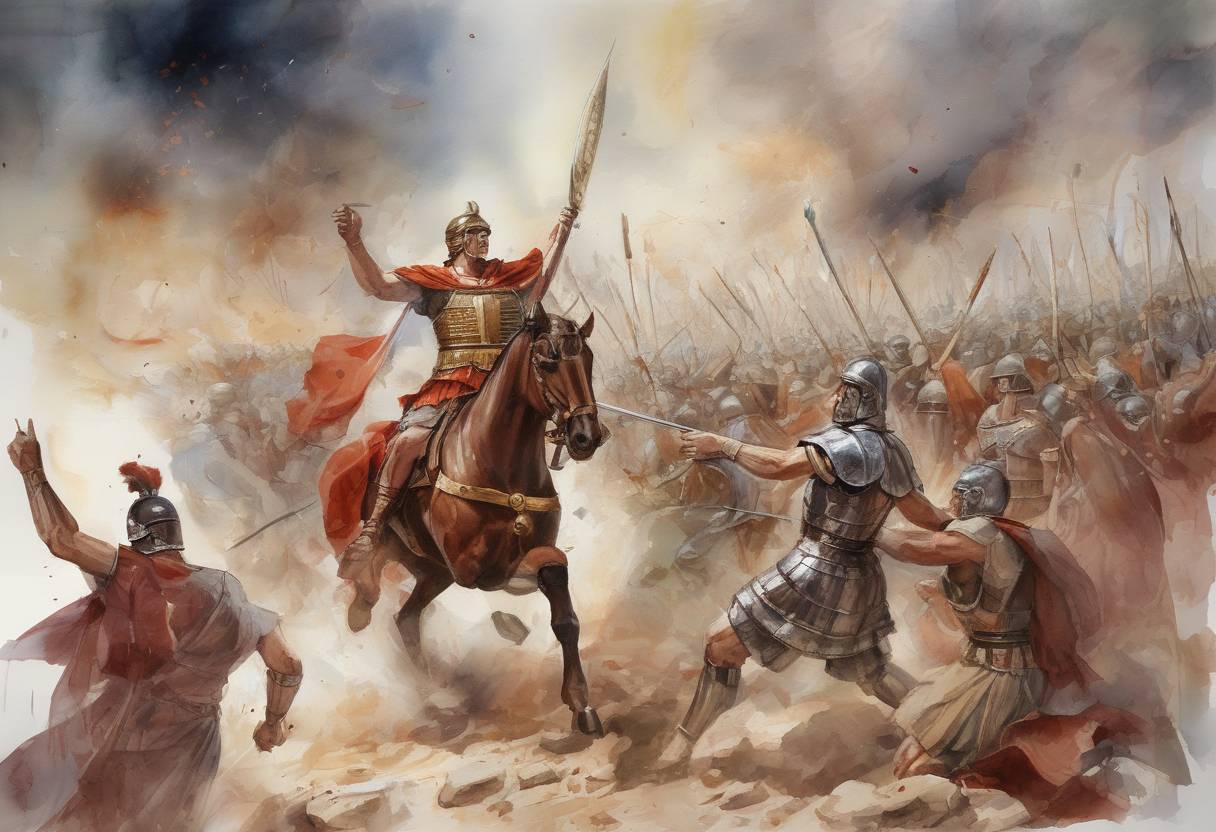
The Battle of Chrysopolis: Constantine’s Consolidation of Power
On September 18, 324, a pivotal moment in Roman history unfolded as Constantine the Great defeated Licinius at the Battle of Chrysopolis. This victory was crucial in consolidating Constantine’s control over the entire Roman Empire, marking the end of a protracted civil war and setting the stage for significant transformations within the empire.
Context Leading to the Battle
The Roman Empire in the early 4th century was marked by internal divisions and power struggles. Following the abdication of Diocletian in 305, the Tetrarchy system he established began to unravel. Constantine, initially one of the junior emperors, rose to prominence after his victory at the Battle of the Milvian Bridge in 312, where he defeated Maxentius and became the sole ruler of the Western Roman Empire.
Licinius, on the other hand, was the ruler of the Eastern Roman Empire. Initially allies, Constantine and Licinius’s relationship deteriorated due to political and religious differences. Constantine’s support for Christianity contrasted with Licinius’s pagan sympathies, further straining their alliance.
The Battle of Chrysopolis
The conflict between Constantine and Licinius culminated in a series of battles, with the decisive encounter occurring at Chrysopolis (modern-day Üsküdar, Turkey) near Byzantium. Constantine’s forces, estimated to be around 130,000 strong, faced Licinius’s army of approximately 160,000.
Despite being outnumbered, Constantine’s military acumen and strategic use of his cavalry played a crucial role in his victory. The battle was fiercely contested, but Constantine’s forces ultimately overwhelmed Licinius’s troops. Licinius fled the battlefield but was later captured and executed, effectively ending his reign.
Aftermath and Historical Significance
Constantine’s victory at Chrysopolis had profound implications for the Roman Empire:
Unification of the Empire: With Licinius’s defeat, Constantine became the sole ruler of both the Western and Eastern Roman Empires, effectively unifying the empire under a single emperor for the first time in decades.
Religious Transformation: Constantine’s victory further solidified his support for Christianity. He continued to promote the faith, culminating in the Edict of Milan (313), which granted religious tolerance throughout the empire. His reign marked the beginning of the Christianization of the Roman Empire.
Foundation of Constantinople: Following his victory, Constantine established Byzantium as the new capital of the Roman Empire, renaming it Constantinople (modern-day Istanbul). This strategic move shifted the power center of the empire to the east and laid the groundwork for the Byzantine Empire.
Legacy of Constantine: Known as Constantine the Great, his reign is often seen as a turning point in Roman history. His policies and reforms had lasting impacts on the empire’s structure, religion, and culture.
The Battle of Chrysopolis was not just a military victory but a transformative event that reshaped the Roman Empire’s future, influencing the course of Western civilization for centuries to come.