Hitler's Ban on Agricultural Unions - March 28, 1933
1933 · Berlin, Germany
Adolf Hitler bans the two largest agricultural unions in Germany in order to secure support from the farming community.
March 5, 1933
Adolf Hitler's Nazi Party won 44 percent of the vote in German parliamentary elections, which helped consolidate Hitler's power in Germany.
Berlin, Germany | Nazi Party
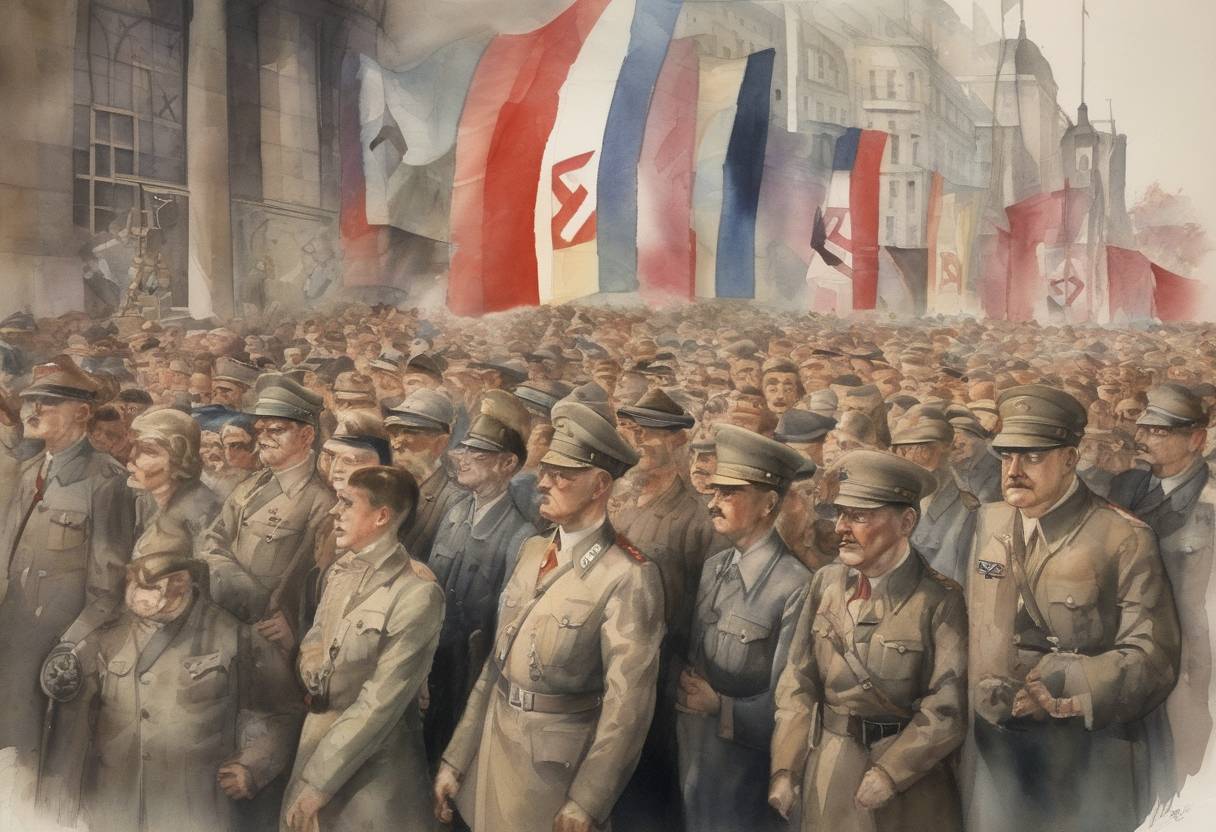
On March 5, 1933, the National Socialist German Workers’ Party (NSDAP), led by Adolf Hitler, secured 44% of the vote in the German parliamentary elections. This election was a pivotal moment in the consolidation of Nazi power in Germany, setting the stage for the establishment of a totalitarian regime.
Economic Turmoil: Germany was reeling from the effects of the Great Depression, which had led to massive unemployment and economic instability. The Weimar Republic, Germany’s democratic government established after World War I, struggled to address these issues, leading to widespread disillusionment with traditional political parties.
Rise of the Nazi Party: The Nazi Party capitalized on the economic despair, promoting a platform of national revival, anti-communism, and strong leadership. Hitler’s charismatic oratory and promises of restoring Germany’s former glory resonated with many voters.
Reichstag Fire: On February 27, 1933, just days before the election, the Reichstag building (home of the German parliament) was set on fire. The Nazis quickly blamed the communists, using the incident to justify a crackdown on political opponents. The Reichstag Fire Decree was issued, suspending civil liberties and allowing for the arrest of communists and other political adversaries.
Nazi Party’s Performance: The NSDAP won approximately 44% of the vote, translating to 288 seats in the Reichstag. Although they did not achieve an outright majority, the results were a significant increase from their previous performance in the July 1932 elections, where they had won 37% of the vote.
Coalition with the DNVP: To secure a working majority, the Nazis formed a coalition with the German National People’s Party (DNVP), which held 52 seats. This alliance enabled Hitler to strengthen his grip on power.
Enabling Act: On March 23, 1933, the Reichstag passed the Enabling Act, which granted Hitler the authority to enact laws without parliamentary consent. This effectively dismantled the democratic framework of the Weimar Republic and laid the foundation for Hitler’s dictatorship.
Suppression of Opposition: Following the election, the Nazis intensified their campaign against political opponents, particularly communists and socialists. Many were arrested, and political parties, except for the NSDAP, were eventually banned.
Establishment of a Totalitarian State: With the Enabling Act and the suppression of opposition, Hitler and the Nazi Party swiftly moved to consolidate their power, leading to the establishment of a totalitarian regime that would have catastrophic consequences for Germany and the world.
The March 5, 1933, election was a crucial step in Adolf Hitler’s rise to absolute power, marking the beginning of a dark chapter in history characterized by aggressive expansionism, war, and the Holocaust.
Source: www.britannica.com