Louis XIV's Coronation: The Beginning of a 72-Year Reign
1654 · Reims, France
Louis XIV was crowned King of France in Reims Cathedral, marking the beginning of his reign, which would last for 72 years.
March 11, 1649
The Fronde, a series of civil wars in France, saw the signing of the Peace of Rueil, which temporarily ended the conflict between the French crown and the Frondeurs.
Rueil-Malmaison, France | French crown
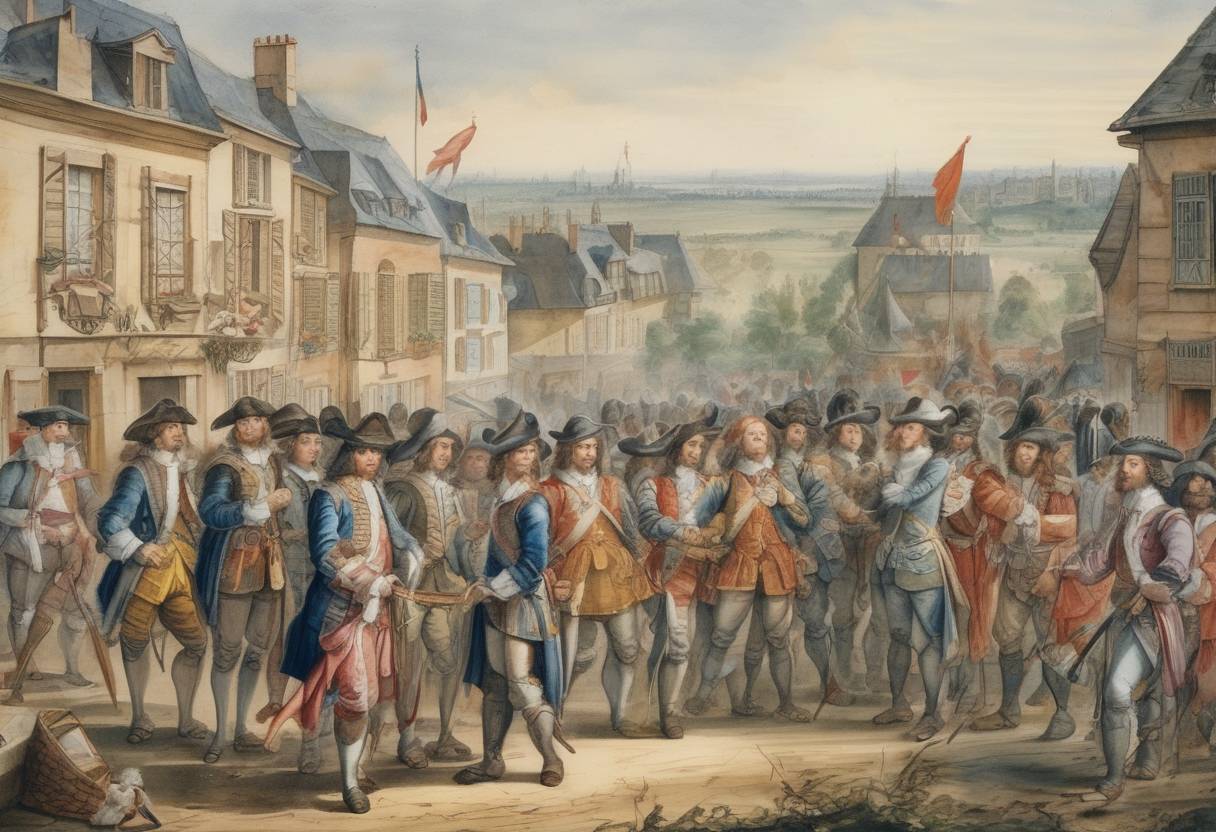
On March 11, 1649, the Peace of Rueil was signed, marking a temporary cessation of hostilities in the series of civil wars known as The Fronde in France. This period of conflict, which took place between 1648 and 1653, was characterized by a struggle between the monarchy and various factions within French society, including the nobility, the Parlement of Paris, and other regional powers.
The Fronde emerged in the aftermath of the Thirty Years’ War and during the minority of King Louis XIV. The French monarchy, under the regency of Queen Anne of Austria and her chief minister, Cardinal Mazarin, faced significant financial strain due to the costs of ongoing wars. To address these fiscal challenges, the government implemented unpopular tax increases and financial reforms, which sparked widespread discontent.
The Fronde is generally divided into two phases:
The Fronde of the Parlement (1648-1649): This initial phase was driven by the Parlement of Paris, which opposed the centralizing policies and fiscal demands of Mazarin. The conflict began with the Day of the Barricades in August 1648, when Parisians erected barricades in protest. The Parlement sought to limit royal authority and protect its traditional privileges.
The Fronde of the Princes (1650-1653): The second phase involved high-ranking nobles, including Prince Louis II de Bourbon, Prince of Condé, who felt marginalized by Mazarin’s influence. This phase was marked by more intense military engagements and shifting alliances.
The Peace of Rueil was negotiated in the context of the Fronde of the Parlement. After months of unrest and military standoffs, both sides were eager for a resolution. The treaty was signed in the town of Rueil-Malmaison, near Paris, and it aimed to address some of the grievances of the Frondeurs while restoring a degree of stability.
While the Peace of Rueil temporarily ended the conflict, it did not address the underlying tensions between the monarchy and its opponents. The Fronde of the Princes soon erupted, leading to further instability. Ultimately, the Fronde failed to achieve its broader goals of limiting royal power, and it reinforced the central authority of the monarchy.
The Fronde had significant long-term consequences for France. It exposed the vulnerabilities of the monarchy and highlighted the need for a more centralized and absolute form of governance, which Louis XIV would later embody in his reign. The experience of the Fronde also influenced Louis XIV’s distrust of the nobility and his decision to establish a more absolute monarchy, famously encapsulated in his statement, “L’État, c’est moi” (“I am the state”).
In summary, the Peace of Rueil was a crucial moment in The Fronde, providing a temporary pause in the conflict but ultimately paving the way for the rise of absolute monarchy in France.
Source: en.wikipedia.org