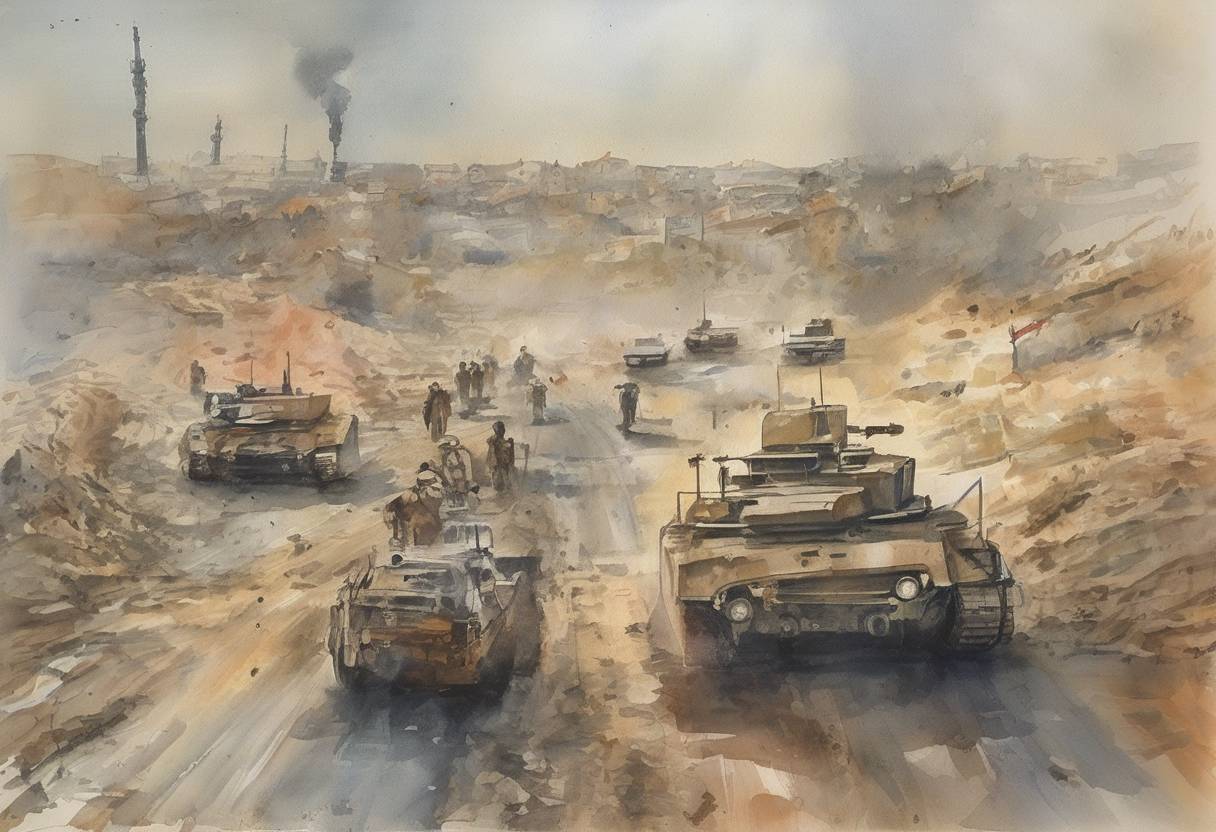
The 1973 Oil Embargo and the Yom Kippur War
Background
On October 6, 1973, the Yom Kippur War began when a coalition of Arab states, led by Egypt and Syria, launched a surprise attack on Israel on Yom Kippur, the holiest day in Judaism. This conflict was part of the ongoing Arab-Israeli tensions following the Six-Day War in 1967, where Israel had captured territories from Egypt, Syria, and Jordan.
The Oil Embargo Announcement
On October 17, 1973, the Organization of Arab Petroleum Exporting Countries (OAPEC), which included the Arab members of the Organization of the Petroleum Exporting Countries (OPEC) and Egypt and Syria, announced an oil embargo. This embargo targeted nations perceived as supporting Israel during the Yom Kippur War, notably the United States and its allies in Western Europe.
Key Points of the Embargo:
- Production Cuts: OAPEC decided to cut oil production by 5% per month until their political and economic objectives were met.
- Price Increases: The price of oil was raised significantly, with the price per barrel nearly quadrupling by the end of the embargo.
- Targeted Nations: The embargo specifically targeted countries that were seen as supporting Israel, including the United States, the Netherlands, and other Western nations.
Impact of the Embargo
The embargo had profound and immediate effects on the global economy:
- Energy Crisis: The sudden reduction in oil supply led to severe shortages and skyrocketing prices, triggering an energy crisis in many Western countries.
- Economic Recession: The increased cost of energy contributed to a global economic recession, with inflation and unemployment rates rising sharply.
- Policy Changes: The crisis prompted many affected countries to reconsider their energy policies, leading to increased investment in alternative energy sources and greater emphasis on energy conservation.
Aftermath and Historical Significance
The oil embargo lasted until March 1974, when it was lifted following negotiations and a partial disengagement agreement between Israel and Egypt. The crisis highlighted the geopolitical power of oil-producing nations and underscored the vulnerability of oil-dependent economies to supply disruptions.
Long-term Consequences:
- Shift in Energy Policy: The crisis accelerated efforts to develop alternative energy sources and improve energy efficiency.
- Geopolitical Realignments: It led to a reevaluation of foreign policy in many Western countries, particularly regarding the Middle East.
- OPEC’s Influence: The events of 1973 established OPEC as a significant player in global economic and political affairs, with the ability to influence oil prices and supply.
The 1973 oil embargo remains a pivotal moment in 20th-century history, illustrating the complex interplay between geopolitics and global economics.