British Occupation of Philadelphia - September 26, 1777
1777 · Philadelphia, United States
British troops occupied Philadelphia during the American Revolutionary War.
September 15, 1776
British forces occupied New York City during the American Revolutionary War.
New York City, United States | British Army
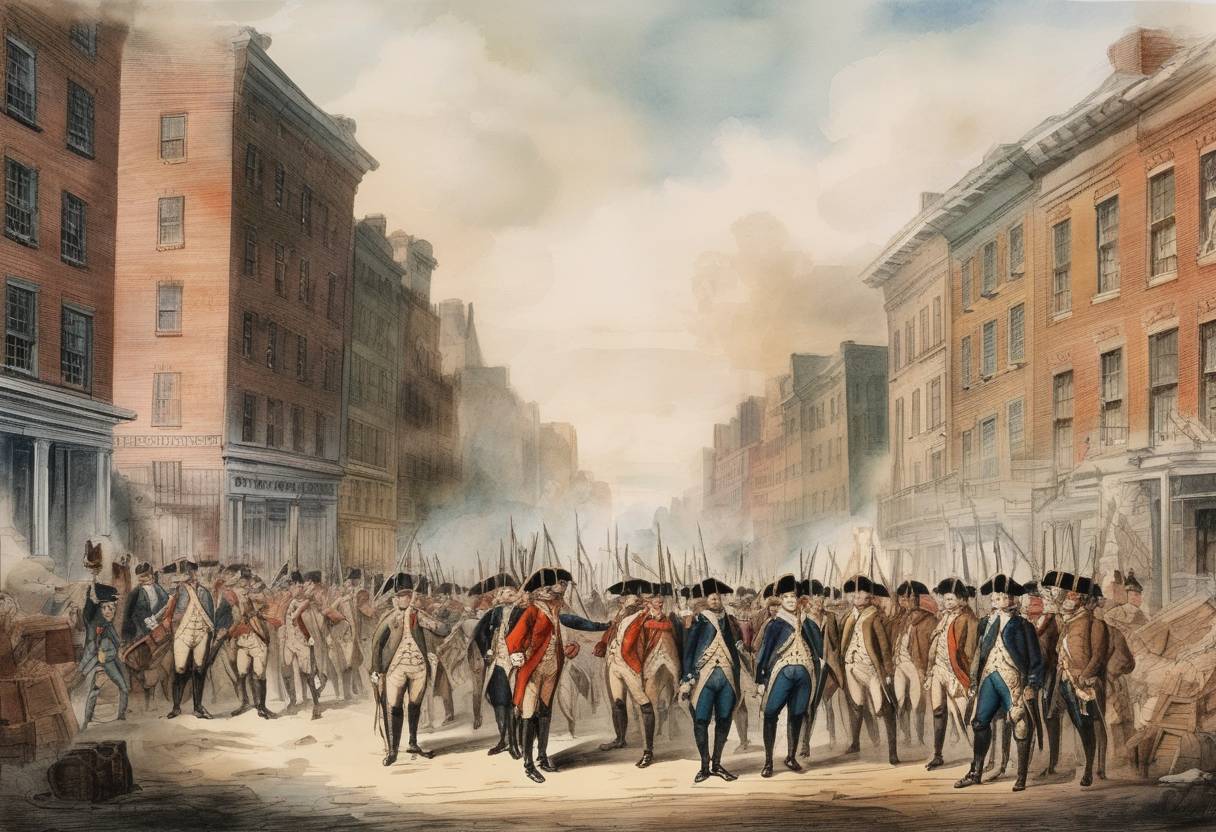
On September 15, 1776, during the American Revolutionary War, British forces successfully occupied New York City, marking a significant strategic victory for the British Crown. This event was part of the larger New York and New Jersey campaign, which aimed to gain control of the vital port city and its surrounding areas.
Strategic Importance: New York City was a crucial strategic location due to its excellent harbor and central position along the Eastern Seaboard. Control of the city would allow the British to effectively split the rebellious colonies in half and control key supply routes.
Battle of Long Island: Prior to the occupation, the British had already achieved a decisive victory at the Battle of Long Island (also known as the Battle of Brooklyn) on August 27, 1776. This battle forced the Continental Army, led by General George Washington, to retreat to Manhattan.
Continental Army’s Position: After the defeat on Long Island, Washington’s forces were in a precarious position. They were outnumbered and outmaneuvered, with British forces under General William Howe poised to strike.
Landing at Kip’s Bay: On the morning of September 15, British troops executed an amphibious landing at Kip’s Bay on the eastern shore of Manhattan. The landing was supported by a heavy naval bombardment, which caused panic and disarray among the American defenders.
American Retreat: The Continental Army, unable to mount an effective defense, retreated northward. Washington attempted to rally his troops, but the overwhelming British force and the chaos of the situation made resistance futile.
British Control: By the end of the day, British forces had taken control of New York City. The occupation was marked by the raising of the Union Jack over the city, symbolizing British authority.
Strategic Advantage: The occupation of New York City provided the British with a significant strategic advantage. It became the central base of British operations in North America for the remainder of the war.
Impact on the Continental Army: The loss of New York was a severe blow to the Continental Army’s morale and resources. However, it also galvanized the American resolve to continue the fight for independence.
Long-term Occupation: New York City remained under British control until the end of the war in 1783, serving as a hub for British military and political activities.
The occupation of New York City on September 15, 1776, was a pivotal moment in the American Revolutionary War, underscoring the challenges faced by the Continental Army and the strategic acumen of British military leadership. Despite this setback, the American forces would continue to fight, ultimately leading to their eventual victory and independence.