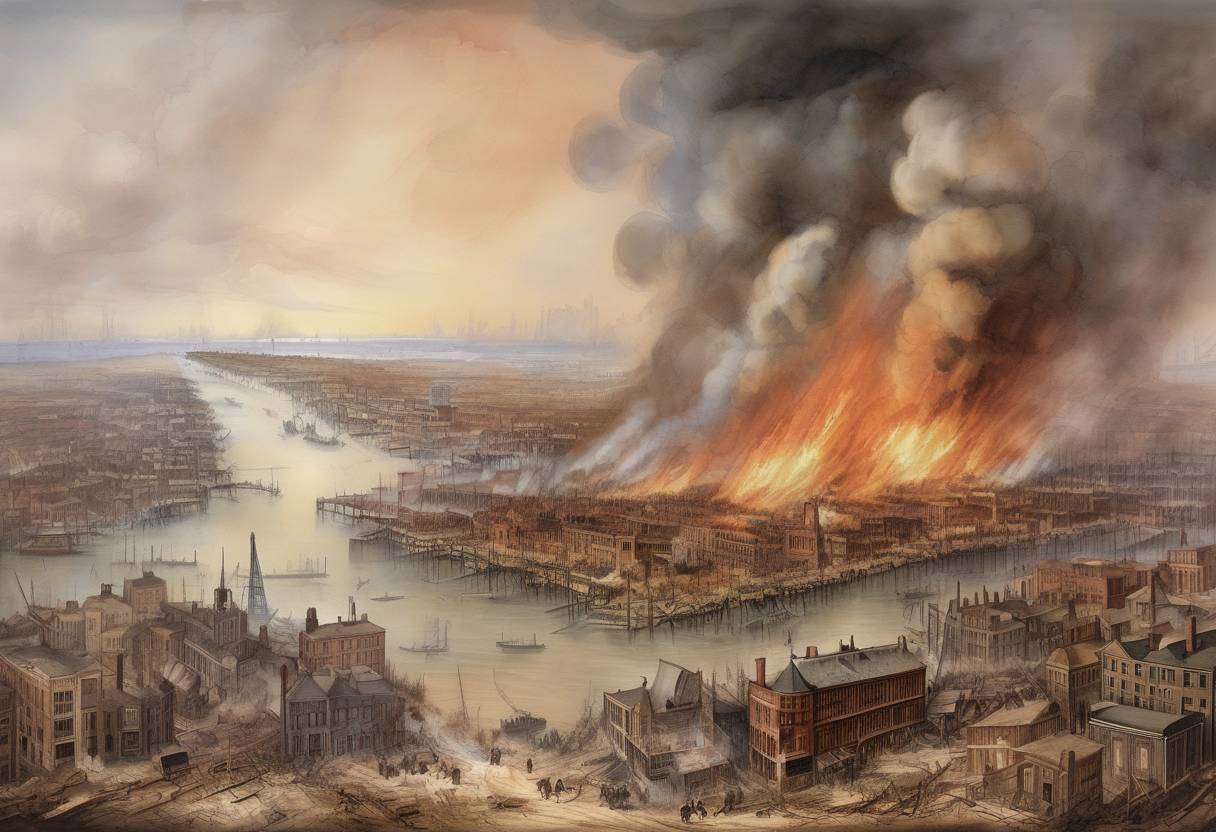
The Great Chicago Fire: October 8, 1871
Overview
The Great Chicago Fire began on the evening of October 8, 1871, and raged until the early hours of October 10, 1871. This catastrophic event resulted in the destruction of a significant portion of Chicago, Illinois, leaving a lasting impact on the city’s development and architecture.
Context and Causes
- Environmental Conditions: The summer and early fall of 1871 were exceptionally dry in the Midwest, with Chicago experiencing only one-fourth of its usual rainfall. This created highly flammable conditions.
- Urban Structure: At the time, Chicago was predominantly constructed of wood, including buildings, sidewalks, and even roads. This made the city particularly vulnerable to fire.
- Origin: The fire reportedly started in or near a small barn owned by Patrick and Catherine O’Leary on the city’s southwest side. The exact cause remains uncertain, though folklore often blames Mrs. O’Leary’s cow for kicking over a lantern.
Key Events
- Spread of the Fire: Fueled by strong southwest winds, the fire quickly spread through the densely packed wooden structures. The flames leapt the Chicago River twice, aided by the wind and the city’s wooden infrastructure.
- Destruction: Over the course of two days, the fire consumed approximately 3.3 square miles of the city, destroying more than 17,000 buildings and leaving over 100,000 residents homeless.
- Casualties: The fire resulted in an estimated 300 deaths, though the exact number is difficult to determine due to the chaotic aftermath.
Aftermath and Consequences
- Rebuilding Efforts: Despite the devastation, Chicago’s recovery was swift. The city embarked on an ambitious rebuilding program, leading to the development of modern skyscrapers and more fire-resistant construction materials.
- Economic Impact: The fire caused an estimated $200 million in damages (equivalent to billions today), but it also spurred economic growth as investments poured in to rebuild the city.
- Fire Safety Reforms: The disaster highlighted the need for improved fire safety measures, leading to stricter building codes and the establishment of a more effective fire department.
Historical Significance
The Great Chicago Fire is a pivotal event in American urban history. It not only reshaped Chicago’s physical landscape but also influenced urban planning and fire safety standards nationwide. The city’s remarkable recovery and transformation into a major metropolis stand as a testament to its resilience and innovation.
Conclusion
The Great Chicago Fire of 1871 remains a defining moment in the history of Chicago and the United States. Its legacy is evident in the city’s architecture and infrastructure, as well as in the lessons learned about urban planning and disaster preparedness.