Robert Falcon Scott Reaches the South Pole - January 17, 1912
1912 · South Pole, Antarctica
British explorer Robert Falcon Scott reaches the South Pole, only to discover that Norwegian explorer Roald Amundsen had beaten him there by 34 days.
November 12, 1912
The frozen bodies of Robert Falcon Scott and his men are found on the Ross Ice Shelf in Antarctica, eight months after their deaths during the ill-fated Terra Nova Expedition.
Ross Ice Shelf, Antarctica | British Antarctic Expedition
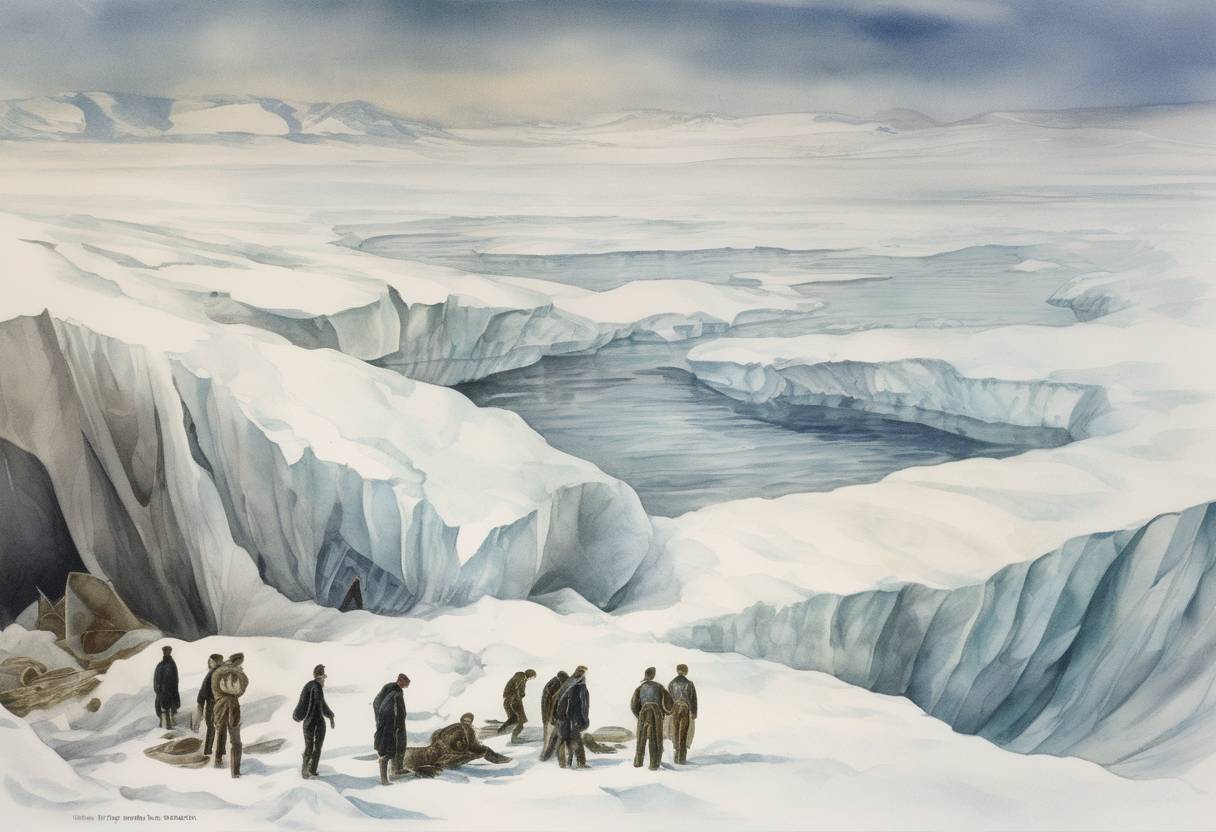
On November 12, 1912, a search party discovered the frozen bodies of Captain Robert Falcon Scott and his two companions, Henry Bowers and Edward Wilson, on the Ross Ice Shelf in Antarctica. This grim discovery marked the tragic end of the British Terra Nova Expedition, which aimed to be the first to reach the geographic South Pole.
The Terra Nova Expedition, officially known as the British Antarctic Expedition, took place from 1910 to 1913. Led by Captain Robert Falcon Scott, the mission’s primary goal was to reach the South Pole and secure Britain’s prestige in the realm of polar exploration. The expedition was named after its supply ship, the Terra Nova.
Scott and his team faced numerous challenges, including extreme weather conditions, logistical difficulties, and the harsh Antarctic environment. Despite these obstacles, Scott and his party reached the South Pole on January 17, 1912, only to find that Norwegian explorer Roald Amundsen had beaten them by 34 days.
The return journey from the South Pole proved to be disastrous. The team suffered from exhaustion, malnutrition, and severe cold. One of the team members, Lawrence Oates, famously sacrificed himself in March 1912, walking out into a blizzard to increase the chances of survival for his companions.
Scott, Bowers, and Wilson made their final camp on March 19, 1912, just 11 miles from a supply depot. They were trapped by a blizzard and succumbed to the elements, with Scott’s last diary entry dated March 29, 1912.
The search party, led by Lieutenant Edward Atkinson, found the bodies on November 12, 1912. They also recovered Scott’s diary, which provided a detailed account of the expedition’s trials and the team’s final days. The bodies were buried under the snow, and a cairn was erected to mark the site.
The tragic end of Scott’s expedition captured the public’s imagination and led to a reevaluation of polar exploration strategies. Scott and his men were celebrated as heroes in Britain, and their story became a poignant symbol of human endurance and the perils of exploration.
The Terra Nova Expedition highlighted the extreme challenges of Antarctic exploration and underscored the importance of preparation and adaptability in such endeavors. It also marked a turning point in polar exploration, leading to improved techniques and equipment for future expeditions.
Scott’s legacy endures, with numerous memorials and tributes commemorating his and his team’s bravery and determination. The story of their journey continues to inspire explorers and adventurers worldwide.
Source: en.wikipedia.org