Establishment of the United States Space Force
2019 · Washington D.C., United States
The United States Space Force was officially established as a new branch of the U.S. Armed Forces.
December 21, 2004
The U.S. Department of Defense announced the creation of the Joint Unmanned Combat Air Systems (J-UCAS) program, aimed at developing unmanned aerial vehicles for combat purposes.
Washington D.C., United States | U.S. Department of Defense
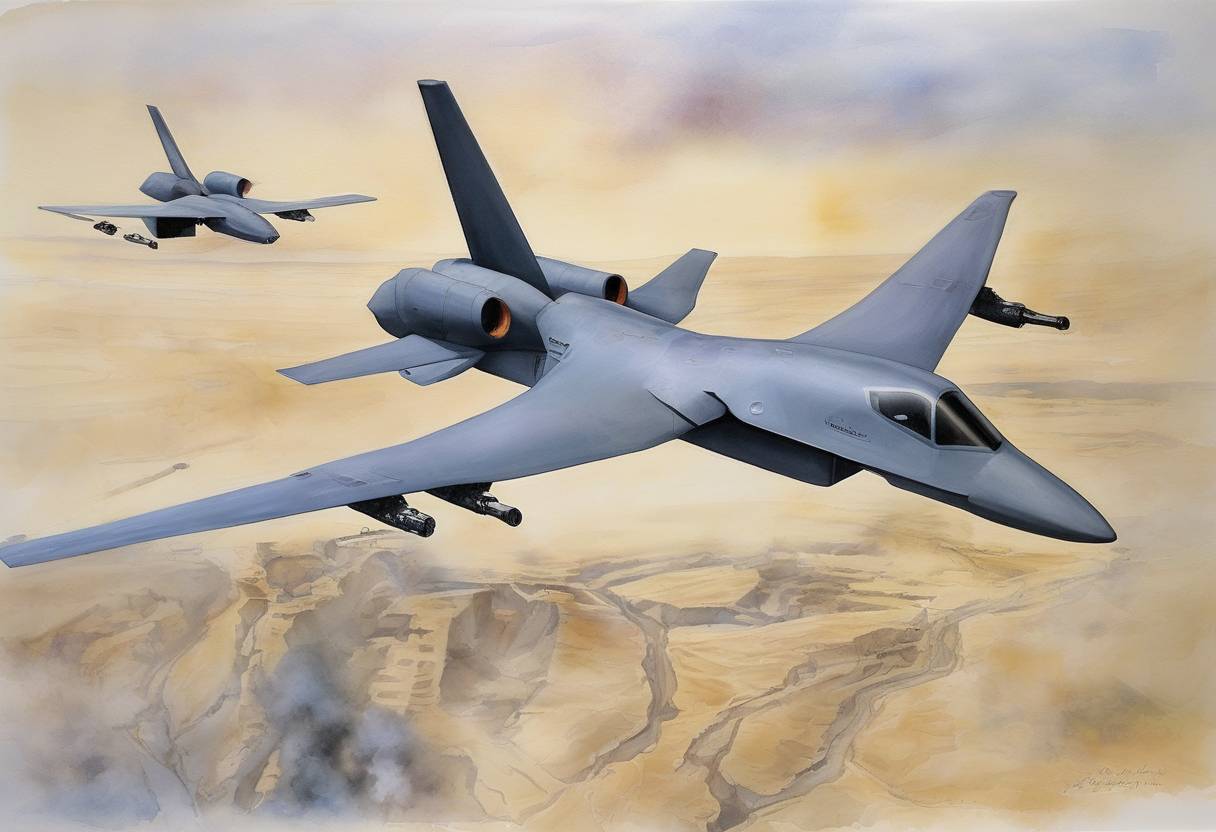
On December 21, 2004, the United States Department of Defense announced the establishment of the Joint Unmanned Combat Air Systems (J-UCAS) program. This initiative marked a significant step in the development and integration of unmanned aerial vehicles (UAVs) for combat purposes within the U.S. military.
The early 2000s saw rapid advancements in UAV technology, driven by the need for enhanced surveillance, reconnaissance, and combat capabilities without risking human pilots. The success of UAVs in operations in Afghanistan and Iraq highlighted their potential, prompting the Department of Defense to formalize efforts to develop more sophisticated unmanned systems.
The primary aim of the J-UCAS program was to create a family of unmanned combat air vehicles (UCAVs) that could perform a variety of missions, including:
The program sought to leverage cutting-edge technology to enhance the capabilities of the U.S. military, ensuring superiority in modern warfare environments.
The J-UCAS program was a collaborative effort involving multiple branches of the military, including the U.S. Air Force and the U.S. Navy. It aimed to develop a versatile platform that could be adapted for different service needs. Notable projects under the J-UCAS umbrella included:
The creation of the J-UCAS program represented a pivotal moment in military aviation, emphasizing the growing importance of unmanned systems in combat scenarios. It laid the groundwork for future developments in UAV technology, influencing subsequent programs and initiatives.
Although the J-UCAS program itself was eventually restructured and its projects absorbed into other initiatives, its legacy continues to shape the evolution of unmanned combat systems. The advancements made under J-UCAS have contributed to the development of current and future UAVs, ensuring that the U.S. military remains at the forefront of technological innovation in defense.
The announcement of the J-UCAS program on December 21, 2004, was a testament to the transformative potential of unmanned systems in modern warfare. By focusing on the development of UCAVs, the Department of Defense set the stage for a new era of military capabilities, characterized by increased efficiency, reduced risk to personnel, and enhanced operational effectiveness.
Source: www.defense.gov