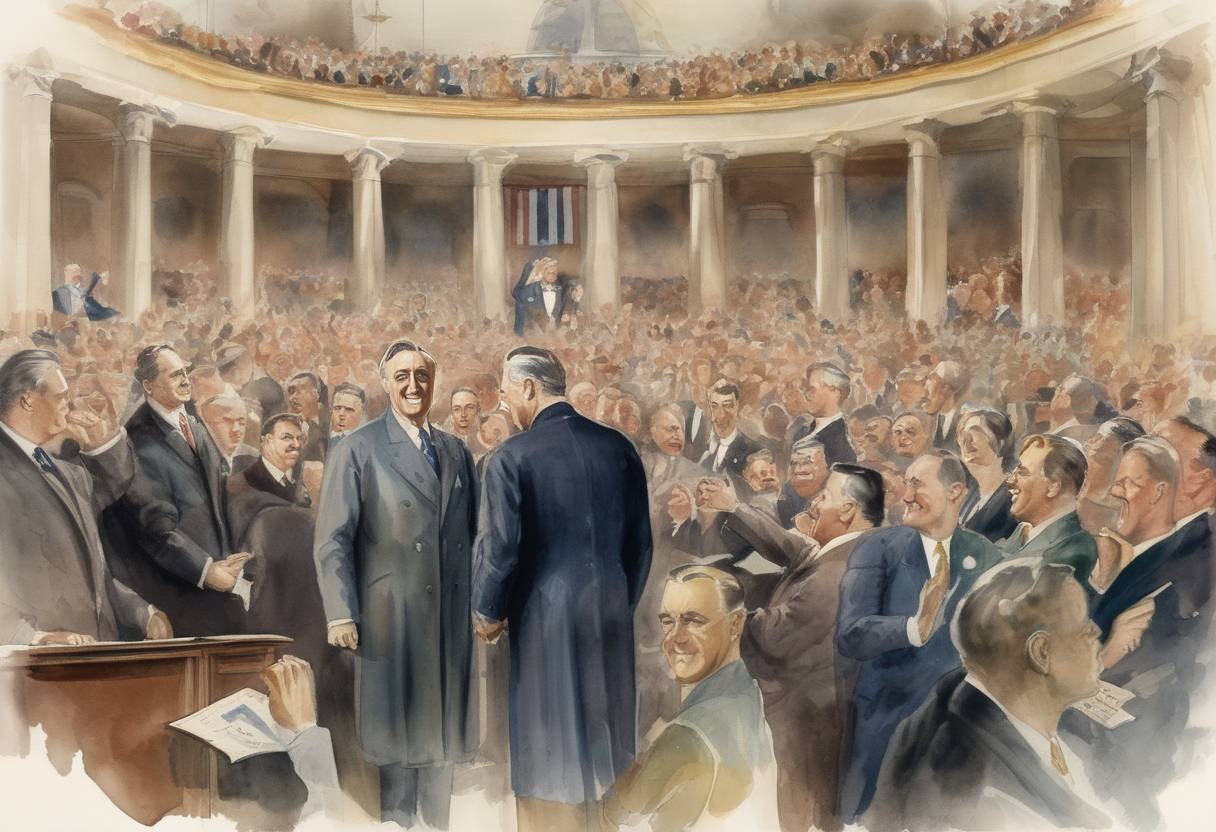
Franklin D. Roosevelt Elected as the 32nd President of the United States
On November 8, 1932, Franklin D. Roosevelt was elected as the 32nd President of the United States, defeating the incumbent President Herbert Hoover in a landslide victory. This election marked a significant turning point in American history, as it occurred during the depths of the Great Depression, a period of severe economic hardship.
Context Leading Up to the Election
The Great Depression: By 1932, the United States was in the throes of the Great Depression, which began with the stock market crash of 1929. Unemployment soared to about 25%, banks failed, and widespread poverty affected millions of Americans.
Herbert Hoover’s Presidency: Hoover, a Republican, had been President since 1929. His administration struggled to effectively address the economic crisis, and his policies, such as the Smoot-Hawley Tariff and reluctance to provide direct federal relief, were widely criticized.
Roosevelt’s Campaign: Franklin D. Roosevelt, the Democratic Governor of New York, campaigned on a platform of hope and change. He promised a “New Deal” for the American people, which included a series of economic and social reforms aimed at recovery, relief, and reform.
The Election
Campaign Strategies: Roosevelt’s campaign effectively communicated his message of optimism and proactive government intervention. He utilized radio broadcasts, known as “fireside chats,” to reach a broad audience and instill confidence in his leadership.
Voter Sentiment: The public’s dissatisfaction with Hoover’s handling of the Depression played a crucial role in Roosevelt’s victory. Many Americans were eager for new leadership and solutions to the economic crisis.
Election Results: Roosevelt won an overwhelming majority in the Electoral College, securing 472 votes to Hoover’s 59. He also won the popular vote by a significant margin, receiving approximately 57% of the vote.
Aftermath and Significance
The New Deal: Upon taking office in March 1933, Roosevelt swiftly implemented the New Deal, a series of programs and policies designed to provide relief to the unemployed, spur economic recovery, and reform the financial system to prevent future depressions.
Political Realignment: Roosevelt’s election marked the beginning of a political realignment in the United States. The Democratic Party became the dominant force in American politics for decades, and the New Deal coalition brought together diverse groups, including labor unions, urban voters, and African Americans.
Legacy: Roosevelt’s presidency fundamentally transformed the role of the federal government in American life, expanding its responsibilities and influence. His leadership during the Depression and later during World War II left a lasting impact on the nation.
Franklin D. Roosevelt’s election in 1932 was a pivotal moment in U.S. history, setting the stage for significant changes in American society and governance. His New Deal policies and leadership style reshaped the political landscape and provided a framework for addressing future challenges.