The 1812 Caracas Earthquake
On March 26, 1812, a devastating earthquake struck the city of Caracas, Venezuela, causing widespread destruction and significant loss of life. This catastrophic event is one of the most notable natural disasters in Venezuelan history and had profound implications for the region, both socially and politically.
Context and Background
In the early 19th century, Venezuela was in the midst of its struggle for independence from Spanish colonial rule. The earthquake occurred during a critical period of the Venezuelan War of Independence, which had begun in 1810. The political climate was tense, with revolutionary forces led by figures such as Simón Bolívar seeking to establish a republic free from Spanish control.
The Earthquake
- Date and Time: The earthquake struck on March 26, 1812, during Holy Week, a significant religious period for the predominantly Catholic population.
- Magnitude: While the exact magnitude of the earthquake is not known, it is estimated to have been around 7.7 on the Richter scale.
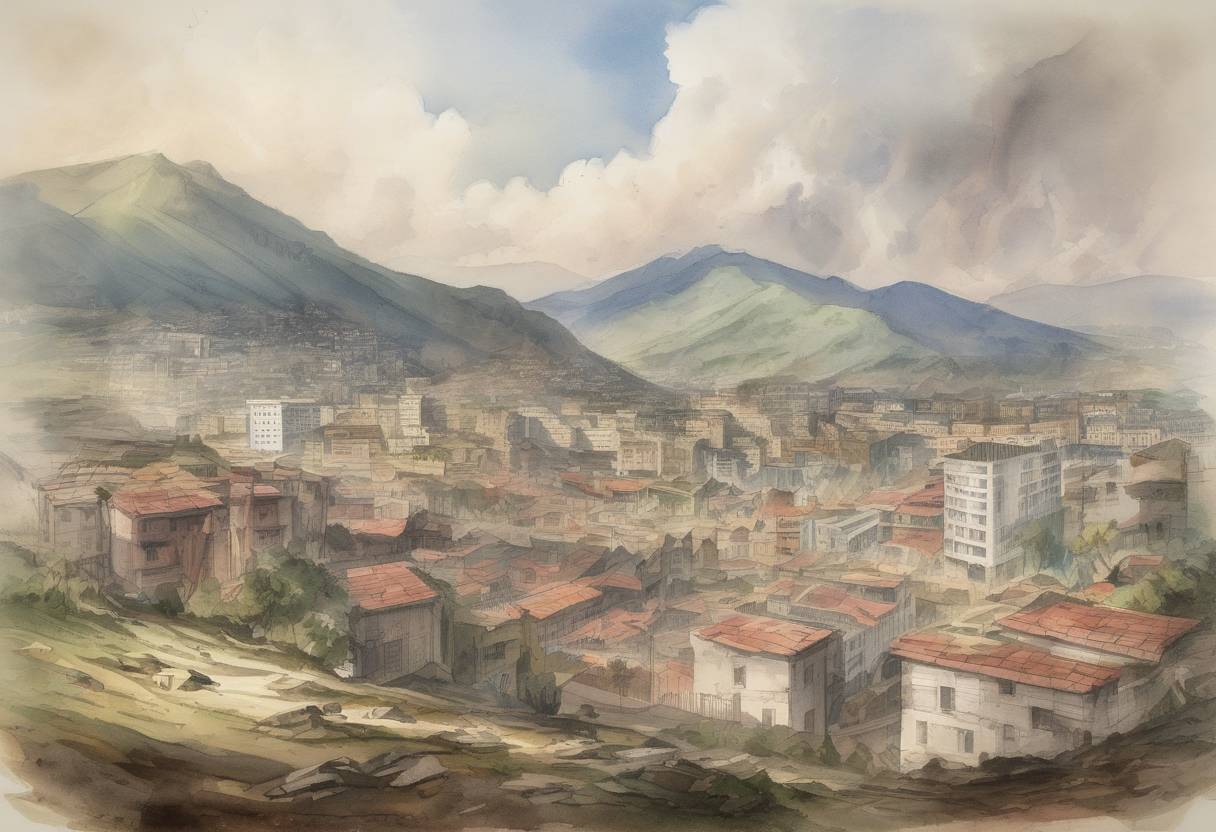
- Impact: The earthquake caused extensive damage to Caracas and surrounding areas. Many buildings, including churches and homes, were destroyed or severely damaged. The destruction was compounded by fires that broke out in the aftermath.
Casualties and Damage
- Casualties: It is estimated that between 10,000 and 20,000 people lost their lives as a result of the earthquake. The high casualty rate was due in part to the collapse of buildings during religious services, which were well-attended because of Holy Week.
- Infrastructure: The earthquake left much of Caracas in ruins. Key infrastructure, including roads and bridges, was severely damaged, complicating rescue and recovery efforts.
Aftermath and Historical Significance
- Political Impact: The earthquake had significant political ramifications. Some royalists interpreted the disaster as divine punishment for the rebellion against Spanish rule, using it to bolster their cause. This interpretation was used to demoralize the revolutionary forces.
- Reconstruction: The rebuilding of Caracas was a slow and arduous process, hampered by ongoing conflicts and limited resources. The disaster underscored the vulnerabilities of colonial infrastructure and prompted discussions on urban planning and construction standards.
- Legacy: The 1812 earthquake remains a pivotal moment in Venezuelan history, remembered for its impact on the independence movement and its role in shaping the nation’s resilience in the face of natural disasters.
In summary, the 1812 Caracas earthquake was a tragic event that not only caused immense human suffering but also influenced the course of Venezuelan history during a crucial period of its fight for independence.