State of Emergency in Pakistan - November 3, 2007
2007 · Islamabad, Pakistan
Pervez Musharraf, the President of Pakistan, declared a state of emergency, suspending the constitution and dismissing the Chief Justice of the Supreme Court.
August 18, 2008
Pervez Musharraf, the President of Pakistan, resigned from office to avoid impeachment. His resignation marked the end of nearly nine years of military rule.
Islamabad, Pakistan | Government of Pakistan
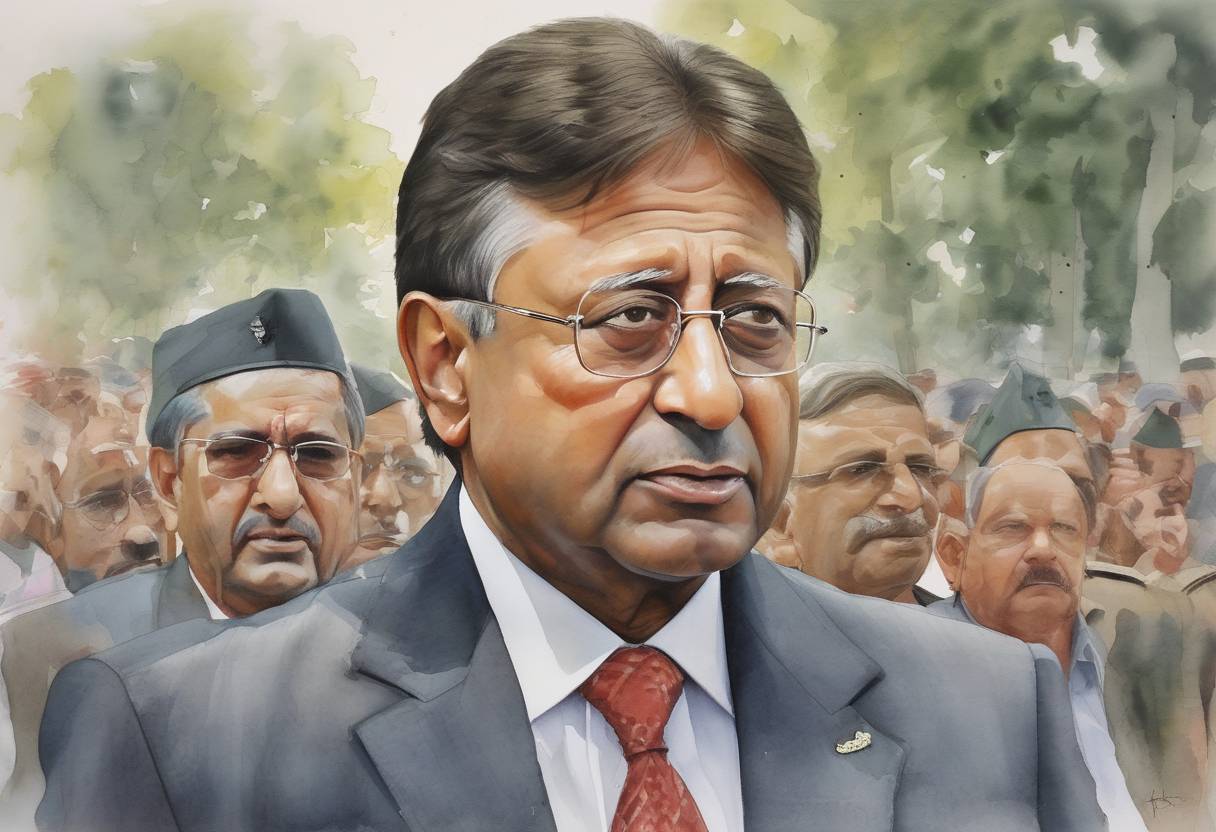
On August 18, 2008, Pervez Musharraf, the President of Pakistan, announced his resignation from office, marking the end of nearly nine years of military-influenced governance. This decision was primarily driven by mounting political pressure and the looming threat of impeachment by the newly elected civilian government.
Pervez Musharraf, a four-star general, came to power in Pakistan through a military coup on October 12, 1999, overthrowing the democratically elected government of Prime Minister Nawaz Sharif. Musharraf declared himself the Chief Executive of Pakistan and later assumed the presidency in 2001. His rule was characterized by a mix of economic reforms and controversial policies, particularly his alignment with the United States in the War on Terror following the September 11, 2001 attacks.
2007 Judicial Crisis: Musharraf’s decision to suspend Chief Justice Iftikhar Muhammad Chaudhry in March 2007 sparked widespread protests and a significant movement for judicial independence. This crisis weakened his political standing.
Emergency Rule: In November 2007, Musharraf declared a state of emergency, suspended the constitution, and dismissed judges who opposed him. This move was widely criticized both domestically and internationally, further eroding his support.
2008 General Elections: The parliamentary elections held in February 2008 resulted in a significant defeat for Musharraf’s allies. The Pakistan Peoples Party (PPP) and the Pakistan Muslim League-Nawaz (PML-N) formed a coalition government, which was committed to restoring democracy and reducing military influence in politics.
Impeachment Threat: By mid-2008, the coalition government, led by Asif Ali Zardari and Nawaz Sharif, initiated steps to impeach Musharraf, accusing him of violating the constitution and mismanaging the economy.
Faced with the inevitability of impeachment and dwindling support from both the military and international allies, Musharraf announced his resignation in a televised address on August 18, 2008. In his speech, he defended his record and expressed his commitment to Pakistan’s stability and prosperity, but acknowledged that stepping down was in the nation’s best interest.
Transition to Civilian Rule: Musharraf’s resignation paved the way for a transition to civilian rule, with Asif Ali Zardari eventually becoming the President of Pakistan in September 2008.
Impact on Military Influence: His departure marked a significant moment in Pakistan’s political history, reducing the military’s direct control over the government, although the military continued to play a crucial role in the country’s politics.
Legacy: Musharraf’s tenure remains a subject of debate, with supporters crediting him for economic growth and modernization efforts, while critics highlight his authoritarian measures and the challenges he left behind, including political instability and security issues.
Musharraf’s resignation was a pivotal moment in Pakistan’s journey towards democratic governance, reflecting the complex interplay between military and civilian forces in the country’s political landscape.
Source: www.nytimes.com