The 27th Amendment to the United States Constitution
1992 · Washington, D.C., United States
The 27th Amendment to the United States Constitution, which deals with congressional pay raises, was ratified after being proposed over 200 years earlier.
August 24, 1954
The Communist Control Act is signed into law in the United States, outlawing the Communist Party and criminalizing membership in or support for the party.
Washington, D.C., United States | U.S. Congress
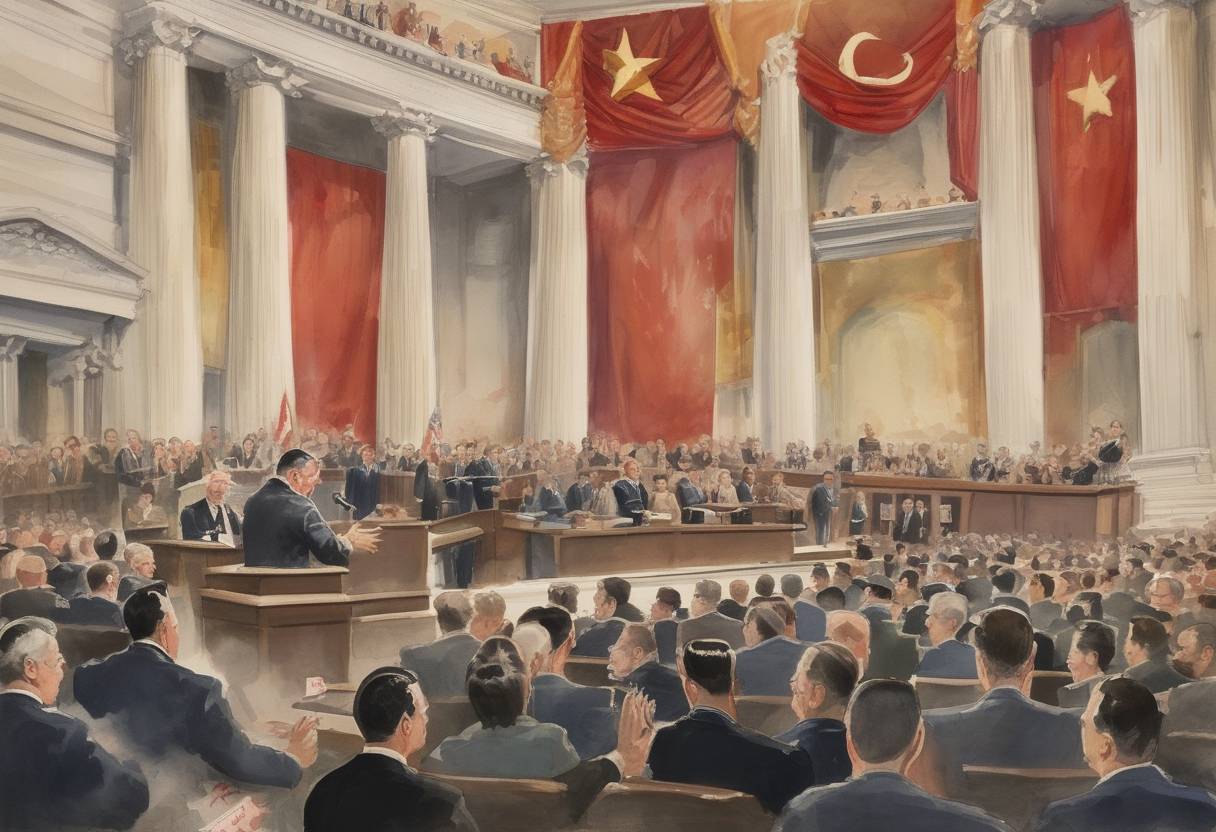
On August 24, 1954, the Communist Control Act was signed into law in the United States, marking a significant moment in the country’s Cold War-era policies. This legislation aimed to curtail the influence of the Communist Party in the United States by outlawing the party and criminalizing membership or support for it.
The passage of the Communist Control Act occurred during a period of heightened anti-communist sentiment in the United States, often referred to as the Red Scare. This era was characterized by widespread fear of communist infiltration and espionage, influenced by the global tensions of the Cold War and domestic events such as the trial of Julius and Ethel Rosenberg and the activities of Senator Joseph McCarthy.
The U.S. government had already taken several steps to combat perceived communist threats, including the establishment of the House Un-American Activities Committee (HUAC) and the implementation of loyalty programs for federal employees. The Smith Act of 1940 had also made it illegal to advocate the violent overthrow of the government, leading to the prosecution of several communist leaders.
The Communist Control Act of 1954 went further by explicitly targeting the Communist Party itself. Key provisions included:
The Act was introduced by Senator John Marshall Butler of Maryland and passed with overwhelming support in Congress. It reflected the bipartisan consensus at the time regarding the perceived threat posed by communism.
The Communist Control Act had significant implications:
In the broader historical context, the Communist Control Act of 1954 exemplifies the intense fear and suspicion that characterized the United States during the Cold War, influencing domestic policies and civil liberties for years to come.
Source: en.wikipedia.org