Florence Nightingale and the Crimean War: October 21, 1854
1854 · Scutari, Turkey
Florence Nightingale and a staff of 38 nurses are sent to the Crimean War.
May 12, 1820
The birth of Florence Nightingale, the founder of modern nursing.
Florence, Italy | N/A
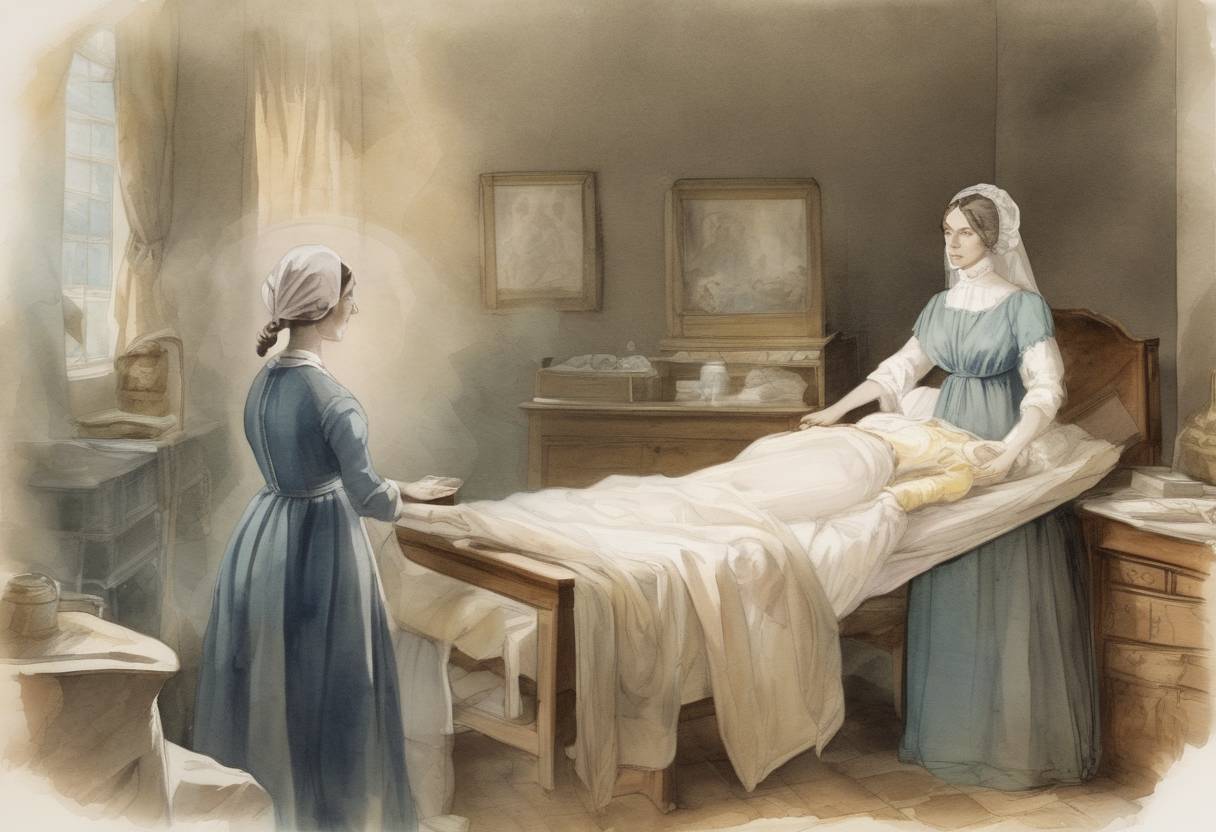
Florence Nightingale, often hailed as the founder of modern nursing, was born on May 12, 1820, in Florence, Italy. Her birth in the city after which she was named marked the beginning of a life dedicated to healthcare reform and the professionalization of nursing.
Florence was born into a wealthy and well-connected British family. Her parents, William Edward Nightingale and Frances Nightingale, provided her with a comprehensive education, which was uncommon for women of her time. She was particularly skilled in mathematics and statistics, disciplines that would later play a crucial role in her work.
Despite societal expectations for women of her class to marry and focus on domestic responsibilities, Florence felt a divine calling to serve others through nursing. This calling was met with resistance from her family, but she persisted, eventually receiving training in nursing in Germany in the 1850s.
Florence Nightingale’s most significant contributions came during the Crimean War (1853-1856). In 1854, she was appointed to oversee the care of wounded soldiers in the Ottoman Empire. She and her team of nurses improved the unsanitary conditions at the British base hospital, significantly reducing the death rate. Her use of statistical evidence to advocate for sanitary reforms was groundbreaking.
Florence Nightingale’s work laid the foundation for modern nursing. After the war, she continued to advocate for healthcare reform, establishing the Nightingale Training School for Nurses at St. Thomas’ Hospital in London in 1860. Her book, “Notes on Nursing,” became an essential text for nursing education.
Florence Nightingale passed away on August 13, 1910, but her legacy endures, celebrated annually on International Nurses Day, which coincides with her birthday. Her pioneering spirit and dedication to improving healthcare continue to inspire nurses and healthcare professionals worldwide.
Source: en.wikipedia.org