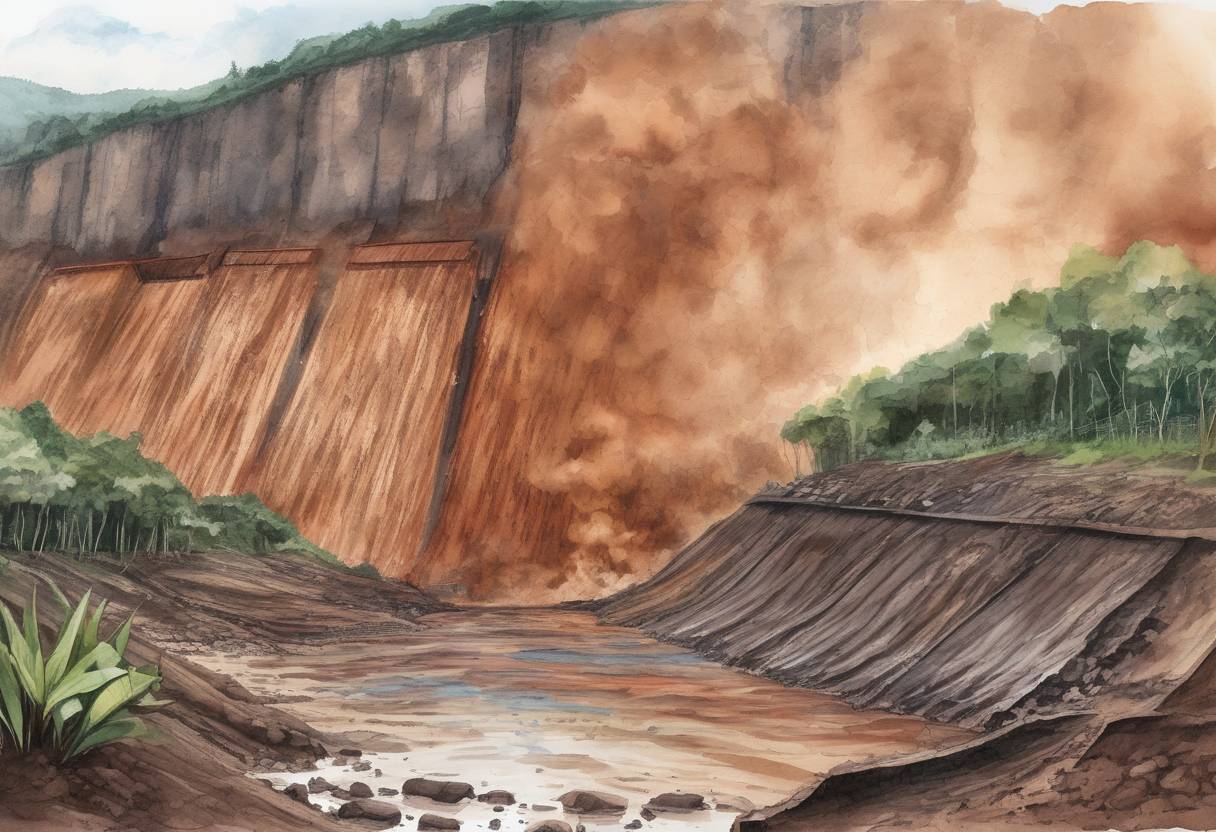
Brumadinho Dam Collapse - January 25, 2019
On January 25, 2019, a catastrophic dam collapse occurred at the Córrego do Feijão iron ore mine near Brumadinho, in the state of Minas Gerais, Brazil. This tragic event resulted in a massive mudslide that claimed the lives of at least 270 people, making it one of the deadliest industrial disasters in Brazilian history.
Background
The dam that collapsed was a tailings dam, used to store byproducts of mining operations. Owned by the Brazilian mining company Vale S.A., the dam was part of the Córrego do Feijão mine complex. Tailings dams are typically constructed to hold the slurry of waste materials left over after the extraction of valuable minerals.
The Collapse
At approximately 12:28 PM local time, the dam failed, releasing a torrent of mud and mining waste that engulfed the surrounding area. The mudslide quickly inundated the mine’s administrative area, including the cafeteria where many workers were having lunch, as well as nearby communities and the Paraopeba River.
- Casualties and Damage: The disaster resulted in the deaths of at least 270 people, including mine workers and local residents. The mudslide destroyed homes, infrastructure, and contaminated water supplies, causing significant environmental damage.
- Rescue and Recovery: Rescue operations were launched immediately, involving local authorities, the Brazilian military, and international aid. However, the sheer volume of mud and debris complicated efforts, and many victims were never recovered.
Broader Impact and Consequences
- Environmental Impact: The collapse released millions of cubic meters of mining waste into the environment, causing long-term ecological damage to the Paraopeba River and surrounding ecosystems.
- Regulatory and Legal Repercussions: The disaster prompted widespread criticism of Vale and the Brazilian government’s regulatory oversight of mining operations. Investigations revealed that the dam had been deemed stable by safety auditors just months before the collapse.
- Policy Changes: In response, Brazil’s government and mining industry faced increased pressure to improve safety standards and oversight of tailings dams. This included stricter regulations and the decommissioning of similar upstream tailings dams.
Historical Significance
The Brumadinho dam collapse highlighted the risks associated with tailings dams and the need for stringent safety measures in the mining industry. It also underscored the human and environmental costs of industrial negligence, prompting global discussions on sustainable mining practices and corporate accountability.
The tragedy remains a somber reminder of the potential consequences of industrial failures and the importance of prioritizing safety and environmental stewardship in resource extraction industries.