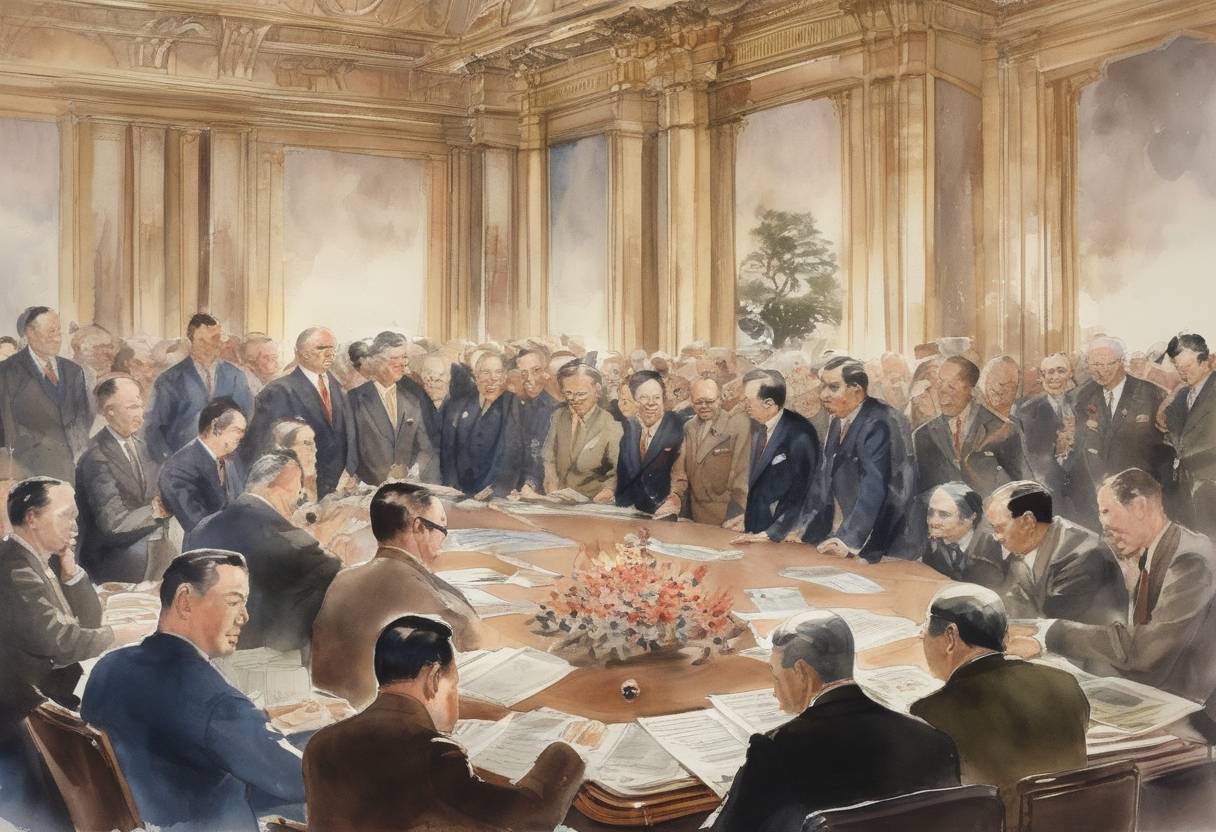
The Treaty of San Francisco: September 8, 1951
On September 8, 1951, the Treaty of San Francisco, also known as the Treaty of Peace with Japan, was signed by 48 nations, officially ending the state of war between Japan and the Allied Powers. This significant event marked a pivotal moment in post-World War II history, as it laid the foundation for Japan’s re-entry into the international community and the reconstruction of its economy and society.
Background
Following Japan’s surrender in World War II on August 15, 1945, the country was placed under Allied occupation, primarily led by the United States. The occupation aimed to demilitarize and democratize Japan, leading to significant political, economic, and social reforms. By the early 1950s, the need to formally end the state of war and restore Japan’s sovereignty became apparent, prompting the negotiation of a peace treaty.
Key Provisions of the Treaty
Sovereignty and Territorial Changes: The treaty restored Japan’s sovereignty, allowing it to govern itself independently. It also addressed territorial issues, with Japan renouncing claims to Korea, Taiwan, the Kuril Islands, and other territories acquired before and during the war.
Security Arrangements: While the treaty did not impose military restrictions on Japan, it allowed the United States to maintain military bases in Japan, a provision formalized in the U.S.-Japan Security Treaty signed concurrently.
War Reparations and Compensation: Japan agreed to compensate Allied nations and individuals who suffered during the war, though the treaty did not impose heavy reparations, recognizing Japan’s economic situation at the time.
Economic and Diplomatic Relations: The treaty facilitated Japan’s reintegration into the global economy and international community, paving the way for future trade agreements and diplomatic relations.
Significance and Aftermath
The Treaty of San Francisco was a cornerstone in the post-war reconstruction of Japan and the broader geopolitical landscape of East Asia. It symbolized a shift from punitive measures to a more cooperative approach in international relations, reflecting the emerging Cold War dynamics. The treaty allowed Japan to focus on economic growth and development, leading to its rapid post-war recovery and eventual emergence as a global economic power.
The treaty also set the stage for the U.S.-Japan alliance, which became a central element of the United States’ strategy in the Asia-Pacific region during the Cold War. This alliance continues to play a crucial role in regional security and economic cooperation.
In conclusion, the signing of the Treaty of San Francisco on September 8, 1951, was a landmark event that not only ended the formal state of war between Japan and the Allied Powers but also laid the groundwork for Japan’s transformation into a peaceful and prosperous nation.