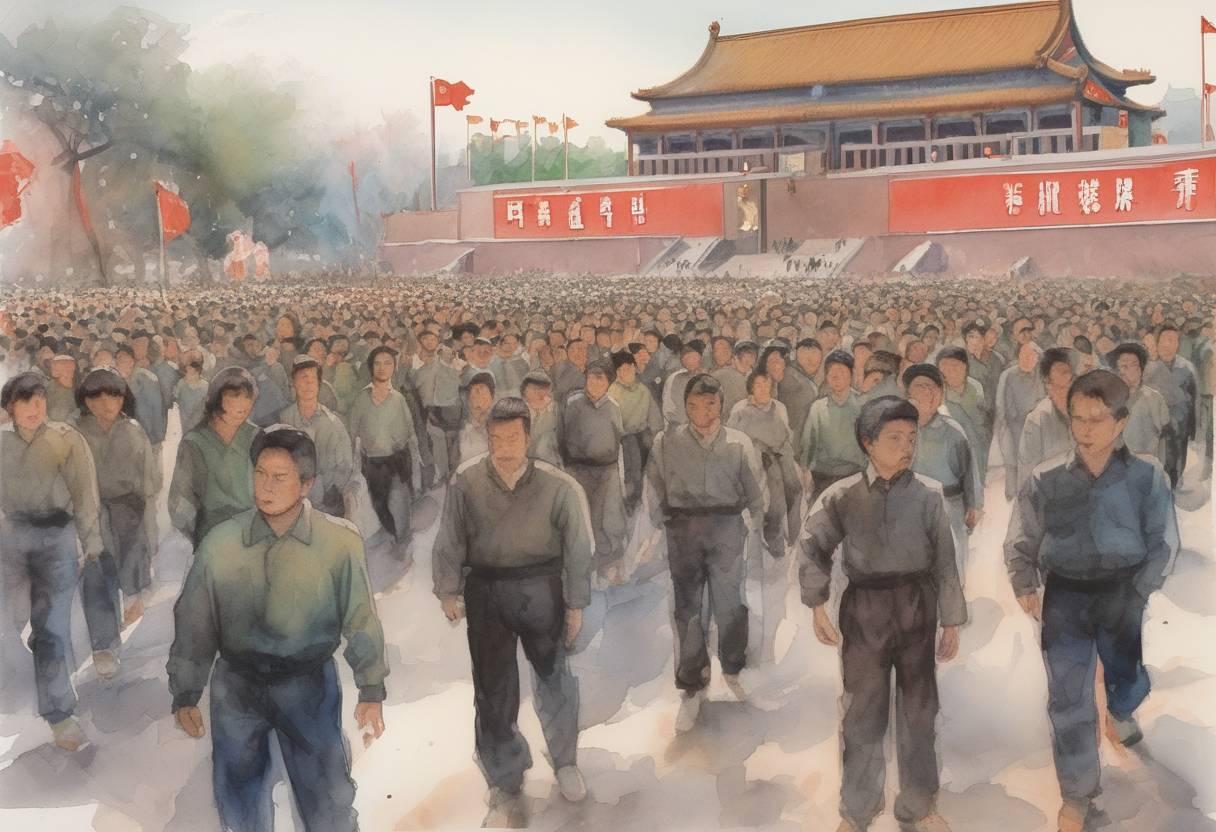
The Tiananmen Square Protests: April 21, 1989
On April 21, 1989, a significant event unfolded in Beijing, China, as students began gathering in Tiananmen Square to mourn the death of Hu Yaobang and demand political reform. This marked the beginning of what would become a large-scale pro-democracy movement, culminating in the tragic events of early June.
Background
Hu Yaobang, a former General Secretary of the Chinese Communist Party, was a reform-minded leader who had advocated for political liberalization and economic reforms. His sudden death on April 15, 1989, sparked an outpouring of grief among students and intellectuals who saw him as a symbol of reform and openness. Hu’s death provided a catalyst for expressing broader discontent with the Chinese government’s corruption, inflation, and lack of political freedoms.
Key Events Leading to April 21
- April 15, 1989: Hu Yaobang passed away, leading to spontaneous gatherings of students in Beijing and other cities to mourn his death and call for his rehabilitation.
- April 17, 1989: Students began organizing more structured demonstrations in Tiananmen Square, drafting petitions that called for greater freedom of speech, press, and assembly, as well as government accountability.
- April 18-20, 1989: The number of demonstrators grew, with students from various universities joining the movement. They demanded dialogue with the government and reforms to address issues such as corruption and inflation.
April 21, 1989: The Gathering
On April 21, the day before Hu Yaobang’s official memorial service, thousands of students gathered in Tiananmen Square. They were not only mourning Hu but also using the occasion to press for political reforms. The atmosphere was charged with a mix of solemnity and determination, as students carried banners and chanted slogans advocating for democracy and reform.
Broader Historical Significance
The events of April 21, 1989, set the stage for what would become a massive pro-democracy movement, drawing support from various sectors of Chinese society, including workers, intellectuals, and even some government officials. The protests highlighted deep-seated issues within the Chinese political system and society, such as the lack of political freedoms and widespread corruption.
The movement continued to grow over the following weeks, leading to heightened tensions between the protesters and the Chinese government. This ultimately resulted in the government’s decision to impose martial law and the tragic crackdown on June 3-4, 1989, which led to a significant loss of life and had lasting impacts on China’s political landscape.
Aftermath
The Tiananmen Square protests and the subsequent crackdown had profound effects on China’s domestic and international policies. Domestically, the government tightened its control over political expression and dissent, while internationally, China faced widespread condemnation and sanctions. The events also served as a poignant reminder of the challenges faced by those advocating for political reform in authoritarian regimes.
The legacy of the Tiananmen Square protests continues to resonate, symbolizing the struggle for democracy and human rights in China and beyond.