The Sino-British Joint Declaration: December 19, 1984
1984 · Beijing, China
The Sino-British Joint Declaration was signed, agreeing to the transfer of sovereignty over Hong Kong from the United Kingdom to China in 1997.
August 29, 1842
The Treaty of Nanking was signed, ending the First Opium War between the United Kingdom and the Qing Dynasty of China. The treaty ceded Hong Kong to Britain and opened several Chinese ports to British trade.
Nanking, China | United Kingdom and Qing Dynasty
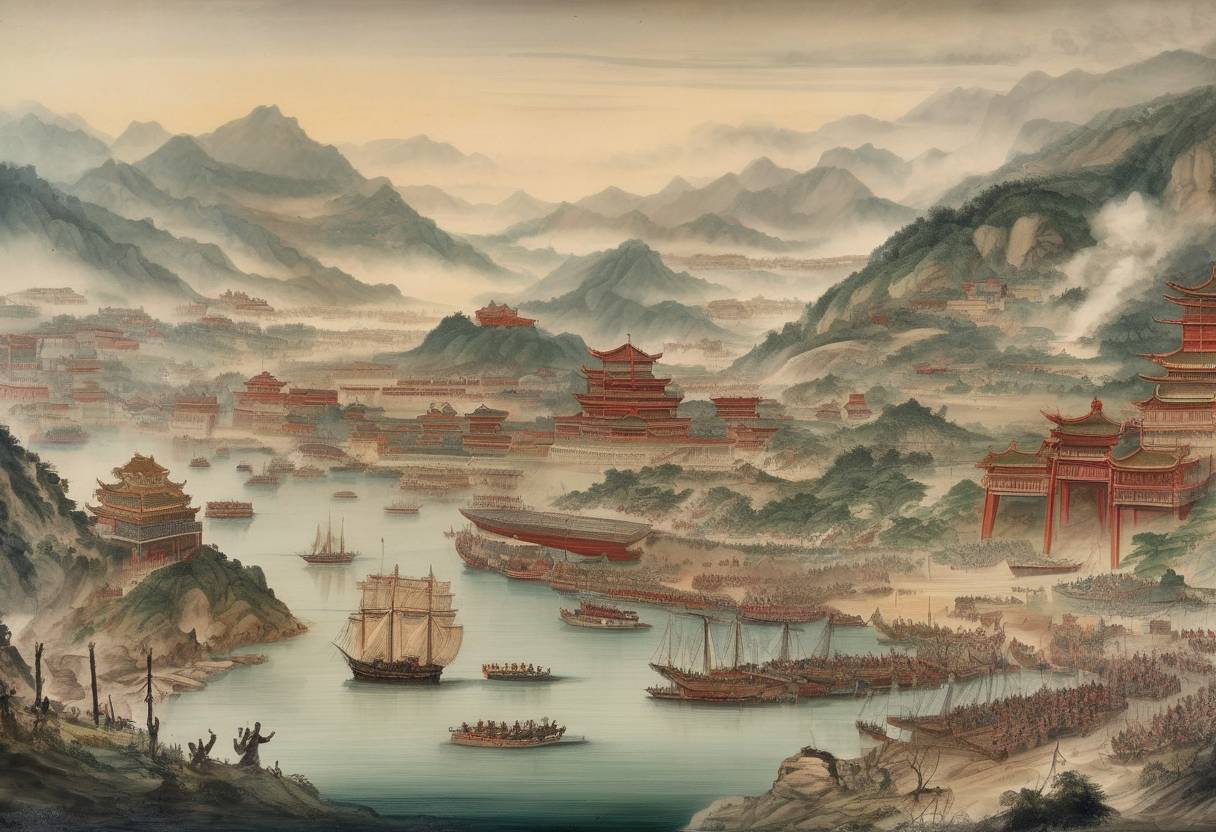
The Treaty of Nanking, signed on August 29, 1842, marked the conclusion of the First Opium War (1839-1842) between the United Kingdom and the Qing Dynasty of China. This treaty is a pivotal moment in 19th-century history, as it signaled the beginning of what is often referred to as the “Century of Humiliation” for China and marked a significant shift in Sino-British relations.
The First Opium War was primarily triggered by disputes over trade and diplomatic relations between China and Britain. The British were exporting opium from India to China, leading to widespread addiction and social issues within China. The Qing government’s efforts to suppress the opium trade, including the confiscation and destruction of opium stocks in Canton (Guangzhou), led to military conflict with Britain.
Cession of Hong Kong: One of the most significant outcomes of the Treaty of Nanking was the cession of Hong Kong Island to Britain. This marked the beginning of over 150 years of British rule in Hong Kong, which would become a major global financial center.
Opening of Ports: The treaty stipulated the opening of five Chinese ports to British trade and residence: Canton (Guangzhou), Amoy (Xiamen), Foochow (Fuzhou), Ningpo (Ningbo), and Shanghai. This was a significant blow to China’s traditional trade restrictions and marked the start of the treaty port system.
Indemnity Payments: China agreed to pay a large indemnity to Britain, amounting to 21 million silver dollars. This was to cover the costs of the war and the value of the opium that had been destroyed.
Extraterritoriality: The treaty granted British citizens extraterritorial rights, meaning they were subject to British, rather than Chinese, law while residing in the treaty ports.
Most-Favored-Nation Clause: The treaty included a most-favored-nation clause, ensuring that any privileges granted to other foreign powers would also apply to Britain.
The Treaty of Nanking is often viewed as the first of the “Unequal Treaties” that Western powers imposed on China during the 19th and early 20th centuries. It significantly weakened the Qing Dynasty’s control over its own territory and economy, leading to further internal strife and external pressures.
The treaty set a precedent for other Western nations to seek similar concessions from China, leading to further treaties and conflicts, including the Second Opium War (1856-1860). The opening of treaty ports facilitated increased foreign influence and trade in China, which had profound impacts on Chinese society and economy.
In the broader context of global history, the Treaty of Nanking exemplifies the era of imperialism and the expansion of Western powers into Asia. It highlights the complexities of international trade, diplomacy, and the often coercive nature of 19th-century global interactions.
Source: www.britannica.com