April 26, 1812: Assassination Attempt on British Prime Minister Spencer Perceval
1812 · London, United Kingdom
British Prime Minister Spencer Perceval survives an assassination attempt.
November 2, 1917
The Balfour Declaration was issued, expressing British support for a Jewish homeland in Palestine.
London, United Kingdom | British Government
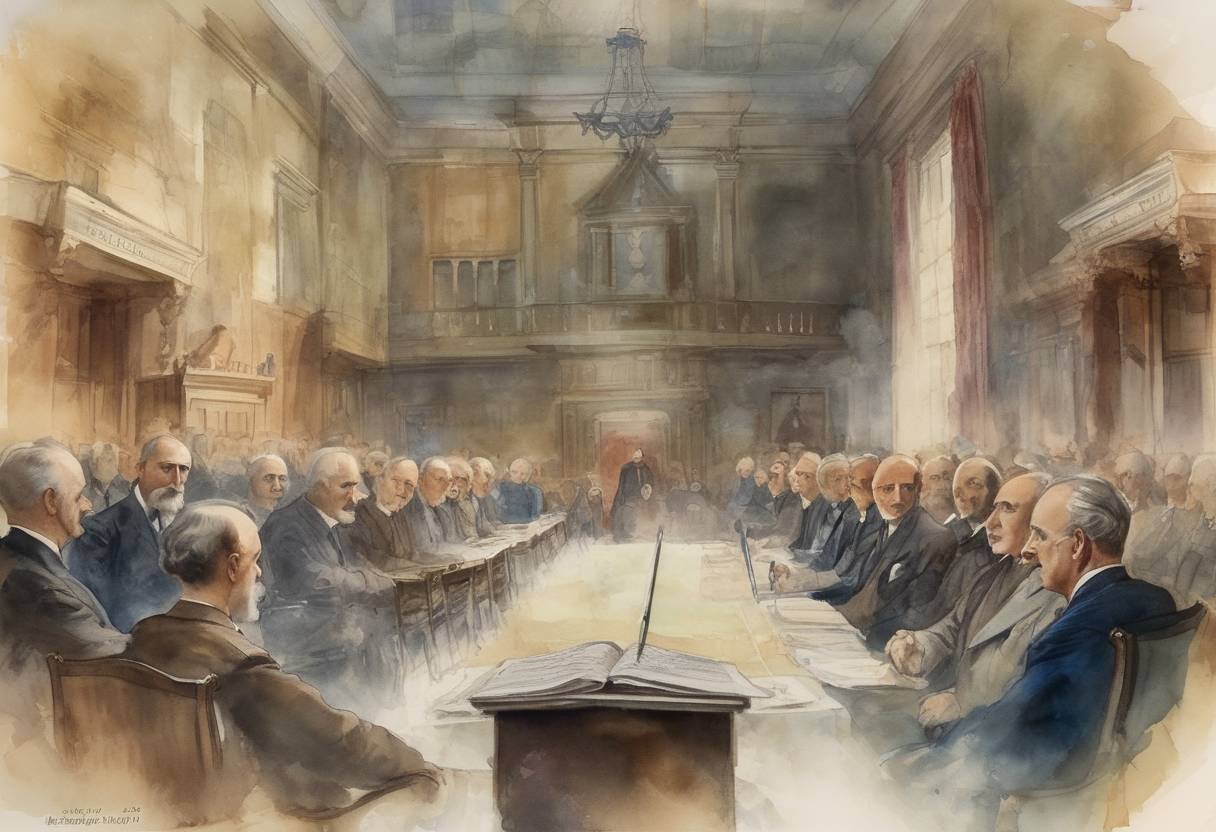
On November 2, 1917, the British government issued the Balfour Declaration, a pivotal document in the history of the Middle East and the Zionist movement. This declaration took the form of a letter from the United Kingdom’s Foreign Secretary, Arthur James Balfour, to Lionel Walter Rothschild, a leader of the British Jewish community. The letter expressed the British government’s support for the establishment of a “national home for the Jewish people” in Palestine.
The Balfour Declaration emerged during World War I, a time when the British government was seeking to secure strategic advantages and support from various groups. Several factors contributed to the issuance of the declaration:
Zionist Movement: The late 19th and early 20th centuries saw the rise of the Zionist movement, which advocated for the establishment of a Jewish homeland in Palestine. The movement gained momentum with leaders like Theodor Herzl, who sought international support for their cause.
British Strategic Interests: During World War I, Britain was engaged in a complex geopolitical struggle. Securing the support of Jewish communities worldwide, particularly in the United States and Russia, was seen as beneficial to the British war effort.
Sykes-Picot Agreement: The 1916 Sykes-Picot Agreement between Britain and France had already outlined the division of Ottoman territories in the Middle East, including Palestine, which was to be under international administration. The Balfour Declaration added another layer to the future of the region.
The Balfour Declaration was brief but significant. It stated:
“His Majesty’s Government view with favour the establishment in Palestine of a national home for the Jewish people, and will use their best endeavours to facilitate the achievement of this object, it being clearly understood that nothing shall be done which may prejudice the civil and religious rights of existing non-Jewish communities in Palestine, or the rights and political status enjoyed by Jews in any other country.”
The Balfour Declaration had far-reaching implications:
In summary, the Balfour Declaration was a critical moment in the history of the Middle East, reflecting the complex interplay of international diplomacy, national aspirations, and colonial interests. Its legacy continues to shape the region’s political dynamics to this day.
Source: en.wikipedia.org