The Siege of Granada Begins: November 25, 1491
1491 · Granada, Spain
The siege of Granada begins, marking the final phase of the Reconquista.
July 3, 1280
The Battle of Moclín occurred between the forces of the Kingdom of Castile and the Nasrid Kingdom of Granada. This battle was part of the Reconquista, where Christian kingdoms aimed to recapture territory from Muslim rulers in the Iberian Peninsula. Castilian forces, led by Sancho IV, sought to weaken Granada's defenses but were ultimately defeated, resulting in a significant loss of life and captured prisoners.
Moclín, Spain | Kingdom of Castile
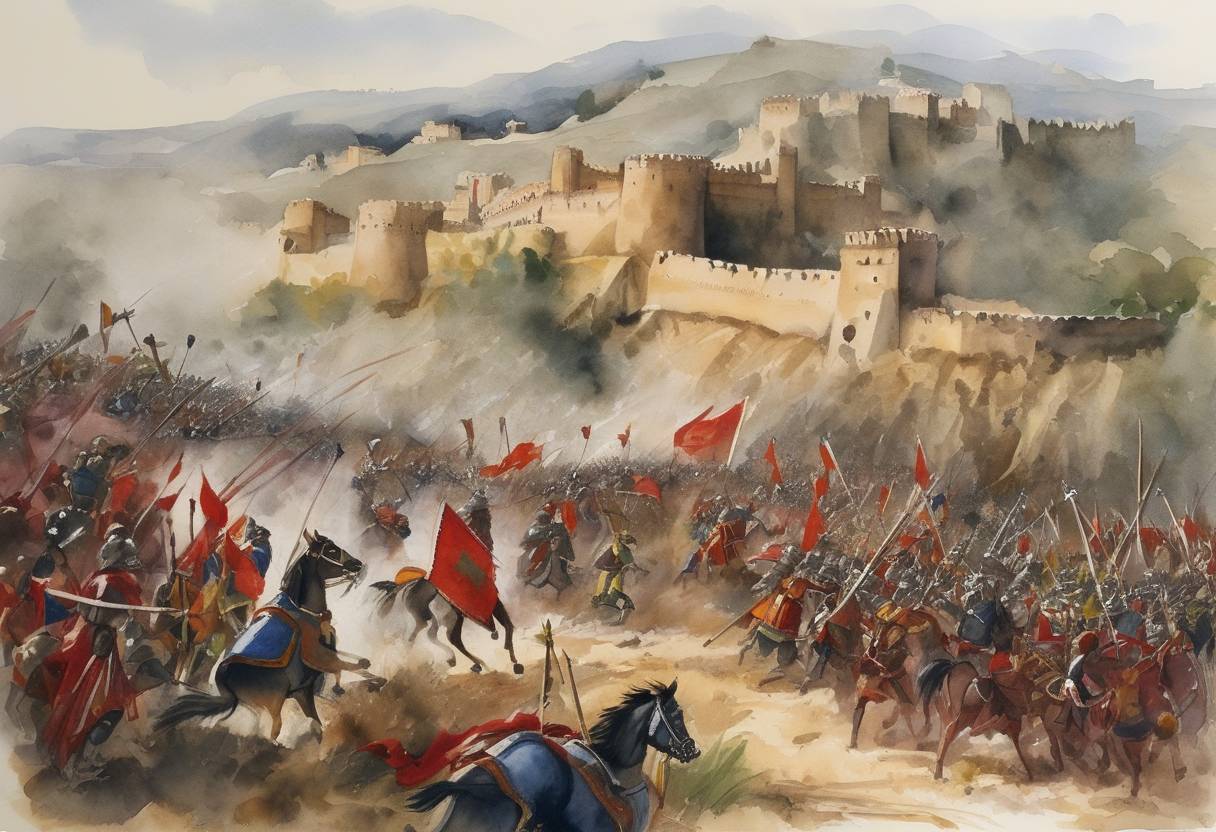
The Battle of Moclín was a significant event in the protracted series of conflicts known as the Reconquista, during which Christian kingdoms sought to reclaim territories in the Iberian Peninsula that were under Muslim rule. On July 3, 1280, forces from the Kingdom of Castile, led by Alfonso Fernández de Castilla, the half-brother of King Sancho IV (who was not present at the battle), clashed with the army of the Nasrid Kingdom of Granada.
By the late 13th century, the Reconquista was well underway, with the Christian kingdoms having gained significant territories from their Muslim counterparts. However, the Nasrid Kingdom of Granada remained a resilient bastion of Islamic power in the southern Iberian Peninsula. The strategic location of Moclín made it a critical point of conquest for Castilian forces aiming to press further into Nasrid territory and weaken Granada’s defenses.
On July 3, 1280, as part of a campaign to capture strategic fortifications in the region, the Castilian forces advanced on Moclín. The Nasrid defenders, well-prepared for the incursion and familiar with the rugged terrain, succeeded in ambushing the Castilian troops. The ensuing battle resulted in a fierce fight, characterized by both the terrain’s difficulties and the surprise elements employed by the Granadan forces.
The sheer ferocity and tactical advantage of the Nasrid defenders led to a comprehensive defeat for the Castilian army. Reports from the period indicate that the battle’s aftermath was devastating for Castile, with significant loss of life, including high-ranking nobles, and many captured as prisoners.
The defeat at Moclín marked a temporary setback for the Kingdom of Castile in its Reconquista efforts. The loss underscored the resilience and tactical adeptness of the Nasrid Kingdom, serving as a sobering reminder to Castilian forces of the challenges inherent in their campaign to dominate the Iberian Peninsula.
Despite this defeat, the broader Reconquista campaign continued, with the eventual fall of Granada not occurring until 1492. The Battle of Moclín remained a poignant example of the complexities and shifting fortunes of medieval warfare in Iberia, highlighting the intricate interplay of political, religious, and territorial ambitions that characterized this period of history.
Source: en.wikipedia.org