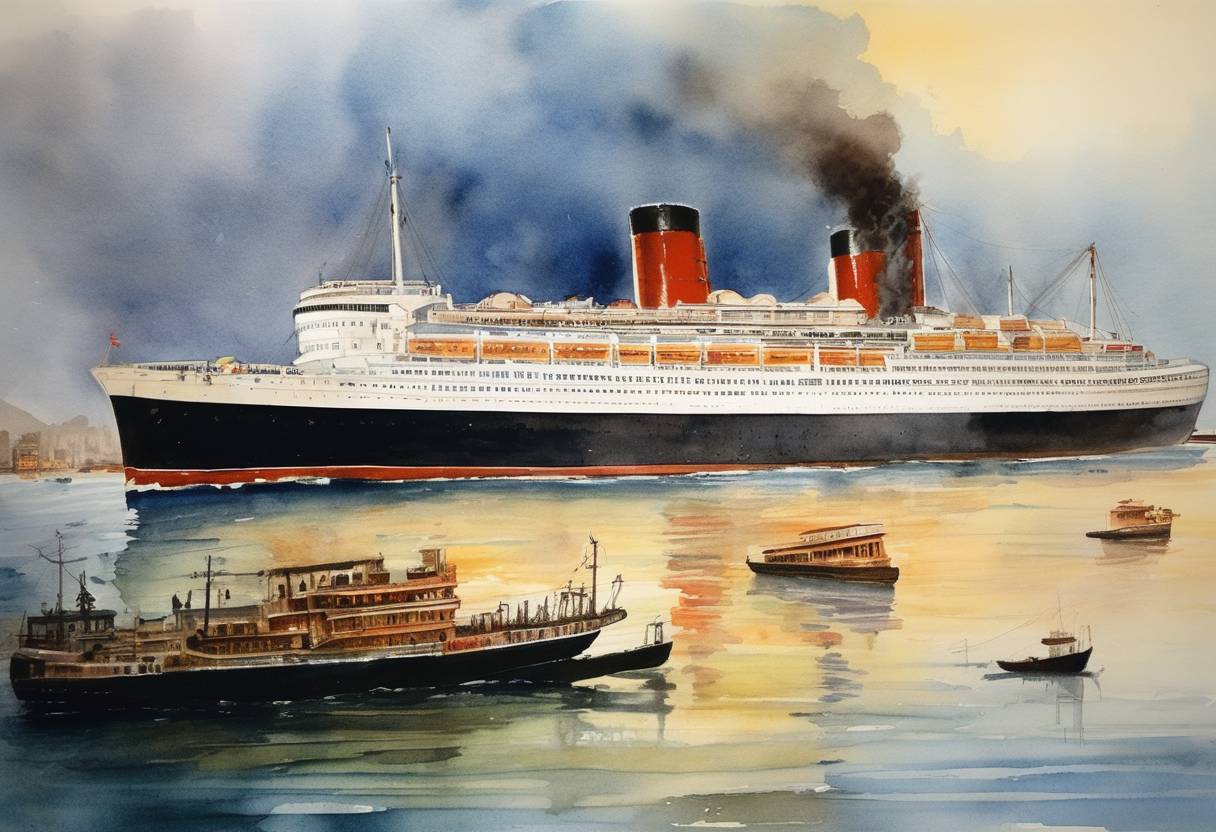
The Sinking of RMS Queen Elizabeth
On January 9, 1972, the RMS Queen Elizabeth, once celebrated as the largest ocean liner in the world, met its tragic end in Hong Kong’s Victoria Harbour. Originally built for the Cunard Line, the ship had a storied career, including transporting troops during World War II and later serving as a prestigious passenger liner.
Background
Commissioned during the late 1930s, the RMS Queen Elizabeth was part of Cunard’s strategy to dominate the transatlantic passenger market. The ship, alongside her sister ship, the RMS Queen Mary, was renowned for luxury and speed, symbolizing British maritime superiority.
After decades of service, the Queen Elizabeth was retired from active Cunard duty in 1968. Eventually, it was sold to a group of investors with plans to transform it into a floating university, known as the “Seawise University”.
The Incident
In 1972, while undergoing refitting in Hong Kong, the RMS Queen Elizabeth caught fire under suspicious circumstances. The fire was reportedly swift and intense, leading to catastrophic damage. Despite firefighting efforts, the vessel could not be salvaged and ultimately capsized in the shallow waters of Victoria Harbour.
Aftermath and Significance
The destruction of the RMS Queen Elizabeth was not only a financial blow to its new owners but also marked the end of an era for one of the most iconic ocean liners of the 20th century. The ship’s demise was shrouded in mystery, with speculations of arson due to insurance disputes.
The wreck of the Queen Elizabeth remained a fixture of Hong Kong Harbour until it was scrapped in the late 1970s. The incident underscored the decline of ocean liner travel, as air transportation became the predominant mode for transatlantic journeys.
The loss of the RMS Queen Elizabeth is remembered as a poignant moment in maritime history, symbolizing the end of the golden age of ocean liners.