Test Baker: The First Underwater Atomic Bomb Test
1946 · Bikini Atoll, United States Trust Territory of the Pacific Islands
The first underwater test of an atomic bomb, known as 'Test Baker,' occurred at Bikini Atoll as part of Operation Crossroads.
July 1, 1946
After World War II, the United States conducted Operation Crossroads at Bikini Atoll in the Marshall Islands, beginning with an early morning atomic bomb test.
Bikini Atoll, Marshall Islands | United States Army
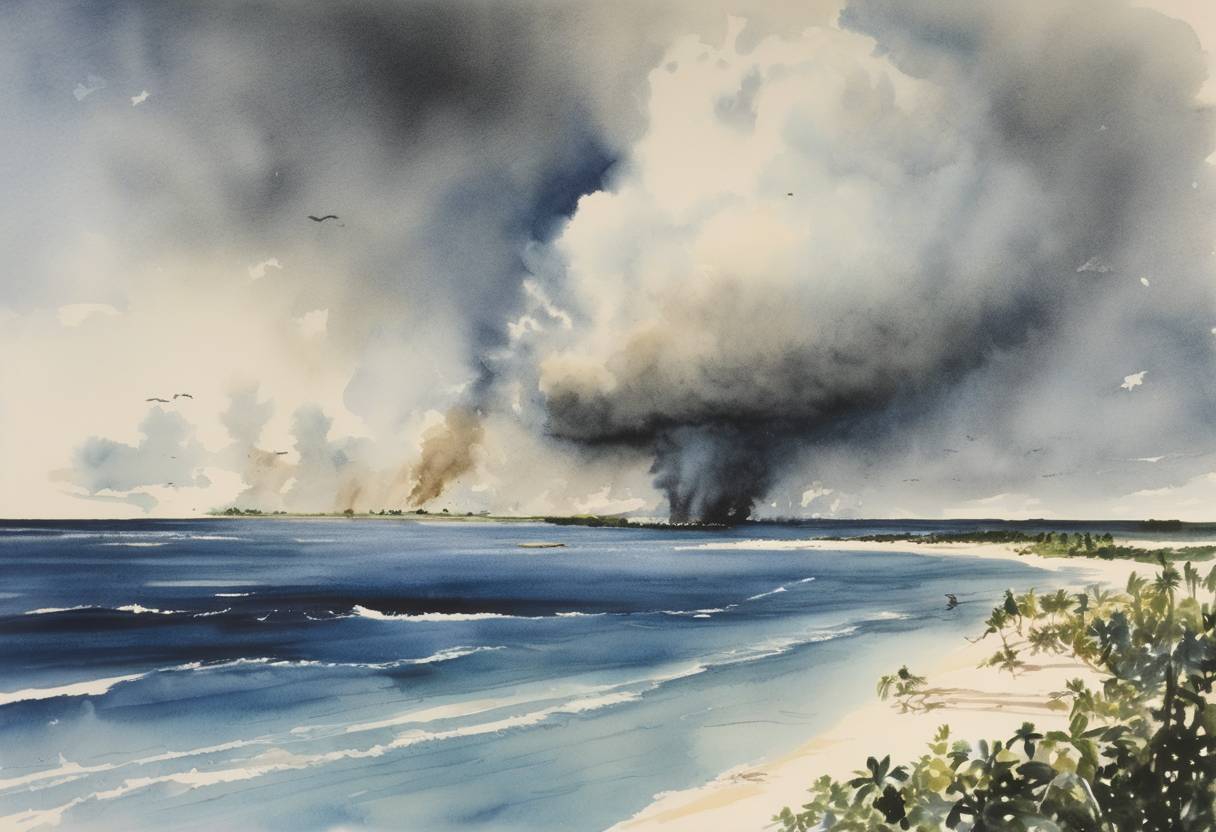
On July 1, 1946, the United States executed Operation Crossroads, an influential series of nuclear tests, beginning with the test named “Able.” This operation was conducted at Bikini Atoll, part of the Marshall Islands, in the Pacific Ocean and was crucial in studying the effects of nuclear explosions on naval vessels.
The conclusion of World War II saw the advent of nuclear weapons significantly altering global military dynamics. Keen to understand and demonstrate the power of atomic weaponry, the United States planned Operation Crossroads intended to assess the effects of nuclear blasts on ships, equipment, and material.
The tests were also aimed at demonstrating U.S. military prowess during the early Cold War era. Bikini Atoll was chosen for its remote location, minimizing risk to human populations and ensuring confidentiality.
The bomb used in the “Able” test was dropped from a B-29 bomber, detonating over a fleet of 95 target ships. This collection included decommissioned American warships, captured Axis vessels, and support craft. The intention was to gauge the destructive impact on naval hardware, testing hull durability and assessing damage to unmanned shipboard structures.
The explosion produced a massive fireball and shockwave, leading to the destruction and severe damage of several ships in the target area. While some ships sank, others remained afloat but heavily damaged, thus providing data on the varying levels of devastation and resilience.
Operation Crossroads marked the first public demonstration of the power of nuclear weapons since World War II. It underscored the potential for future conflicts to be influenced by nuclear armaments. The results had considerable implications for naval engineering, strategic military planning, and international diplomacy in the nascent atomic age.
The tests displaced and affected the indigenous populations of Bikini Atoll, leading to longstanding legal and ethical concerns regarding the site’s environmental and health impacts. The occasion further highlighted the need for global dialogue on nuclear testing and disarmament, issues that persisted throughout the latter half of the 20th century.
Overall, the operation underscored the daunting power of nuclear weapons and the emerging need for comprehensive international frameworks to manage their testing and proliferation.
Source: en.wikipedia.org