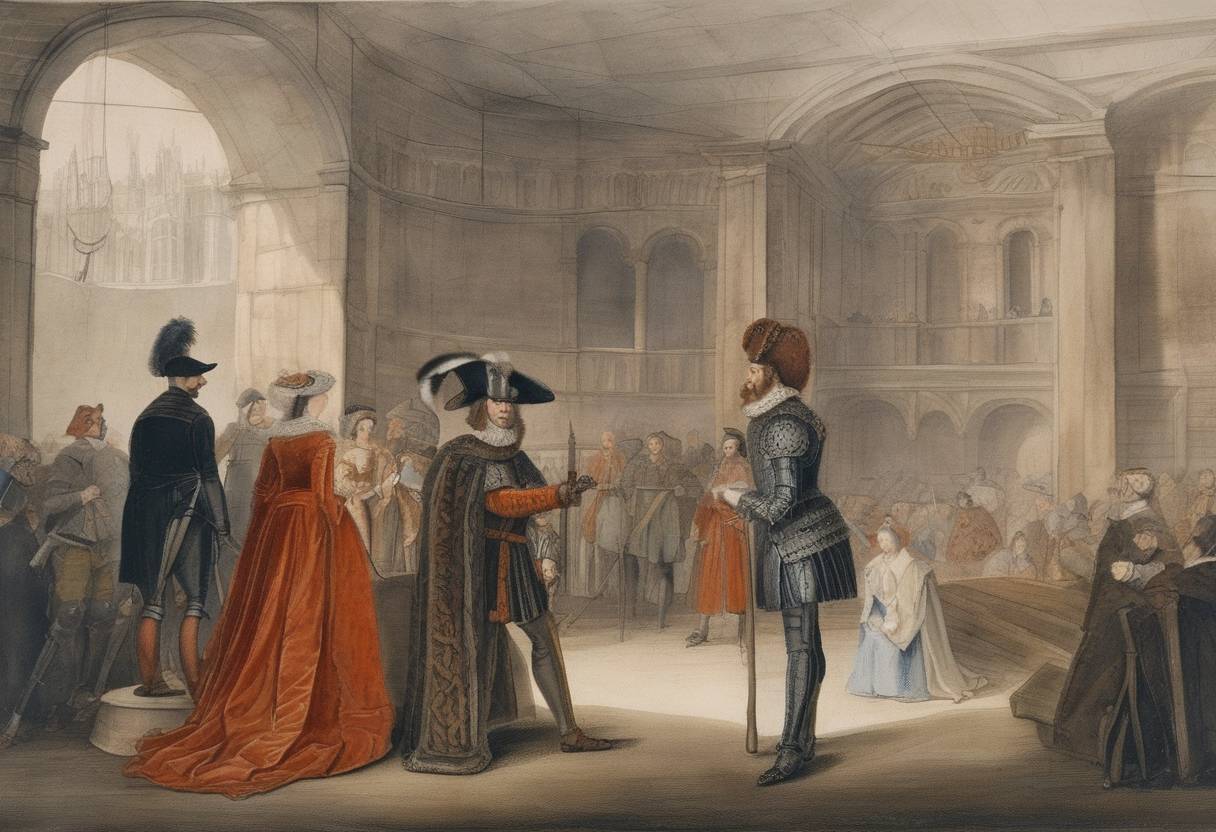
Execution of Robert Devereux, 2nd Earl of Essex - February 25, 1601
On February 25, 1601, Robert Devereux, the 2nd Earl of Essex, faced execution for treason following a failed rebellion against Queen Elizabeth I of England. This marked a significant moment in Elizabethan England, underscoring the volatility and perils of court politics.
Background
Robert Devereux was born in 1565, ascending to the earldom in 1576. He became a favorite of Queen Elizabeth I, gaining prominence through his charm and political aptitude. His early career was marked by military service and various court roles, yet tensions grew from his ambition and impetuous nature.
The Essex Rebellion
The Essex Rebellion was born from Devereux’s frustrations with his diminishing influence in Elizabeth’s court. After a series of political miscalculations and failures, including a disastrous campaign in Ireland, his relationship with the Queen deteriorated. Feeling sidelined, Devereux orchestrated a coup aimed at seizing control and forcing Elizabeth to dismiss his political adversaries.
The plan culminated in February 1601 when Devereux, along with a group of supporters, attempted to incite a public uprising in London. His efforts quickly unraveled, with little public support and swift government action to quell the insurgency. Devereux was arrested, tried, and found guilty of treason.
Execution
Devereux was executed at the Tower of London on February 25, 1601. His execution demonstrated the perilous nature of Elizabethan politics where even the closest courtiers were not immune to the consequences of challenging royal authority.
Aftermath and Significance
Essex’s execution had several profound implications:
- Political Climate: It emphasized the precarious balance of power and the severity of dissent in Elizabethan England.
- Succession Concerns: The rebellion fueled growing anxieties about the Queen’s succession, with no clear heir appointed, creating tension within the nation.
- Cultural Reflection: The downfall of Essex inspired literary works and reflections on loyalty, power, and ambition, most notably influencing Essex’s former protégé, William Shakespeare, in plays such as “Hamlet.”
The execution of the Earl of Essex remains a poignant example of political intrigue and the often-tragic consequences of challenging monarchical authority in the age of Elizabeth I.