Battle of Viljandi - October 15, 1211
1211 · Viljandi, Estonia
The Livonian Brothers of the Sword defeated an Estonian army at the Battle of Viljandi during the Livonian Crusade.
June 15, 1184
The Republic of Novgorod was defeated by the Livonian Brothers of the Sword in the Battle of Ümera.
Ümera, Estonia | Livonian Brothers of the Sword
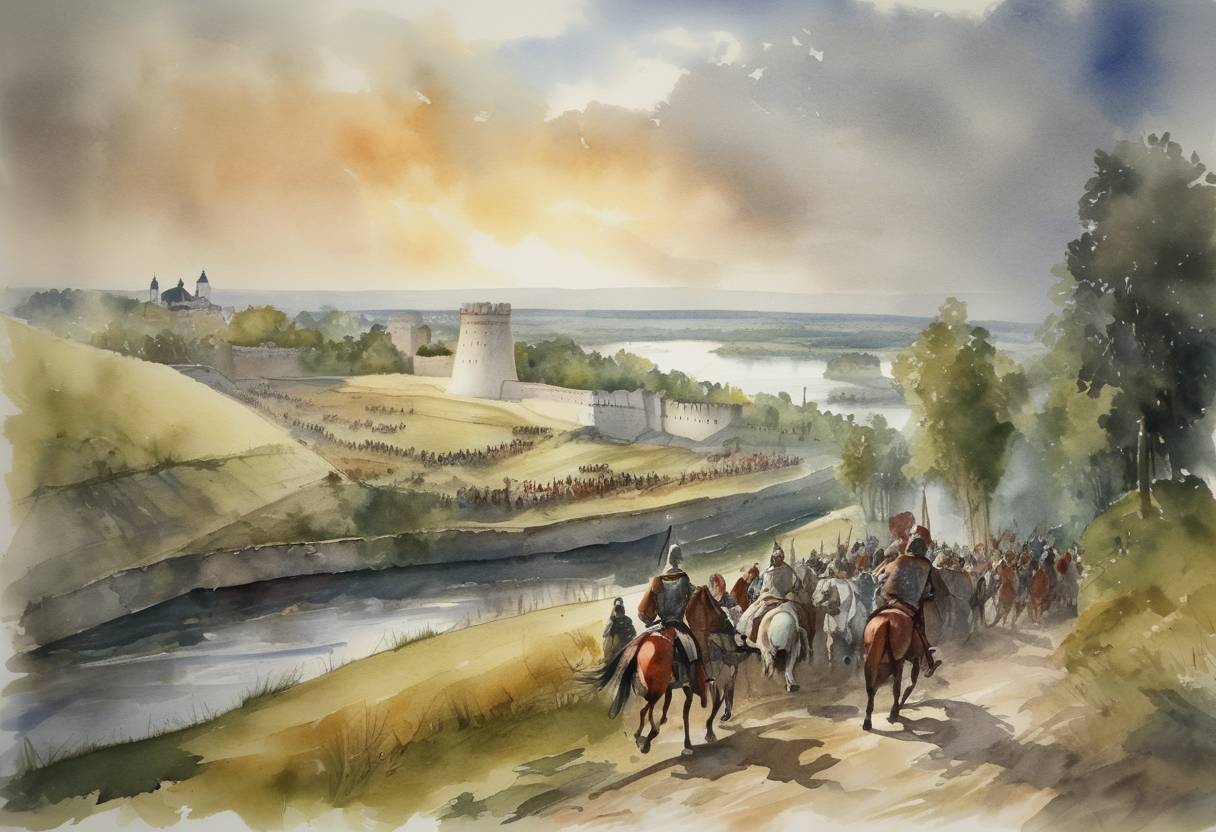
The Battle of Ümera, which took place on June 15, 1184, saw the Republic of Novgorod clashing with the Livonian Brothers of the Sword, a military order formed to aid in the Christianization of the eastern Baltic region. This battle was part of the larger Northern Crusades, where various crusading orders attempted to convert pagan populations in the area.
The Republic of Novgorod, during this time, was a prominent and powerful city-state in what is now Russia. Renowned for its rich trade connections and cultural influence, it was a thriving center for commerce and politics. Meanwhile, the Livonian Brothers of the Sword were a militant religious order established in 1202 by Albert of Riga. However, at the time of the battle, the territory was heavily influenced by German Crusaders seeking expansion.
The specific details of the Battle of Ümera itself are somewhat scarce. However, sources generally indicate that it was a confrontation that involved Novgorodian forces attempting to either repel or assert control over the areas threatened by the expansion of the Livonian Order. The Livonian Brothers of the Sword were part of the broader campaign to extend Christian influence.
While records of the battle specify defeat, the detailed strategic and tactical outcomes are less documented. Despite the setback, the Republic of Novgorod continued to be a dominant force in the region for several centuries. The ongoing conflict in the Baltic area was part of a much broader series of military and religious campaigns that expanded the influence of Christian orders and the Holy Roman Empire in northeastern Europe.
The event reflects the period’s complex dynamics, marked by religious zeal, regional politics, and cultural conflicts. These battles contributed to shaping the political landscape in Eastern Europe, influencing the power dynamics between the emerging nations in the region.
Following the battle, the region saw further campaigns and battles as Novgorod and various other entities continued to vie for power in the Baltic region. The Livonian Brothers of the Sword, later merged into the Teutonic Order, continued to play a significant role in the Baltic Crusades until their eventual dissolution, contributing to the spread of Christianity and Germanic influence throughout the area.
The legacy of such conflicts can be observed in the rich tapestry of cultural and religious identities in the region, marking a pivotal era of transformation and consolidation that laid the groundwork for modern Eastern European states.
Source: en.wikipedia.org