The Treaty of London: Ending the Bishops' Wars
1641 · London, England
The Treaty of London was signed, ending the Bishops' Wars between England and Scotland. This treaty was part of the larger conflict that led to the English Civil War.
May 29, 1328
A peace treaty between France and England known as the Treaty of Northampton was ratified, ending the First War of Scottish Independence. This treaty recognized the independence of Scotland and represented a significant diplomatic achievement for the Scots, under the leadership of King Robert the Bruce.
Northampton, England | Kingdom of Scotland, Kingdom of England
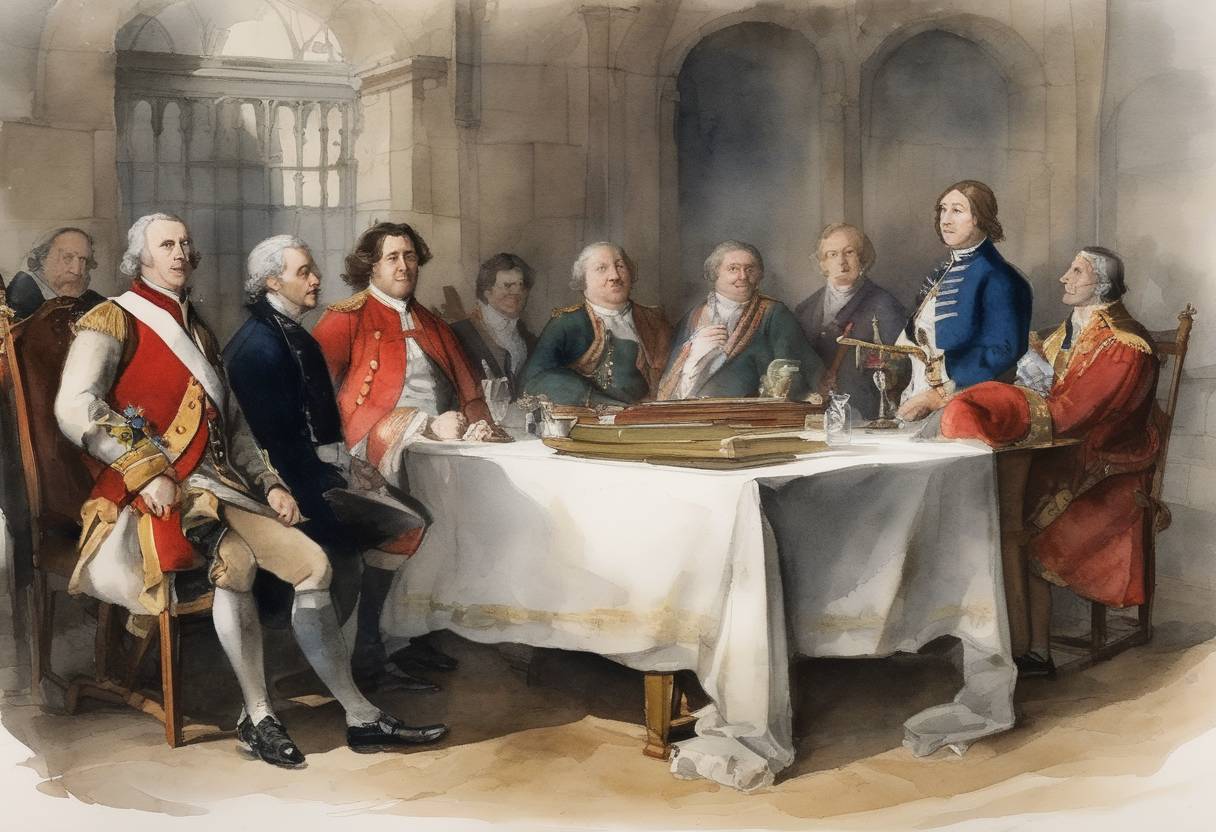
The Treaty of Northampton, ratified on May 29, 1328, marked the official end to the First War of Scottish Independence. This treaty was a pivotal diplomatic accord between the Kingdom of England and the Kingdom of Scotland, establishing Scotland’s recognition as an independent nation after years of conflict.
The First War of Scottish Independence began in 1296 as Scotland resisted English attempts to assert control over its territories. King Robert the Bruce emerged as a key leader for the Scottish cause after his coronation in 1306. Despite major battles, such as the Battle of Bannockburn in 1314, which was a significant Scottish victory, the struggle for independence continued for years.
Recognition of Independence: The treaty included recognition by England of Scotland’s status as a separate and independent kingdom. This acknowledgment was a major triumph for Robert the Bruce and his supporters.
Marriage Alliance: As part of the peace terms, a marriage was arranged between Joan of the Tower, the sister of King Edward III of England, and David, the son of Robert the Bruce. This alliance was meant to cement the peace and strengthen diplomatic ties between the two kingdoms.
Territorial Agreements: England agreed to relinquish claims to Scottish territories, effectively acknowledging the pre-war borders of Scotland.
Payments: A substantial monetary compensation (referred to as a dowry) was secured from Scotland to England as part of the marriage alliance and stipulations of the peace agreement.
The Treaty of Northampton was a crucial milestone in Scottish history. By ratifying this treaty, England formally acknowledged Scotland’s sovereignty, and Robert the Bruce’s leadership helped solidify Scotland’s position as an independent kingdom. While peace was established through this treaty, the uneasy and often tumultuous relationship between Scotland and England persisted in subsequent centuries, ultimately leading to further conflicts. Nevertheless, the 1328 treaty stands out as a moment of significant diplomatic victory for Scotland in the medieval period.
Source: en.wikipedia.org