Minnesota's Admission as the 32nd U.S. State
1858 · Washington, D.C., United States
Minnesota is admitted as the 32nd U.S. state.
May 29, 1848
The Wisconsin Territory was admitted as the 30th state of the United States of America, known as the State of Wisconsin.
, United States | United States Congress
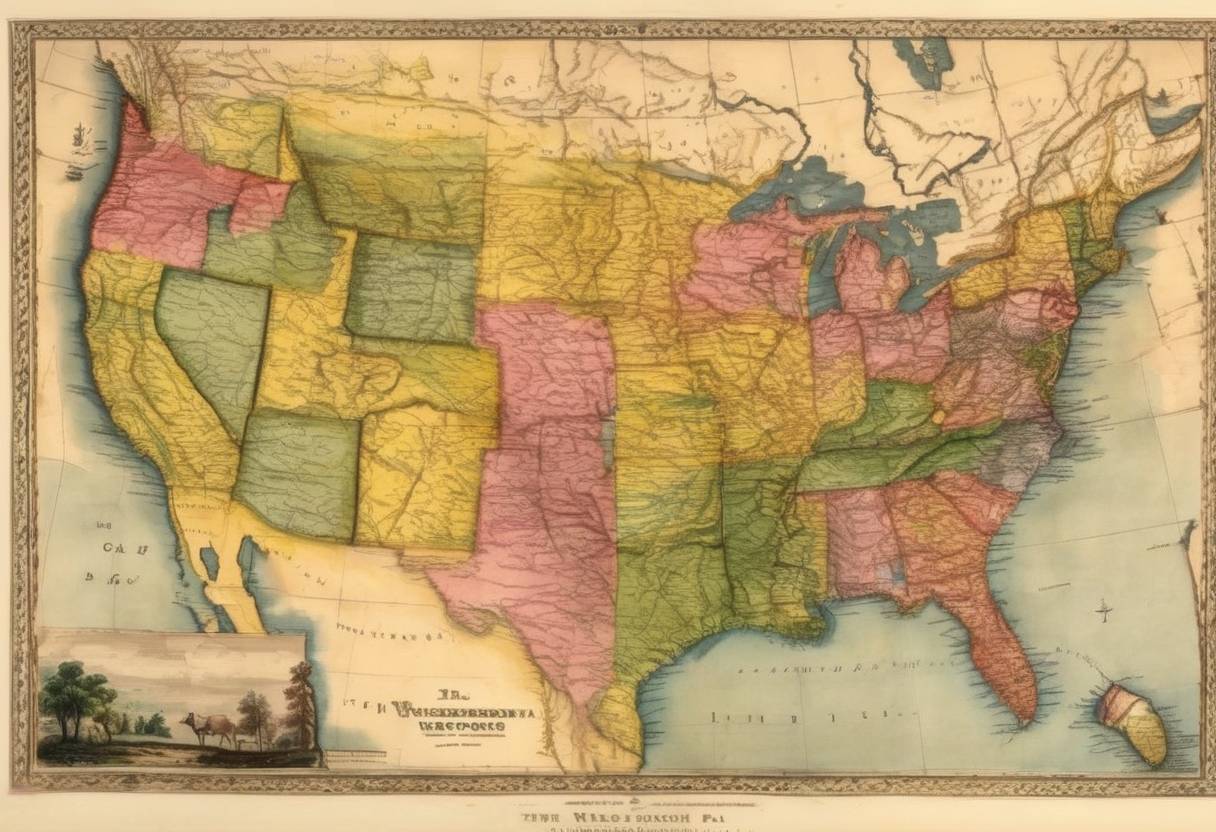
On May 29, 1848, the Wisconsin Territory was officially admitted to the United States as the 30th state, known as the State of Wisconsin. This significant event marked the culmination of a complex process of territorial development and national expansion.
Territorial Beginnings: The area that would become Wisconsin was originally part of the Northwest Territory. Following a number of territorial reconfigurations, the Wisconsin Territory was established in 1836. It included areas that are now part of Minnesota, Iowa, and the Dakotas before being reduced to roughly the current size of the state.
Population Growth: Throughout the 1830s and 1840s, Wisconsin experienced significant population growth, driven by immigration primarily from the Eastern United States and Europe, particularly from German and Scandinavian countries. This population boom was largely due to the region’s promise of fertile farmland and the rise of industries such as mining and logging.
Path to Statehood: The push towards statehood was driven by the thriving economy and increasing population. With sufficient numbers to meet the requirements for statehood, Wisconsin crafted a state constitution in 1846. However, the initial version was rejected by the electorate. A revised constitution, crafted in 1847, was accepted, clearing the final hurdle for admission to the Union.
Statehood Achieved: On May 29, 1848, Wisconsin was formally admitted to the Union by an act of Congress and the signature of President James K. Polk. This admission occurred amidst a period of rapid expansion for the United States, which had recently welcomed several other new states.
Constitution: Wisconsin’s state constitution, known for its progressive elements compared to earlier drafts, provided for popular sovereignty and general suffrage for white men, and it tackled issues such as the structure of the state government and the rights of its citizens.
Economic Development: The statehood bolstered economic development, contributing to further infrastructure improvements including roads, railroads, and the expansion of Milwaukee and other cities.
Influence on Politics: Wisconsin’s entry into the Union added to the political dynamics of the period, affecting balances between free and slave states leading up to the Civil War. Wisconsin was a free state, which had implications in the fiercely debated national issues of the era.
Cultural Impact: As a new state, Wisconsin played a critical role in the migration trends of the mid-19th century, with its agricultural and industrial offerings attracting a diverse range of settlers who contributed to its multicultural fabric.
The state of Wisconsin’s admission to the Union on May 29, 1848, was a pivotal moment in the broader narrative of American expansionism, reflecting the period’s complex social, economic, and political changes.
Source: www.loc.gov