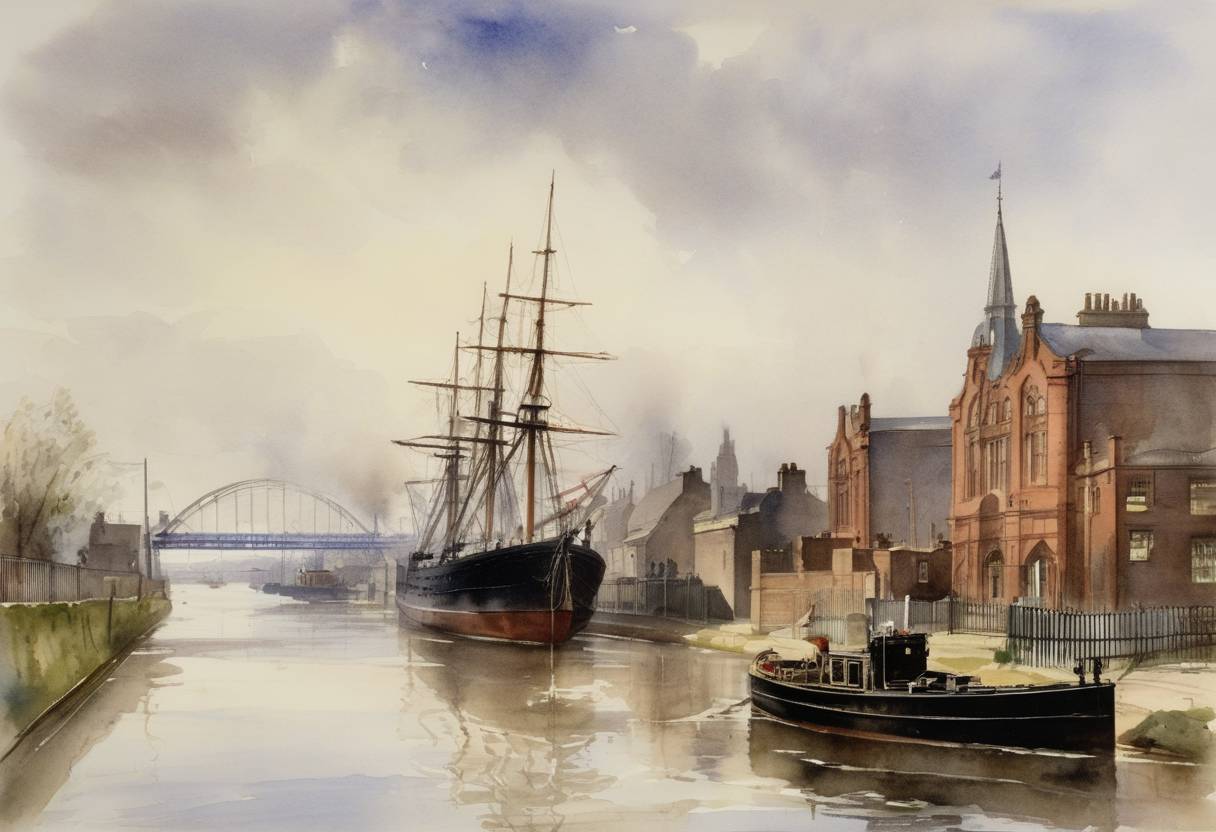
The Opening of the Manchester Ship Canal
Date: May 21, 1894
On May 21, 1894, The Manchester Ship Canal was officially opened by Queen Victoria. This monumental engineering feat linked the industrial city of Manchester directly to the Irish Sea, allowing ocean-going vessels to bypass the Liverpool docks and reach Manchester directly.
Historical Context
During the late 19th century, Manchester was a thriving industrial hub but was at a disadvantage due to its inland location. The city’s industrialists sought a solution to avoid excessive shipping costs and delays linked to the use of the Port of Liverpool. The idea to construct a ship canal was conceived as a means to boost Manchester’s competitive edge by providing it with its own port facilities.
Construction
- Initiation: Construction of the canal began in 1887, driven by the vision of Sir Edward Leader Williams, the chief engineer, and Daniel Adamson, who initially spearheaded the campaign for the canal’s creation.
- Scale and Challenges: The canal stretched approximately 36 miles (58 kilometers) from Eastham on the Mersey Estuary to the Manchester Docks. The construction involved a significant amount of manual labor and was marked by engineering challenges, including the excavation of millions of tons of earth and the construction of infrastructure such as locks, aqueducts, and bridges.
- Labor Force: At its peak, the canal’s construction employed over 16,000 workers.
Opening Ceremony
Queen Victoria officially opened the canal with a ceremony that illustrated the significance of the project to both the region and the broader United Kingdom. It was a symbol of Manchester’s industrial ambition and progress.
Economic Impact
The canal transformed Manchester into an inland seaport. It immediately reduced the cost of transporting goods and facilitated the import and export of goods directly to and from the city, fostering significant economic growth.
Broader Significance
The Manchester Ship Canal was not only a triumph of civil engineering but also a reflection of the industrial revolution’s transformative impact on urban geography and commerce. It exemplified the era’s spirit of innovation and enterprise, dramatically altering trade patterns in northwest England.
Legacy
Today, the Manchester Ship Canal stands as a historical landmark and continues to play a role in local shipping and transport. Its creation marked a pivotal development in the history of industrial Manchester and underscores the broader narrative of human endeavor overcoming geographical constraints for economic expansion.