The First National Meeting of the Republican Party: February 22, 1856
1856 · Pittsburgh, United States
The Republican Party holds its first national meeting in Pittsburgh, Pennsylvania.
February 19, 1856
The Know-Nothing Party holds its first national convention in Philadelphia, where Millard Fillmore is nominated as the presidential candidate.
Philadelphia, United States | Know-Nothing Party
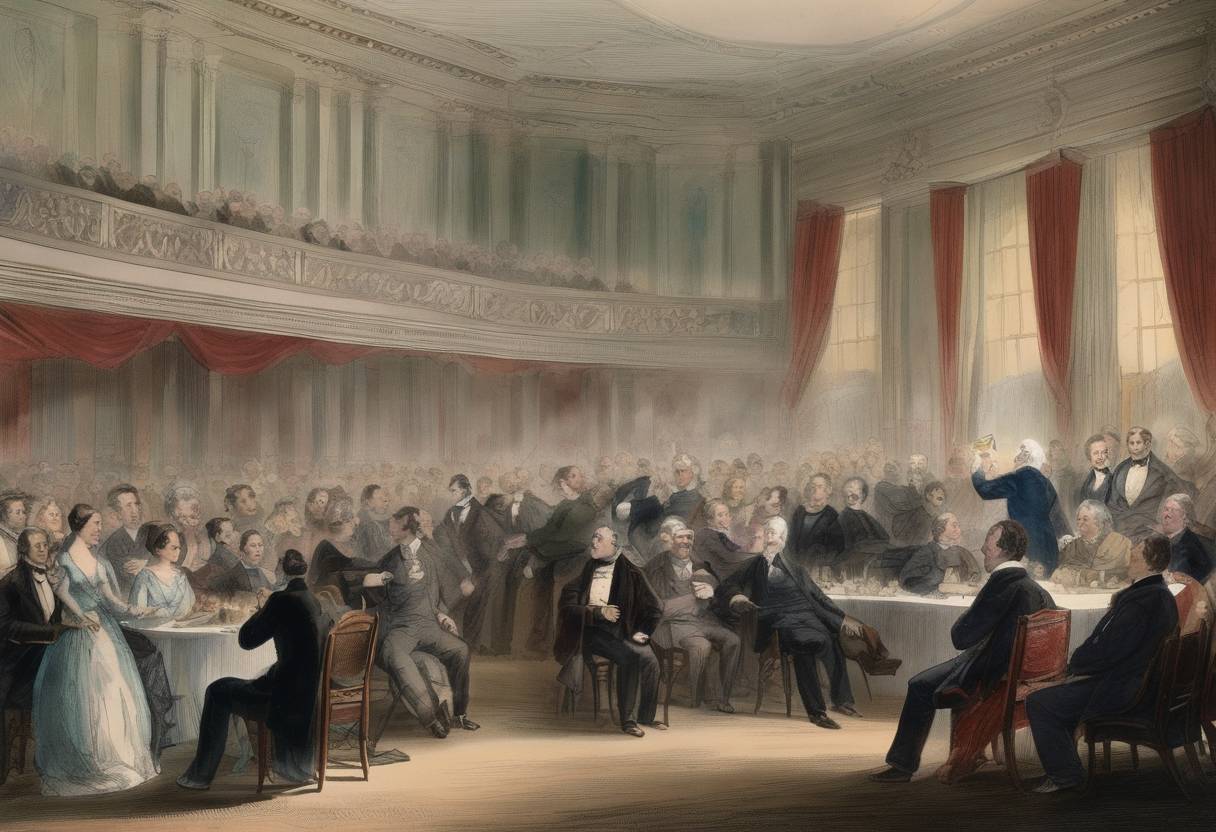
On February 19, 1856, the American Party, more commonly known as the Know-Nothing Party, held its first national convention in Philadelphia. This event marked a significant moment in the antebellum political landscape of the United States, as the party emerged from a secretive, nativist movement to a formally organized political force.
The Know-Nothing Party originated in the 1840s and early 1850s amid growing anti-immigrant and anti-Catholic sentiments, driven by the influx of Irish and German immigrants. These sentiments helped the party gain popularity, especially among native-born Protestant Americans who perceived the newcomers as threats to American values and jobs.
The party’s name, “Know-Nothing,” came from their secretive nature; when members were asked about their activities, they were instructed to say they “know nothing.”
The convention in Philadelphia was pivotal in consolidating the party’s national presence. Held at the National Hall, this gathering officially nominated former U.S. President Millard Fillmore as their candidate for the upcoming presidential election. Andrew Jackson Donelson, the nephew of President Andrew Jackson, was selected as the vice-presidential nominee.
The platform adopted by the convention emphasized nativist policies. Its primary goals included:
Additionally, while the Know-Nothing Party primarily focused on nativist issues, the convention also navigated the divisive matter of slavery. The party attempted to take a neutral stance, notably omitting strong positions on the expansion of slavery to avoid fracturing its support in both the North and the South.
The 1856 presidential election was a three-way race between the Democratic candidate James Buchanan, the newly established Republican Party’s John C. Frémont, and Millard Fillmore for the Know-Nothings. Fillmore garnered 21.5% of the popular vote and carried the state of Maryland, showcasing the party’s significant regional support but also its limitations on the national stage.
Following the 1856 election, the party quickly declined as tensions over slavery intensified, leading to the eventual dominance of the Republican Party in opposing the Democrats. The Know-Nothing movement’s impact, however, persisted as it highlighted deep-seated nativist sentiments in American society, a theme recurring throughout U.S. history.
Source: www.britannica.com