Ascension of King Edward III of England
1327 · London, England
King Edward III of England was declared King of England, following the abdication of his father, Edward II.
February 19, 1369
Pedro the Cruel of Castile challenges his half-brother Henry of Trastámara to a duel that ultimately led to the War of the Castilian Succession.
Burgos, Castile (now part of Spain)
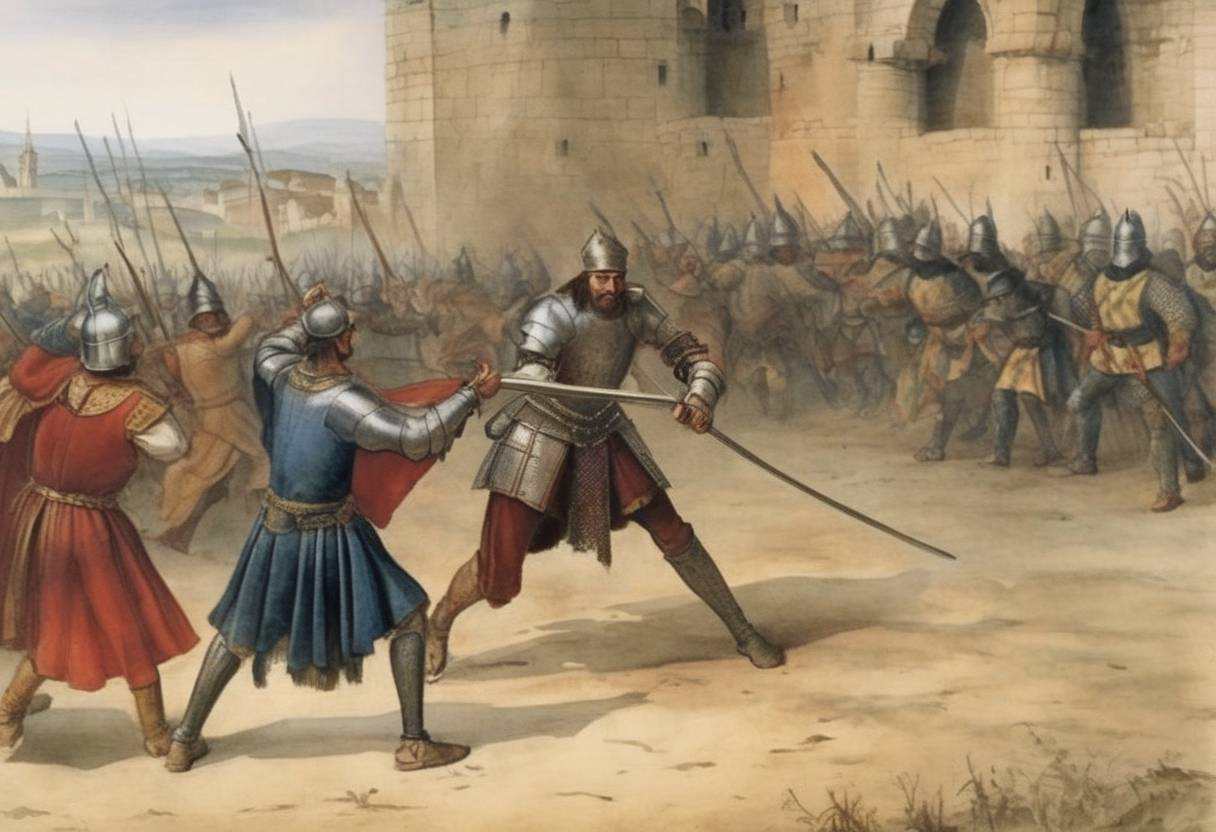
On February 19, 1369, King Pedro I of Castile, infamously known as Pedro the Cruel, challenged his half-brother Henry of Trastámara to a duel. This confrontation was a pivotal moment in the Castilian Civil War, which later became known as the War of the Castilian Succession.
Pedro I ascended to the throne of Castile in 1350. His rule was marked by internal strife, as he alienated the Castilian nobility through his authoritarian policies and alleged brutality. In contrast, Henry of Trastámara, Pedro’s illegitimate half-brother, gained substantial support among discontented nobles and external allies, most notably the French.
The rivalry between Pedro and Henry intensified over the years, stemming from territorial and political disputes. While Pedro sought to consolidate royal power and assert his authority, Henry positioned himself as a defender of noble privileges and regional autonomy. The animosity culminated in a series of conflicts during the 1360s, with Henry repeatedly challenging Pedro’s rule.
The duel challenge issued by Pedro on February 19, 1369, was born out of the desperation and pressure mounting upon his kingship. As civil war raged, the duel was proposed as a means to resolve the succession dispute through personal combat, reflecting the chivalric customs of medieval Europe. However, the duel did not occur as planned.
Though the duel was not fought, the broader conflict between Pedro and Henry continued, eventually leading to Pedro’s downfall. In March 1369, just a month after the proposed duel, Pedro was killed by Henry’s forces during the Battle of Montiel, in circumstances rife with betrayal and intrigue.
Henry ascended to the Castilian throne as Henry II, marking the beginning of the Trastámara dynasty. His victory and subsequent rule were solidified with support from France and the Aragonese crown, which altered the political landscape of Iberia.
The conflict and its resolution had long-term implications, notably influencing the balance of power on the Iberian Peninsula. The Trastámara ascension to the Castilian throne not only affected national politics but also had repercussions for future alliances and conflicts involving Portugal, Aragon, and neighboring kingdoms.
The War of the Castilian Succession highlighted the volatile nature of medieval succession disputes, where personal rivalries and political maneuvering often dictated the fate of kingdoms.
Source: en.wikipedia.org