The Suicide of Emperor Nero: End of the Julio-Claudian Dynasty
68 · Rome, Roman Empire
Roman Emperor Nero committed suicide, marking the end of the Julio-Claudian dynasty.
July 19, 0064
The Great Fire of Rome begins, leading to widespread destruction over several days. The fire engulfs much of the city, lasting for six days before being brought under control. The aftermath saw Emperor Nero blaming Christians for the fire, leading to a severe persecution.
Rome, Roman Empire | Roman Empire
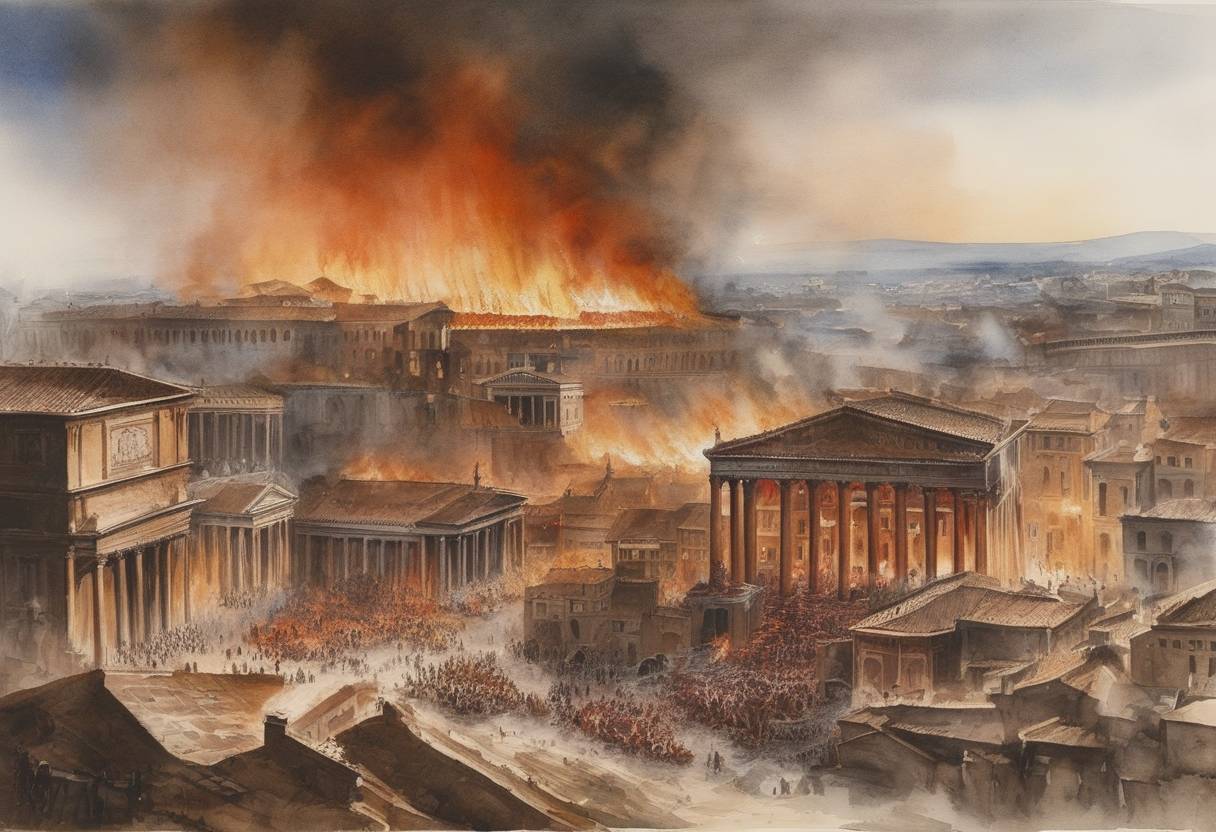
On July 19, 64 AD, a devastating fire broke out in Rome, an event later known as the Great Fire of Rome. The inferno began in the densely populated area near the Circus Maximus, a venue used primarily for chariot races. Due to the congested and flammable nature of the city’s wooden buildings, the fire quickly spread through Rome, raging uncontrollably for nine days.
Initial Outbreak: The fire first ignited in the merchant shops around the Circus Maximus. These decrepit wooden structures fueled the flames, with the blaze fanned by strong winds.
Spread: Over the next six days, the fire engulfed much of the city. Historical sources such as Tacitus record that of Rome’s 14 districts, three were completely destroyed, and seven suffered severe damage. Only four districts were spared widespread destruction.
Control and Aftermath: By the sixth day, efforts to control the fire began to succeed, but small separate fires continued to explode sporadically across the city, extinguished only after three more days.
Urban Reconstruction: In the aftermath of the blaze, Emperor Nero initiated a significant reconstruction project. The plans included broader streets and more open spaces to prevent such disastrous fires in the future. He also constructed his extravagant Domus Aurea, or “Golden House,” on some of the cleared land.
Political and Social Repercussions: The fire’s origin was a subject of controversy. Rumors persisted that Emperor Nero had started the fire to clear land for his palace. In response to this, or possibly as a scapegoat to deflect criticism, Nero accused Christians of arson.
Persecution of Christians: This accusation marked the beginning of one of the earliest recorded persecutions of Christians in the Roman Empire. Christians were subjected to extreme cruelty, with many being executed in brutal public spectacles.
The Great Fire of Rome profoundly impacted the city’s urban landscape and social fabric. It demonstrated the vulnerabilities of urbanization without regulatory oversight while highlighting the socio-political tensions within the sprawling empire. The event has been shrouded in historical debate, particularly regarding Nero’s actions and intentions, but it undeniably changed the course of Roman architecture and Christian history.
Source: en.wikipedia.org