Title IX of the Education Amendments Enacted
1972 · Washington D.C., United States
Title IX of the Education Amendments is enacted, prohibiting gender discrimination in federally funded education programs in the United States.
March 22, 1972
The United States Congress sent the Equal Rights Amendment to the states for ratification. This proposed amendment sought to guarantee equal legal rights for all American citizens regardless of sex.
Washington D.C., United States | United States Congress
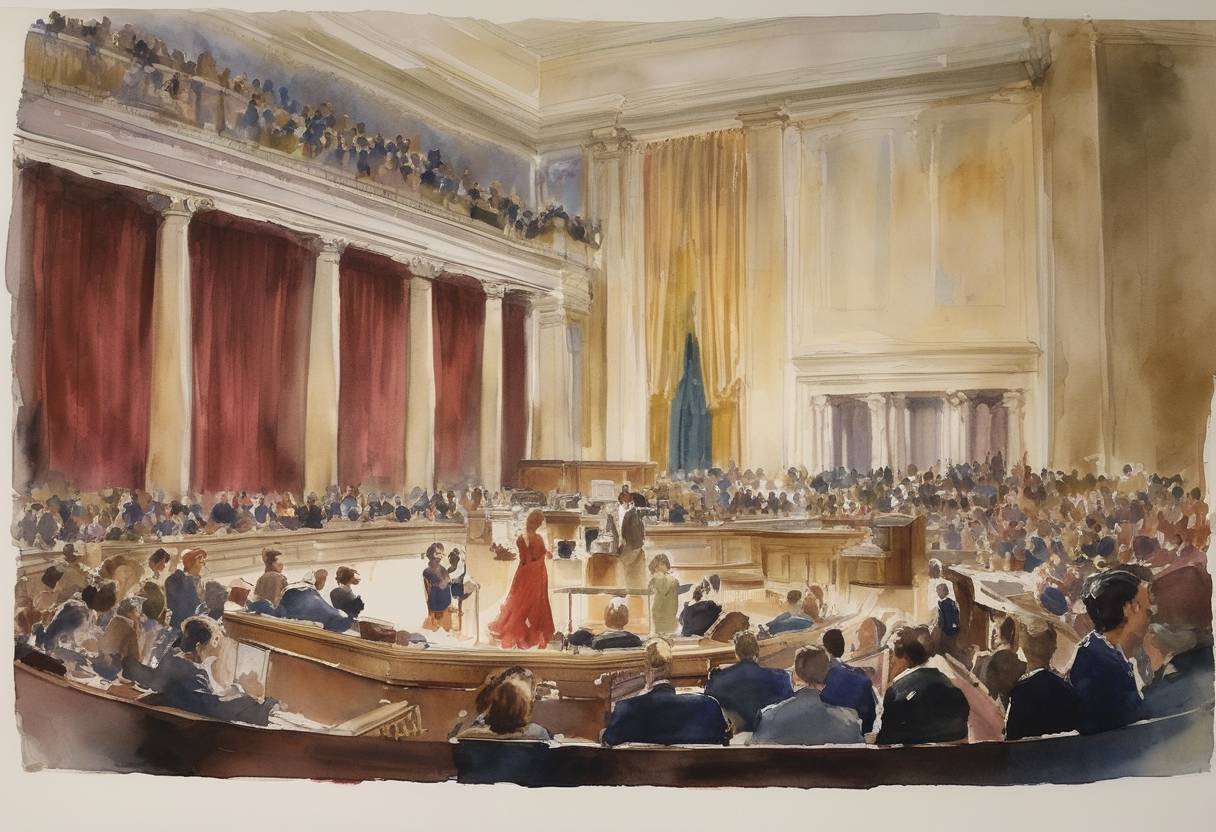
On March 22, 1972, the United States Congress took a significant step towards gender equality by sending the Equal Rights Amendment (ERA) to the states for ratification. This proposed constitutional amendment aimed to guarantee equal legal rights for all American citizens regardless of sex, marking a pivotal moment in the struggle for women’s rights in the United States.
The core language of the ERA was notably succinct and powerful:
The push for the ERA originated in the women’s suffrage movement of the early 20th century. Drafted by Alice Paul and Crystal Eastman, the amendment was first introduced to Congress in 1923. It sought to address the legal disparities between men and women, building on the momentum gained by the 19th Amendment, which granted women the right to vote in 1920.
Throughout the mid-20th century, growing support from women’s rights organizations and shifting public opinion brought the ERA back into the national spotlight. The resurgence of the feminist movement in the 1960s and 1970s further fueled calls for gender equality under the law.
In 1972, after nearly five decades since its initial introduction, the ERA achieved a major milestone when it passed both houses of Congress. The Senate approved the amendment with a vote of 84 to 8, following the House’s earlier approval. This overwhelming bipartisan support underscored a broad recognition of the need for gender equality.
The next step in the amendment process required ratification by three-fourths (38) of the state legislatures. Congress initially set a seven-year deadline for this to occur. The ERA quickly gained traction, with 30 states ratifying it by the end of 1973.
Despite early momentum, the ratification process stalled amid growing opposition, particularly from conservative groups led by activists like Phyllis Schlafly. These opponents argued that the ERA would dismantle traditional gender roles and negatively impact families.
By the original 1979 deadline, only 35 states had ratified the amendment, falling short of the required 38. Congress extended the deadline to 1982, but no additional states ratified the ERA within that time frame.
The ERA remains a focal point of advocacy. In the 21st century, renewed efforts emerged to restart the ratification process. Several states have ratified the ERA since, reigniting debates over its legal status and the validity of past deadlines.
The amendment’s journey reflects ongoing challenges and efforts in the quest for gender equality in the United States. It symbolizes a crucial chapter in the broader fight for civil rights, underscoring the enduring struggle for equal protection under the law.
Source: www.archives.gov