First Use of Ether Anesthesia in Surgery
1842 · Jefferson, United States
Ether anesthesia was used for the first time in an operation by Dr. Crawford Long in Jefferson, Georgia, marking a significant advancement in medical surgery.
November 12, 1847
Sir James Young Simpson, a Scottish physician, discovered the anesthetic properties of chloroform, widely changing practices in surgical procedures.
Edinburgh, Scotland | Royal College of Physicians of Edinburgh
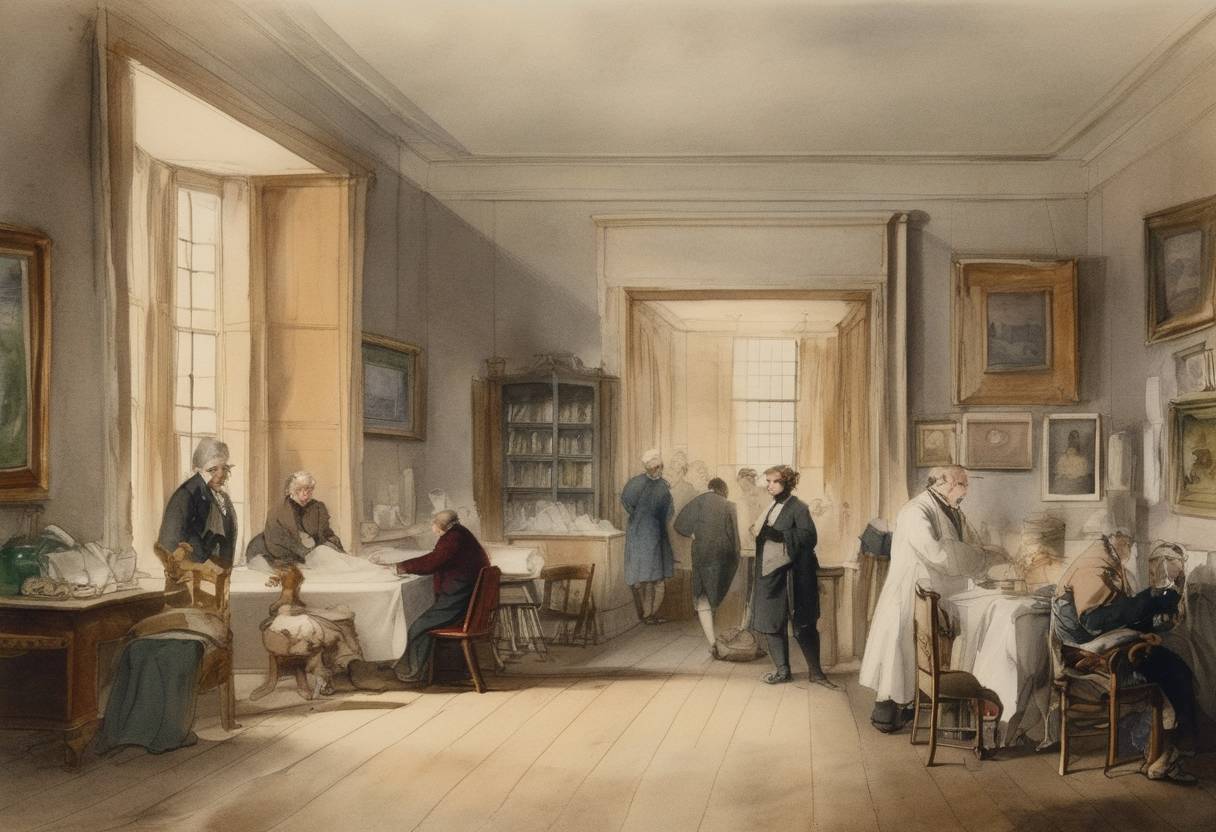
On November 12, 1847, Sir James Young Simpson, a pioneering Scottish obstetrician, revolutionized medical surgery with his discovery of the anesthetic properties of chloroform. Working at his residence in Edinburgh, Simpson, along with his assistants, conducted experiments to identify an alternative to ether, the commonly used anesthetic at the time.
Prior to the discovery of chloroform, surgical procedures were often excruciatingly painful, and the use of ether, introduced in 1846, marked the beginning of anesthetic practices. However, ether had limitations, including unpleasant side effects and a strong, irritating odor that made some patients and medical practitioners seek a substitute.
Simpson and his colleagues, Drs. George Keith and James Matthews Duncan, began by inhaling various chemical agents in search of a more effective anesthetic. On the evening of November 12, 1847, during one of these trials, they tested chloroform. Immediately after inhalation, the members were rendered unconscious, experiencing a pleasant sensation before awakening with no negative aftereffects. This reaction indicated chloroform’s potential as an anesthetic.
Simpson quickly published his findings, and chloroform was soon adopted widely in the medical community for both surgical and obstetrical procedures. Despite initial skepticism, its ease of use and effectiveness contributed to rapid acceptance, significantly impacting surgical practices by allowing for longer and more complex procedures without subjecting patients to severe pain.
The discovery of chloroform by Simpson marked a crucial advancement in medical science, contributing to the development of modern anesthesia. It paved the way for more humane surgical practices and played an essential role in the advancement of surgery as a reliable and relatively pain-free medical intervention.
Simpson’s work on that November evening in 1847 not only transformed surgical procedures but also elevated the quality of medical care. The legacy of his discovery of chloroform’s anesthetic properties reverberates through the fields of surgery and medicine to this day, underscoring the fundamental importance of anesthetics in patient care.
Source: www.sciencehistory.org