The Battle of Nieuwpoort: Prelude, May 31, 1600
1600 · Nieuwpoort, Spanish Netherlands
The Battle of Nieuwpoort was in preparation with Maurice of Nassau's Dutch-English army assembling for engagement, significant in the Eighty Years' War.
April 9, 1609
Spain and the Dutch Republic sign the Twelve Years' Truce, halting warfare for a period during the Eighty Years' War as both sides sought to recover from the exhaustion of the first phase of the conflict.
Antwerp, Spanish Netherlands | Spain and the Dutch Republic
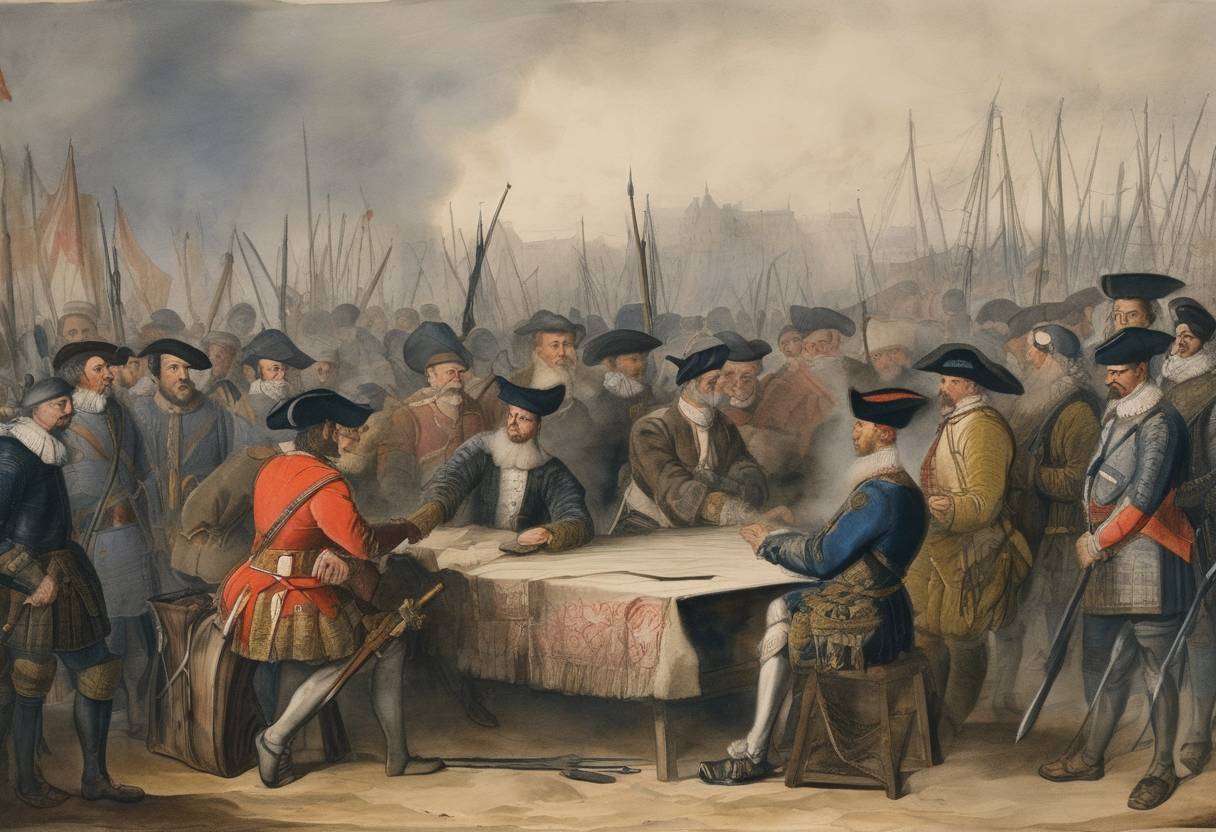
On April 9, 1609, the Treaty of Antwerp, known as the Twelve Years’ Truce, was signed between Spain and the Dutch Republic, marking a significant pause in the ongoing Eighty Years’ War. This ceasefire agreement was reached after decades of brutal conflict, allowing both sides an opportunity to recuperate from extensive military strains.
The Eighty Years’ War, a pivotal struggle beginning in 1568, involved the rebellious provinces of the Low Countries seeking independence from Spanish rule. Spain, led by the Habsburg monarchy, under King Philip II, had been embroiled in efforts to maintain control over these territories, which were economically prosperous and strategically vital.
The war was characterized by its protracted nature, severe battles, and the involvement of broader European powers. By early 1600s, it had resulted in considerable military and economic exhaustion for both parties.
The Twelve Years’ Truce had significant repercussions across Europe. It contributed to a temporary stabilization in the region’s political landscape, affecting alliances and influencing other European powers’ interventions in the conflict. For the Dutch, the truce period allowed for economic recovery and strengthening of their political institutions.
For Spain, the truce offered a respite to concentrate on other pressing matters, such as the ongoing conflict with England and internal issues within its empire.
The Twelve Years’ Truce marked a crucial juncture in the Eighty Years’ War, halting the first phase of what would become a protracted fight for Dutch independence. It exemplified the broader European dynamics of diplomacy and conflict management, setting a precedent for future negotiations and contributing to the eventual resolution of the broader conflict with the Peace of Westphalia in 1648.
Source: www.britannica.com