The War of 1812: James Madison's Declaration of War Request
1812 · Washington, D.C., United States
U.S. President James Madison asked Congress to declare war on the United Kingdom, leading to the War of 1812.
June 4, 1812
The Louisiana Territory was divided into the Missouri Territory and the Orleans Territory (which later became the state of Louisiana). This division was part of the United States' westward expansion following the Louisiana Purchase.
Washington, D.C., United States | United States Congress
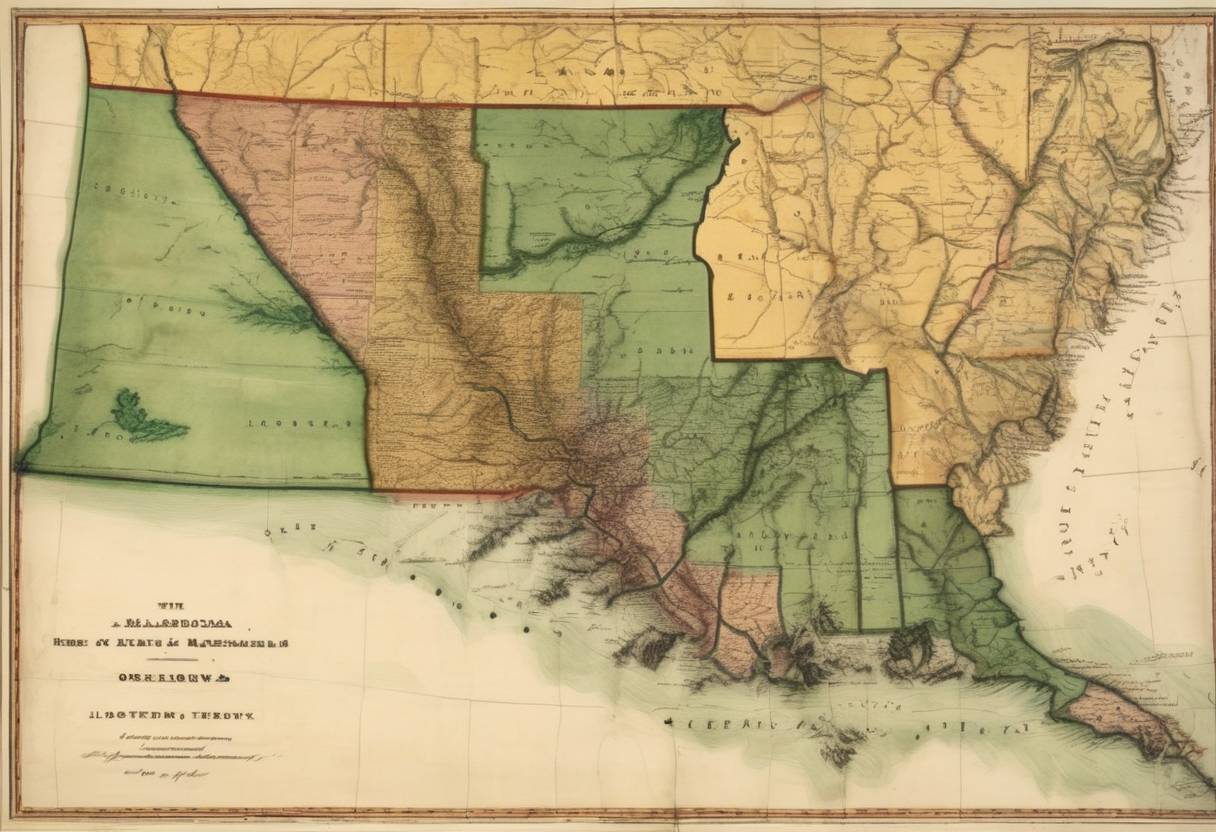
On June 4, 1812, as part of the westward expansion of the United States, the U.S. Congress enacted the division of the expansive Louisiana Territory into two separate entities: the Missouri Territory and the Orleans Territory. This strategic division followed the landmark Louisiana Purchase of 1803, where the United States acquired approximately 828,000 square miles of land from France, effectively doubling the size of the nation.
The Louisiana Purchase was a pivotal moment in American history, driven by the need to secure American control of the Mississippi River and the port of New Orleans, crucial for trade. After the acquisition, the vast area, loosely categorized as the Louisiana Territory, required administrative and political restructuring for effective governance and integration into the United States.
Through these territorial delineations and subsequent statehoods, the United States continued to shape its continental presence, demonstrating the importance of administrative foresight in sustaining expansionist policies. This division was a significant chapter in the development of the western United States and exemplified the ongoing transformation of American political geography in the 19th century.
Source: www.britannica.com